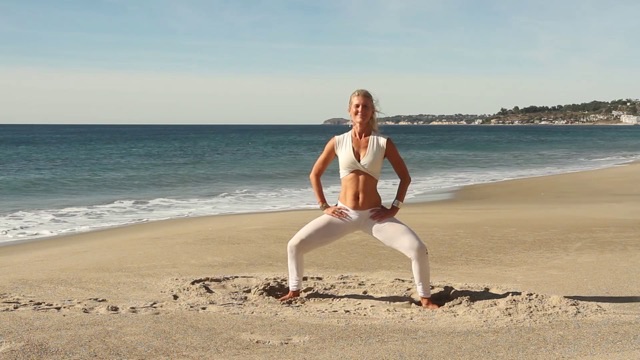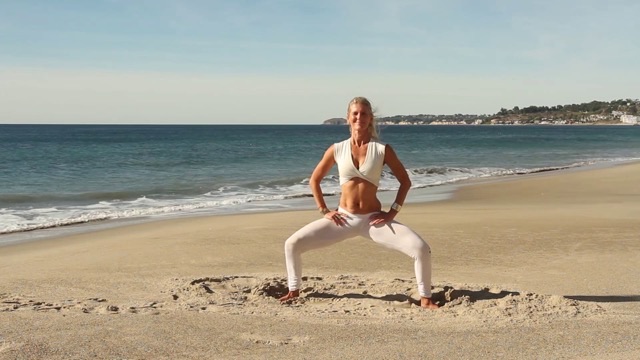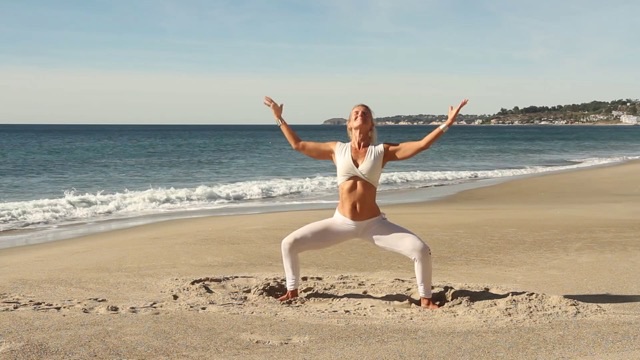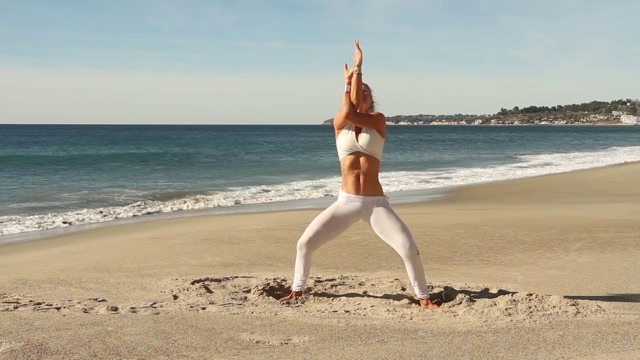

Yoga Alchemy

Yoga Alchemy · Courses

Prana Vinyasa Solar Mandala of Asanas

Overview

MOA | Samudraglobalyoga

WELCOME TO MOA

MANDALA OF ASANAS

your body is a ocean mandala
rich with hidden treasures
open your inmost chamber and light its lamp
- mirabai

Start Journey

What's inside

Module I | Samudraglobalyoga
7 lessons
Docs

Namaskars catalog | Samudraglobalyoga

Namaskars catalog | Samudraglobalyoga .portfolio-item .portfolio-image, .portfolio-item .portfolio-image a, .portfolio-item .portfolio-image img { display: block; width: 276px; height: 207px; } Home module i module ii module iii module iv Asanas of Namaskars catalog Home Module I Namaskars catalog Foundation iframe, object, embed { position: absolute; top: 0; left: 0; width: 100%; height: 100%; } Tadasana Uttanasana Plankasana Chatturanga Dandasana Bhujangasana Urdhva-Mukha-Svanasana Adho Mukha Svanasana Utkatasna Virabhadrasana 1 Anjaneyasana Virabhadrasana 2 jQuery(window).load(function(){ var $container = $('#portfolio'); $container.isotope({ transitionDuration: '0.65s' }); $('#portfolio-filter a').click(function(){ $('#portfolio-filter li').removeClass('activeFilter'); $(this).parent('li').addClass('activeFilter'); var selector = $(this).attr('data-filter'); $container.isotope({ filter: selector }); return false; }); $('#portfolio-shuffle').click(function(){ $container.isotope('updateSortData').isotope({ sortBy: 'random' }); }); $(window).resize(function() { $container.isotope('layout'); }); });

Docs

3-Part Prana Vinyasa Guide | Samudraglobalyoga

3-Part Prana Vinyasa Guide | Samudraglobalyoga .portfolio-item .portfolio-image, .portfolio-item .portfolio-image a, .portfolio-item .portfolio-image img { display: block; width: 276px; height: 207px; } .portfolio-desc h3 a { font-size: 14px; } .portfolio-desc h3 a { display: block; margin-top: -10px; } .titolo1, .titolo2, .titolo3 { padding-top: 20px; } Home module i module ii module iii module iv 3-Part Prana Vinyasa Guide catalog Home Module I 3-Part Prana Vinyasa Guide Pulsation Vinyasa Body Vinyasa Rhythmic Vinyasa Introduction to Prana Vinyasa “3-Part Prana Vinyasa” Technique The 3-Part Prana Vinyasa is a term that I created to refer a three-tiered approach of experiencing and teaching vinyasa from the breath pulsation. This technique was honed from Krishnamacharya’s teaching of moving dynamically between poses and using arm movements to enhance pranayama in asana and evolved as a method to for realization, alignment, creating flow state and understanding living vinyasa. From the organic need to transmit to students and teachers, the names for these vinyasas within vinyasas emerged as the “3-Part Prana Vinyasa” system: Pulsation Vinyasa: pulsing in the key action of an asana with the breathwave of inhale and exhale Body Vinyasa: moving limbs of an asana with the breathwave
Rhythmic Vinyasa: moving between two asanas with the breathwave The other contribution is to decondition the space of “chaturanaga – upward dog – downward dog as the only vinyasa that serves as a transtion between asansa. Prana Vinyasa “connecting vinyasa” is a concept to describe sequencing 2-3 asanas together as the transition (connecting vinyasa) between “mini-vinyasas” of standing asanas, arm balances, backbends and forward bends. Summary of the Purpose of the “3-Part Prana Vinyasa Technique” 
1. Teach alignment within the flow through the movements of prana and body patterns
. 2. Express the movements of prana and the breathwave in a tangible way that students of any form of hatha yoga can relate to and effectively experience the benefits of moving with prana
 3. Connecting the breathwave with movement while “holding a pose” or “marinating in an asana” or “pulsating within a mudra”
. 4. To transform the Newtonian-Mechanical View of the body as “material” and experience the energetic flow of the moving-breathing body and universe
. 5. Keep the experience of breath/prana alive
. 6. Awaken fluidity, grace, sustainability and love of being alive
. 7. Empower students and teachers to access the inherent creativity that is available within their body in each asana and every movement. Pulsation Vinyasa A Pulsation Vinyasa is a term created within Prana Vinaysa to refer to the the pulsation of the inhale and exhale within the key action of an asana. The pulsation is the most primary vinyasa - the primordial pulse that is expressed in every cell and in the rhythm of our breath. Purpose:
1. teaches the basic flow of the bandhas as the interaction of the grounding (apana) and rising (udana-prana) force develops mula and uddiyana bandha within asanas 2.  as a natural and effective experience of body sup- port and sustainable power brings an understanding of weight-bearing and distribution of weight and prana through the entire body by learning to not collapse the body in the joints with gravity but to develop the buoyancy of the bandhas develops a natural feeling of buoyancy in the joints 3. develops an embodied relationship to the primary pulse of the movements of prana in an ongoing experience (like a heartbeat) that is always present waiting to be related to. 
4. gives students an experience of the inner pulse and in doing so develops a greated internal connection and participation in the flow of yoga within their own experience. Best Applications:
 * Pulsing in the base of the pelvis (mulabandha) in “bent-leg standing poses” such as Vira I and II and lunges; this pulsation teaches
 * In Downward Dog: there are pulsations from the feet to the upper body which are very useful in helping be- ginners to teachers begin to experience a dog that moves and breathes and is not frozen!
 * In all thoracic spine openers such as anahatasana, pincha mayurasana with arms against the wall and in downward dog to open the upper body. This is one of the greatest discoveries for me in teaching men and people with “stiff upper bodies”.
 Be Aware:
 *Pulsation is not bouncing but a movement with the flow of the breath and bandhas
 * Pulsation is not a great tool for intense balancing poses such as Vira III or Parivritta Padangustasana but can be useful in Baksana (crow) or even Vrksasna (tree).  iframe, object, embed { position: absolute; top: 0; left: 0; width: 100%; height: 100%; } .portfolio-desc h3 a { margin-left: -5px; } Bent Knee (Apana Udana) Pulsation Bent Knee (Apana Udana) Pulsation Samana / Vyana Core Pulsation Four Movement of Lunge Heart Pulsation Side Waist Pulsation Waving Spine Pulsation Pelvic Tilt Pulsation Twisting Pulsations Pada Pulsations Neck Release Pulsation Hip/Inner Leg Pulsation Bent Arm Pulsation Body Vinyasa A body vinyasa is a term created within Prana Vinyasa to refer to the vinyasa using limbs: arms, legs, torso with the flow of breath to highlight energetic alignment and awaken the movement of prana. Best Applications: * Arm movements in standing poses and lunges * Leg movements when the one leg is extended in the air * Torso movement in twists and thoracic spine openers Be Aware: Body Vinyasas are always to enhance the alignment and integration within the integrity of an asana. Moving arms and legs from creative ideas that do not arise naturally from the form and function of an asana creates “disco yoga” – save that for the dance floor. Purpose: 1. Teach alignment in the flow using one’s limbs: body, legs, torso to embody the key actions, polarities and different qualities inherent with the mudra of an asana. 2. Highlight “unity of opposites” through the movements of prana by moving that part of the body part to create a holistic a connection and feeling of pranic movement inside the body. 3. Create a greater sense of opening or releases to areas that feel held or stuck. 4. Enhance breath flow while in asana   Lower Body Vinyasa Hip Joint Madala Prana/Apana (Single leg lift) Arm Body Vinyasas, Mudra Vinyasas Tadasana Mudra Vinyasa Samudra Mudra Vinyasa Samana/Vyana Mudra Vinyasa Anahata Mudra Vinyasa Prana Mudra Vinyasa Padma Mudra Vinyasa Arm Variation Vinyasas Root Rise Arm Body Vinyasa Egyptian Arms I Egyptian Arms II Spiral Arms Body Vinyasa Garuda Arms Body Vinyasa Arm Torso Body Vinyasas Single Arm Side-Waist Opening Mandala Arm Body Vinyasa Single Side-waist Opening Ganesh's Trunk Arm Body Vinyasa Shoulder Rolls Body Vinyasa Single Arm & Leg Body Vinyasa Rhythmic Vinyasa Coming soon. jQuery(window).load(function(){ $('iframe').each(function(){ var url = $(this).attr('data-src'); var r = /(videos|video|channels|\.com)\/([\d]+)/; var idvid = url.match(r)[2]; var url = $(this).parent().parent().parent().find('a').attr('href'); var nodo = $(this).parent().parent(); // console.log(url); nodo.html(''); }) var $container = $('#portfolio'); $container.isotope({ transitionDuration: '0.65s' }); $('#portfolio-filter a').click(function(){ $('#portfolio-filter li').removeClass('activeFilter'); $(this).parent('li').addClass('activeFilter'); var selector = $(this).attr('data-filter'); $container.isotope({ filter: selector }); return false; }); $('#portfolio-shuffle').click(function(){ $container.isotope('updateSortData').isotope({ sortBy: 'random' }); }); $(window).resize(function() { $container.isotope('layout'); }); }); jQuery(window).load(function(){ var $container = $('#portfolio1'); $container.isotope({ transitionDuration: '0.65s' }); $('#portfolio-filter1 a').click(function(){ $('#portfolio-filter1 li').removeClass('activeFilter'); $(this).parent('li').addClass('activeFilter'); var selector = $(this).attr('data-filter'); $container.isotope({ filter: selector }); return false; }); $('#portfolio-shuffle1').click(function(){ $container.isotope('updateSortData').isotope({ sortBy: 'random' }); }); $(window).resize(function() { $container.isotope('layout'); }); }); jQuery(window).load(function(){ var $container = $('#portfolio2'); $container.isotope({ transitionDuration: '0.65s' }); $('#portfolio-filter1 a').click(function(){ $('#portfolio-filter1 li').removeClass('activeFilter'); $(this).parent('li').addClass('activeFilter'); var selector = $(this).attr('data-filter'); $container.isotope({ filter: selector }); return false; }); $('#portfolio-shuffle1').click(function(){ $container.isotope('updateSortData').isotope({ sortBy: 'random' }); }); $(window).resize(function() { $container.isotope('layout'); }); }); jQuery(window).load(function(){ var $container = $('#portfolio3'); $container.isotope({ transitionDuration: '0.65s' }); $('#portfolio-filter1 a').click(function(){ $('#portfolio-filter1 li').removeClass('activeFilter'); $(this).parent('li').addClass('activeFilter'); var selector = $(this).attr('data-filter'); $container.isotope({ filter: selector }); return false; }); $('#portfolio-shuffle1').click(function(){ $container.isotope('updateSortData').isotope({ sortBy: 'random' }); }); $(window).resize(function() { $container.isotope('layout'); }); }); jQuery(window).load(function(){ var $container = $('#portfolio4'); $container.isotope({ transitionDuration: '0.65s' }); $('#portfolio-filter1 a').click(function(){ $('#portfolio-filter1 li').removeClass('activeFilter'); $(this).parent('li').addClass('activeFilter'); var selector = $(this).attr('data-filter'); $container.isotope({ filter: selector }); return false; }); $('#portfolio-shuffle1').click(function(){ $container.isotope('updateSortData').isotope({ sortBy: 'random' }); }); $(window).resize(function() { $container.isotope('layout'); }); });

Docs

Prana Vinyasa System | Samudraglobalyoga

Prana Vinyasa System | Samudraglobalyoga Home module i module ii module iii module iv Prana Vinyasa System Home Module I Prana Vinyasa System SECTION I: Prana Vinyasa Namaskars THE EVOLUTION OF ENERGETIC VINYASA— PRANA FLOW NAMASKARS After ten years of Sun Salutations in my body, something began to shift and a different calling started to emerge. I was hesitant at first to move beyond the classical forms I had learned, but I had a deep desire to embody the unique quality of each day, whether through spontaneous sahaja move- ments of the rising moon or by dropping low to the earth with the falling leaves xaa autumn. The Prana Flow Namaskar Mandala, which I have developed over twenty years of practice, offers a framework for approaching the shifts that occur through the wheel of the year and the solar-lunar cycle. (A full description of the mandala is beyond the scope of this book, but I offer it on the book’s website, tendingtheheartfire.com, as an additional practice resource.) Here the sixty-four namaskars are arranged around the seasons as well as the ele- ments. It begins at the top of the mandala with the new year and flows through the seasons, connected to the doshas (inner wheel of vata-pitta-kapha) and the rasas (vira, sringara, shanti). These are general guidelines that follow the movement: the solar wheel of increasing light from January through June (the solar, right side of the mandala) and the waning light from June through December (the lunar, left side of the mandala). The namaskars move up the centerline in the flow of the chakras, starting at the bottom with the foundational earth or bhumi namaskar and up through the elements to the most subtle namaskars at the top, connected to our highest devotion. These represent the deva-devi namaskars, in which all of our movements are offered to the Source. It has been my great pleasure in my practice and teachings to see the benefits of the “ener- getic diversity” reflected in the mandala. I have seen type triple-A, highly driven solar students integrate their fluid nature with great joy. The slow-moving, peaceful movements on the man- dala provide tremendous support during the high stress of the holiday season in December. The solar stimulation of the fire namaskars helps stoke the inner fire when it is dim or going out. Firekeeping through the namaskars gives us the ability to be “movement alchemists”—a way of cultivating rasa through changing rhythms and qualities of being. In creating the Prana Flow–Energetic Vinyasa system, my aim has been to empower yoga prac- titioners to be “agents of change” by respecting, attuning to, and moving with their life force. Rhythmic Namaskar A Rhythmic Namaskar B Dancing Warrior Dancing Warrior Shoulder Opening Variation Dancing Warrior Hip Opening Variation Dancing Warrior Side-Waist Opening Variation SECTION II: Movement Meditation If we look to the world’s ritual movement meditations, we find a spectrum: from the energy activation of Kodo drummers’ ritual running to Taoist qigong to trance-dance forms such as Kecak from Bali and Candomblé Orisha dances in Brazil to sublime meditations of the Sema ceremony of the Whirling Dervishes to the davening of Jewish prayer. Movement meditation is any embodied form that brings us into the state of flow—from pure energy to sacred immersion. In every case the dancer experiences effortlessness—time outside of time—and the movements are always generated by an inner source. Perhaps the simplest and most pervasive movement is the ritual movement of prostration or pranams, stemming from the root word namah, meaning “to blow,” “to realize the essence.” This sharira (body) mudra creates a natural shift as our heart, forehead, and whole body surrender upon the earth—a simple yet profound movement found in ritual meditations across the world’s spiritual traditions. There are many examples of movement meditations found in traditions around the world. THE DANCING DIVINE— THE SAHAJA ORIGINS OF MOVEMENT MEDITATION Within the visions of yoga, the Supreme dances the world, all of creation, yoga, and us. God as Krishna dances intimately with each devotee, in the Rasa Lila, Ganesh dances over obstacles, and Shiva and Shakti dance the world into creation in the Sandhya Tandava and Lasya. This natural flow of sahaja is described as samavesha, or “immersion” into the divine current—the goal of yogic practice that transforms our ordinary, stiff, and limited experience of ourselves into a fluid expression of the “mover” moving through us: Shiva and Parvati realized within. Just as our breathwave is the primary source for the movement of our life, yoga arises from the divine movement of Shiva and Shakti. Within the myths of yoga, the origins of asanas, mudras, dance, and music are found in the ecstatic ex- pression of Shiva, the mahayogin, and Parvati, the mother of the universe.3 It is said that all of these movement arts arose spontaneously from their meditations, and as such, music, sound, dance, mudras and yogasana are viewed and experienced as divine mediums of consciousness. This vision of Shiva and Shakti in creative movement is reflected in myths, paintings, and oral transmissions from teacher to student. The great thirteenth-century Maha Siddha Matsyendranath offers a meditation on the body in which each cell is alive with the movement of Shiva and Shakti, whom he describes as being in union within their sport of love for several eons. In between their lovemaking, creative pastimes arise spontaneously, such as the poetic meditations Shiva offers to Parvati (found in the Vijnana Bhairava) and the creation of the veena, a musical instrument inspired by the beautiful movements Shiva witnessed arising from Parvati’s breath. Yet the dance of Shiva and Shakti—known as the tandava (his movements) and lasya (her movements)—is the heart of their creative expression. There are seven forms of tandava attributed to Shiva, with several expressing the loving rhythm of ngara rasa that forms the creative cycles of the universe, while other forms, such as raudra tandava, express the fierce dissolution that comes with the samhara, or the death cycle. Parvati’s lasya represents the fluid nature of the feminine and is composed of circular, spiral, and swirling movements. There are 840,000 asanas attributed to their ecstatic dance. SECTION III: Body Mudra Body Mudra  - Awakening Our Instinctual Body All bodily movements, created spontaneously from awakened consciousness, pure in essence, become sacred gestures or mudras. - Sahajayoginicinta (eight-century yogini) Yoga helps reawaken our living intelligence – our connectedness to the natural flow of our body -  the vibrating circuitry of our 75 trillion cells that we sometimes disconnect from. I often describe this whole body thawing out as the awakening of our “instinctual body”. Our instinctual body is the experience of our primal aliveness, a kind of non-verbal knowing and connectedness, a subtle inner power that emanates within as we begin to embody our life-force. In Prana Flow, we describe this as the shift “from doing yoga to being yoga” and the beginning of feeling the current of the life-force (prana) as the flow of our movement, energetic alignment and total embodiment. This is the feeling we can access in mudras whether of hands or whole body. Just raise your arm with a fist in the sky or touch your heart with both hands across your center, and there an inner shift arises that gives us access to our sacred center. Mudras, translated as “seals” by their very form, create a shift of consciousness, a receptivity, a way to tap into our inherent instinctual knowing. Body Mudra In Prana Flow, we dissolve the concept of “posture” to experience asana as “Mudrasanas” – when the flow within a form activates the instinctual experience of our sublime intelligence. Mythic movements like Vira 1 come alive when you excavate the intrinsic power – the rising with the core, the upraised arms, the arrow gaze. Natarajasana becomes a mudrasana when the bindu or source point of energy is realized beneath one’s feet and moves in a circular flow through the heart with intensity and freedom and absolute presence. When you feel mudrasanas, your body finds alignment through these instinctual pathways – spine coiling, spine rising, heart breathing, arms reaching – and the entire form comes alive.  Prana Flow namaskars are movement meditations to find this inner flow.

Docs

Namaskars background | Samudraglobalyoga

Namaskars background | Samudraglobalyoga Home module i module ii module iii module iv Namaskars background Home Module I Three-Namaskars background SECTION I: Essence of Namaskar Article by Shiva Rea: NAMASKARAM “Perform each asana as a mantra and each pose as a meditation then the light will dawn from the center of your being” Sri BKS Iyengar (ILW: 504) Sri BKS Iyengar has been like the sun to so many practitioners around the world - shining the light of his own devotion and awareness from his own being to illumine the universal path of yoga. His legacy has not only made yoga accessible to all regardless of needs and limitations, but has offered a path of conscious embodiment at the heart of yoga. Sri BKS Iyengar teachings bring us through the gateway of our physical bodies, using breath as the bridge, to access to the intelligence and awareness that resides within our cells for self-realization and wisdom in action. As a student of yoga, Kashmiri Shavism and classical Indian dance forms, I am interested in all the ways we can transform a mundane relationship to our body, to the earth body and the universal body to realize the unified field of consciousness pervading creation. It is the aim of yoga—like dance and music—to go beyond the long struggles with technique and performance to cultivate rasa, that state of embodied communion with what is within us. The great sage, Abhinavagupta describes rasa as the self tasting the self, the juice of life, its essential essence. Rasa is the transformational state where the thinking mind quiets and pure feeling pulses through the body. This feeling of rasa— of connection to our deeper selves and the universal Self—can arise during any of life’s activities. It is a heightened state of communion between us and what surrounds us. We feel rasa not with the thinking mind but with the feeling mind of our heart-intelligence which is called in Sanskrit bhava. We must first become aware of our bhava or true feeling state. In this fast-paced world, a lack of connection is common with the ever changing rhythms of technology challenging our nervous system to be constantly pulled externally. Sometimes the very diligence of yoga practice, or a cold application of vairagya “non-attachment”, deliberately avoiding feeling, in order to still the fluctuations of the mind can dry the soil of our natural inner connection. We need to tune in to our inner bhava and harmonize with the environment around us for rasa to emerge. I believe that all human beings on this planet have consciously or unconsciously experienced rasa. There is one yoga practice that we have participated in that has allowed us to have the experience of bhava-rasa, regardless of background, karma or dharma. In spontaneous awe, all beings have paused in spontaneous recognition of the radiant, transformative power and beauty of the sun that touches us some 10 million miles away. Eyes closed or open, this visceral, inherent response in which a human being enters - even if for moments - is instinctual meditation. It is the moment which blends us all, humans, animals, ocean life, plants, into a natural unitive yogic consciousness. This ‘thoughtless’ communion with the microcosm and macrocosm, this unconscious act of devotion, is a universal experience of yoga. This is surya namaskar—sun salutations arises from the natural bhava of the sun. Surya namaskar is that special sequence of asanas which is the yogi and yogini’s prayer to the sun. We translate it from the Sanskrit as ‘sun salutation’. Surya namaskar tunes into the flow of life, of the seasons and the heavens ... the natural circadian rhythms. It is a progressive sequence which unfolds with an inherent harmony and cellular intelligence like the opening of a waterlily’s petals or the series of ocean waves breaking on the shore. The words have a reverential connection to the life force of the universe which is clearly lost in the translation from the Sanskrit of namaskar as the slightly stiff English salutation. This archaic greeting word is rarely used in everyday English and brings to mind the rigid Roman greeting or the formal military salute, imbued as it is with acknowledgements of power and submission. This is completely lacking in the all-encompassing and compassionate feeling of the consummate greeting of namaste or namaskaram that permeates life in the Hindu/yogic world of India. EMBODYING THE FLOW As with so many Sanskrit words, namaskar is imbued with so much bhava. With salutation as its equivalent translation the vital inner link to both the universal and the deep roots of yoga are lost. The roots of namaskar as nama - is literally “not me”, implying an inner bowing that awakens our receptive awareness to feel, to connect, to open, to receive and absorb this miracle of Life. At the same time, we reflect outwards our own personal divinity back to the universe and to all beings regardless of race, sex or creed. We place our hands in the universal symbol of prayer, connecting palms and all fingertips to symbolize unity and oneness with the divine. We magnify the healing energy within ourselves and manifest it outwards into the universe. With that one act we realize that we are all created equal; that we are all connected with each other and with the ultimate source of spiritual energy in the universe. This ‘lost-in-translationness’ can seep over into our practice of the sequence itself where sun salutations as the consummate hatha yoga fitness can be done without namasakar. As BKS Iyengars teachings offer, when movement is done mechanically the power of yoga dissolves. We lose the rasa of our spiritual connectivity that we innately have with the radiant sun. Allowing surya namaskar to arise from our natural connnection to the source of life - the outer sun, we awaken the feeling-mind of bhava-rasa to stimulate our body-mind-heart connection. As BKS Iyengar has offered, “To live in the moment is sprituality. To live in the movement is divinity”. By aligning the outer world (environment and physical body) and the inner world (energy, breath, emotions, consciousness), we can transform our practice into a vibrating connection to our life-force. If we stay true to the original spirit of namaskar, we can traverse mundane mind and enter that sacred light that existed at the beginning of the universe and that brought all into being. In our post-modern secular society which has lost the grounding of daily ritual to our environment, the idea of Ishvara pranidhana or surrendering to a higher source, of willing to become part of a bigger picture, initiates a sacred shift of perspective that is urgently needed in these times of ecological peril. The act of surrendering is a potent method of dissolving the endless agitations of the mind and shifting our perspective from the individual selfishness towards universal interconnectedness. If ultimately yoga is about connecting to the bigger ‘dance’ of life, then Surya Namaskar, in its true origin as a meditatively moving prayer, is a very potent method of awakening transformative bhava-rasa in one’s body, life and in the world. And as the great yogic artist, Sri BKS Iyengar embodies fully: “Yoga is like music, the rhythm of the body, the melody of the mind and the harmony of the soul, create the symphony of life.” SECTION II: Roots of Surya Namaskar BECOME THE SUN IN THE HEART OF YOUR BODY Namaskar is a special type of vinyasa, a ritual offering in the form of a synchronized sequence of mudras or asanas. This is a kind of movement alchemy, designed to awaken and transform the mover. There is one yoga practice that every human who has lived on Earth has practiced in some form: a namaskar or bow to the sun. We have all spontaneously responded in awe to the transformative power and beauty of a sunrise or sunset and experienced in our hearts, even if just for a moment, a state of meditative communion. This instinctual meditation is a universal experience of yoga—the heart of surya namaskar. Surya namaskar is that special sequence of asanas that unfolds with an inherent harmony. The Sanskrit word namaskar has a reverential connection to the life force of the universe that is sadly lost in translation as the stiff English “salutation.” The root of the word namaskar is nama—literally, “not me”—which conveys an inner bowing, an openness to feel, receive, and absorb the miracle of life. The mantras that are integrated with the twelve movements of surya namaskar, including six bias  that are repeated twice, have been linked to the ritual movements and mantras recorded in the Vedas. Raising your arms to the sky is a natural movement that generates joy and receptivity. Bowing with your knees on the earth is a universal expression of grounding or returning to the source. Hands drawn inward facilitate internal movement. Expansive arms open to the world. The movement meditations of this namaskar both kindle and balance the Heart Fire. EndFragment Classical sequences such as surya (sun) and chandra (moon) namaskar are integrated with mantras that correspond to the phases of the sun and moon, to awaken a corresponding inner movement. Namaskar beyond yoga is not yet widely known, yet other “salutation” forms are found in Indian classical dance and martial arts such as kalarippayatu. In Prana Flow–Energetic Vinyasa, the power of namaskar as devotion in motion takes form in more than forty different namaskars connected to fire, water, earth, the heart, and mandalas—circles of wholeness. Pranam-Prostrations - Origins of Namaskar Whole-body prostration, called pranam, is one of the most universal of movement meditations. This expression of surrender creates a point of contact in the frontal brain, heart, belly, base of the body, and hands that is deeply grounding and relaxing. It reawakens our connection to our heart and creates an inward shift on all levels: body, mind, emotions, and spirit. Prostrations may be offered once; in a continuous, moving prayer of 108 rounds; or with great devotion as the means of moving around a temple or sacred mountain. They are the full-body expression of total release, intimacy, and surrender. You can offer prostrations as a practice all its own or to transition between the rhythms of the day, and you can combine them with chanting or mantra. Classical Namaskar Surya Namaskar Surya Namaskar A Surya Namaskar B AUDIO: 2-02 Surya Namaskar With Traditional Mantras 13 Surya Namaskara Mantra PDF: Surya Namaskar Mantras (PDF) SECTION III: Chandra Namaskar CHANDRA NAMASKAR— EMBODYING THE MOON Chandra namaskar is the sequence of surya nature of the moon and induces slow, inward, ojas-generating movement. It is best to cultivate the lunar gaze by circulating these movements while facing the moon, or by visualizing receiving the lunar nectar with every breath. This induces a healing cascade of hormones that you can feel as heart-brain connection. The following mantras correspond with the lunar tithis, or phases of the moon, which are connected to the nityas, or different aspects of Shakti, the Mother Goddess. VIDEO: Chandra Namaskar AUDIO: 14 Chandra Namaskara 15 Chandra Namaskara Mantra PDF: Chandra Namaskar Mantras (PDF)

Docs

moa-namaskars-brackground

top.location.href = "moa-namaskars-background.html";

Docs

Study Guide | Samudraglobalyoga

Study Guide | Samudraglobalyoga jQuery(document).ready(function(a){a("iframe").each(function(){var e=a(this).attr("data-src"),t=/(videos|video|channels|\.com)\/([\d]+)/,r=e.match(t)[2],i=a(this).parent().parent().parent().find(".fixframe");i.html("
Docs

Study Guide | Samudraglobalyoga

Study Guide | Samudraglobalyoga jQuery(document).ready(function(a){a("iframe").each(function(){var e=a(this).attr("data-src"),t=/(videos|video|channels|\.com)\/([\d]+)/,r=e.match(t)[2],i=a(this).parent().parent().parent().find(".fixframe");i.html("
Content
336 lessons
0:10

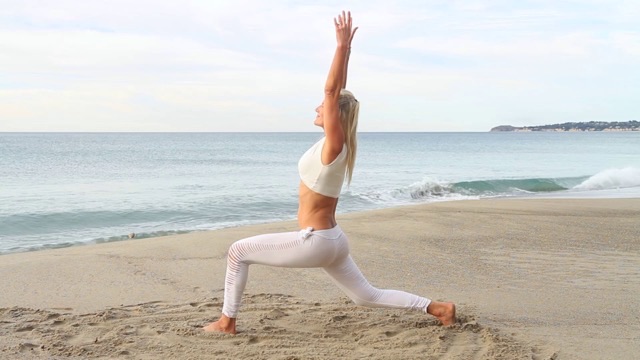
anjaneyasana - pelvic tilt pulsation, plus pulsation thru back leg

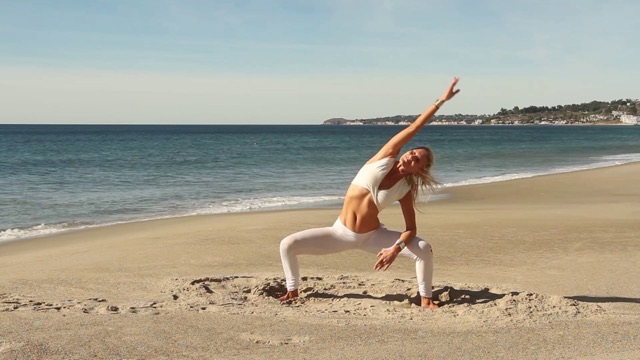
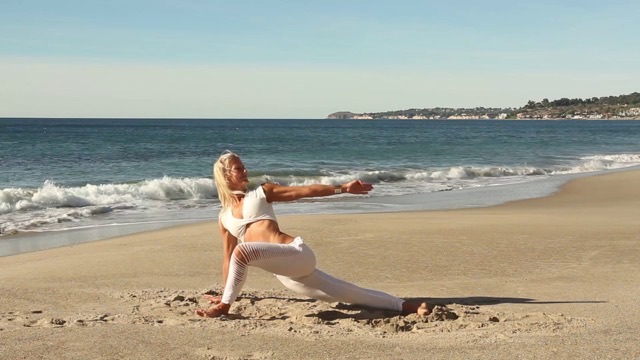
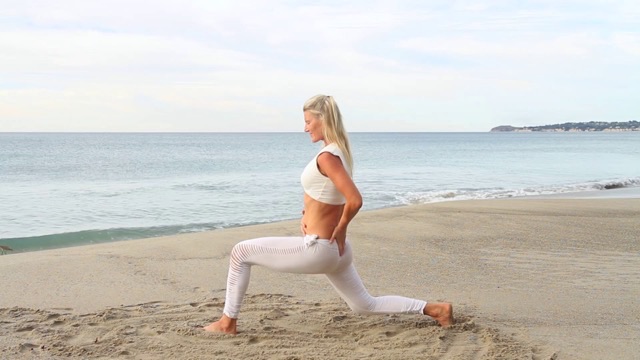
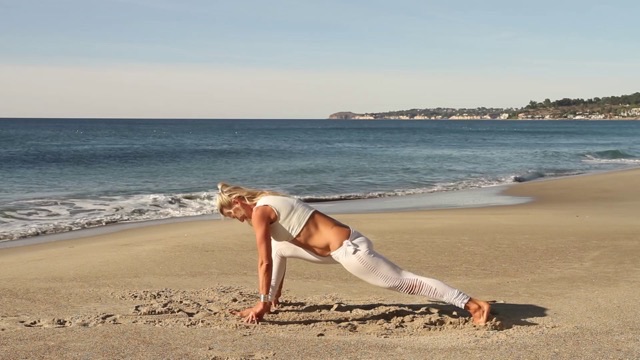
Pronunciation: (EN-JAH-NAY-AH-SUN-AH) Meaning: Anjaneya: the son of Anjana, a name of Hanuman Related Asana: Pose info: KEY ACTIONS AND CUES: foundational asymmetrical square hip asana as a standing asana it offers opening to the psoas and quads while challenging strength "pada 1" and surya pada on back foot: as you ground through the four corners of the front foot, radiate your back heel away four movements of lunge: from the center, draw the front knee over the ankle while resisting the front shin back; press up through center of the back leg and radiate the back heel away; front hip presses down and back as you lift the back hip up low lunge, samana vayu to create a lift in torso: engage and lift from the pubic bone to the heart as your tailbone reaches down lengthen the three rivers of the spine: inhale and stretch evenly through the spine   Five Movements of Prana Apana - Pada I roots down through the front foot from heel to ball and your back heel radiates away, tailbone points to the earth, front hip draws back and down encouraging hips into parallel alignment, scapula slide down the back Prana - cobra action in the chest expands from your pubic bone to your heart center Samana - adductors hug towards center activating Mula Bandha spinning the back leg from the outer to inner thigh, Uddiyana Bandha in the navel coils in and up to balance pelvis between heaven and earth, lift the pelvis off of the femur head, and, support the natural curvature of the spine, triceps revolve into the ears wrapping the upper arms towards the face Vyana - draw the front knee over the ankle while radiating the back heel away, extend the three rivers of the spine from navel to heart (central channel - lengthen from pubic to naval to sternum to crown; second and third rivers - side waist from top of pelvis to armpits), collarbones broaden through the chest, energy circulates through the finger and toes Udana - back quadriceps rise up the femur, press up through center of the back leg, skull floats up and out as a natural extension of the spine, simhasana pranayama as 5th movement of lunge Active - Triceps, Anterior Deltoid, Trapezius (lower fibers), Rhomboids, Spinal Extensors, Adductors; FRONT LEG: Iliopsoas, Quadriceps, Tibialis Anterior; BACK LEG: Glutes, Quadriceps (lower fibers), Hamstrings (upper fibers) Receptive - Biceps, Posterior Deltoid, Trapezius (upper fibers), Pectorals, Core Abdominals (eccentrically contracted), Abductors; FRONT LEG: Glutes, Hamstrings (eccentrically contracted), Gastrocnemius, Soleus; BACK LEG: Iliopsoas, Quadriceps (upper fibers), Hamstrings (lower fibers) hands on blocks under shoulders (mid-Anjaneyasana) asymmetrical / parallel hip / Pada I (front foot), Surya Pada (back foot) grounding, balancing, stabilizing, centering, empowering, expansive, solar or lunar, all elements, shanti, sringara or vira depending on variation Stretches the groins Strengthens the legs and arms Tones Core Misalignments and Assists: Common misalignments: front knee not aligned over ankle at 90 degree angle too much Apana in the back leg anterior tilt of pelvis lordosis or kyphosis of spine shoulders lifted to the ears lack of Vyana through fingers tension in cervical spine Hands on Enhancements: (from front) one hand at hip crease of front leg pressing back and down, other hand at knee crease of front leg guiding knee over ankle (from back) one hand at hip crease of front leg drawing back and down, other hand at quadriceps of back leg lifting up one hand on front shin, one hand on back heel encouraging Vyana through legs one hand to navel one hand to sacrum one hand supports back of heart, other hand to sternum or wrists hands compressing trapezius hands to upper arms wrapping triceps to ears sliding hands up arms to wrists encouraging length through extremities hands at base of skull lengthening cervical spine [sf_gallery gallery_id="148" slider_transition="slide" show_thumbs="yes" autoplay="yes" show_captions="yes" enable_lightbox="yes" width="1/3" el_position="last"] Three Part Vinyasa: Pulsation Vinyasa: Mula Bandha Pulsation Vinyasa [sf_button colour="white" type="sf-icon-stroke" size="standard" link="moa-anjaneyasana/moa-anjaneyasana-mula-bandha-pv.html" target="_self" icon="fa-external-link" dropshadow="no" extraclass=""]Teaching cues[/sf_button] Pelvic Tilt Pulsation Vinyasa [sf_button colour="white" type="sf-icon-stroke" size="standard" link="moa-anjaneyasana/moa-anjaneyasana-pelvic-tilt-pv.html" target="_self" icon="fa-external-link" dropshadow="no" extraclass=""]Teaching cues[/sf_button] Four Movements of Lunge Pulsation Vinyasa [sf_button colour="white" type="sf-icon-stroke" size="standard" link="moa-anjaneyasana/moa-anjaneyasana-four-movements-of-lunge-pv.html" target="_self" icon="fa-external-link" dropshadow="no" extraclass=""]Teaching cues[/sf_button] Body Vinyasa: Prana-Apana Arms Body Vinyasa [sf_button colour="white" type="sf-icon-stroke" size="standard" link="moa-anjaneyasana/moa-anjaneyasana-prana-apana-arms-bv.html" target="_self" icon="fa-external-link" dropshadow="no" extraclass=""]Teaching cues[/sf_button] Root-Rise Arms Body Vinyasa [sf_button colour="white" type="sf-icon-stroke" size="standard" link="moa-anjaneyasana/moa-anjaneyasana-root-rise-arms-bv.html" target="_self" icon="fa-external-link" dropshadow="no" extraclass=""]Teaching cues[/sf_button] Egyptian Arms I Body Vinyasa [sf_button colour="white" type="sf-icon-stroke" size="standard" link="moa-anjaneyasana/moa-anjaneyasana-egyptian-arms-I-bv.html" target="_self" icon="fa-external-link" dropshadow="no" extraclass=""]Teaching cues[/sf_button] Egyptian Arms II Body Vinyasa [sf_button colour="white" type="sf-icon-stroke" size="standard" link="moa-anjaneyasana/moa-anjaneyasana-egyptian-arms-II-bv.html" target="_self" icon="fa-external-link" dropshadow="no" extraclass=""]Teaching cues[/sf_button] Prana Mudra Body Vinyasa [sf_button colour="white" type="sf-icon-stroke" size="standard" link="moa-anjaneyasana/moa-anjaneyasana-prana-mudra-bv.html" target="_self" icon="fa-external-link" dropshadow="no" extraclass=""]Teaching cues[/sf_button] Garuda Arms Body Vinyasa [sf_button colour="white" type="sf-icon-stroke" size="standard" link="moa-anjaneyasana/moa-anjaneyasana-garuda-arms-bv.html" target="_self" icon="fa-external-link" dropshadow="no" extraclass=""]Teaching cues[/sf_button] Anahata Mudra Body Vinyasa [sf_button colour="white" type="sf-icon-stroke" size="standard" link="moa-anjaneyasana/moa-anjaneyasana-anahata-mudra-bv.html" target="_self" icon="fa-external-link" dropshadow="no" extraclass=""]Teaching cues[/sf_button] Arm Mandala Body Vinyasa [sf_button colour="white" type="sf-icon-stroke" size="standard" link="moa-anjaneyasana/moa-anjaneyasana-arm-mandala-bv.html" target="_self" icon="fa-external-link" dropshadow="no" extraclass=""]Teaching cues[/sf_button] Side-Waist Opening Body Vinyasa [sf_button colour="white" type="sf-icon-stroke" size="standard" link="moa-anjaneyasana/moa-anjaneyasana-side-waist-opening-bv.html" target="_self" icon="fa-external-link" dropshadow="no" extraclass=""]Teaching cues[/sf_button] Rhythmic Vinyasa: Anjaneyasana - Ardha Hanuman Rhythmic Vinyasa [sf_button colour="white" type="sf-icon-stroke" size="standard" link="moa-anjaneyasana/moa-anjaneyasana-ardha-hanuman-rv.html" target="_self" icon="fa-external-link" dropshadow="no" extraclass=""]Teaching cues[/sf_button] Variations and Kramas: [blank_spacer height="24px" width="1/1" el_position="first last"]
0:22

anjaneyasana - PV - 4-movements of lunge

A low lunge class featuring four movements of the lunge position.

0:19

anjaneyasana - prana apana arms, plus pulsation thru back leg

A low lunge class featuring prana-apana arms and pulsation through the back leg.

0:10

Anjaneyasana - Mulabandha Pulsation Vinyasa

Teaching cues: Inhale: "lift your shoulders over your hips and radiate arms overhead" Exhale: "Ground into your feet, shifting front knee over ankle, pressing the back heel away" Inhale: "lift through the pelvic floor (mulabandha) to draw the lower belly in and up, activating uddiyana bandha" (samana-prana) Exhale: "send the front shin forward and press the edge of the back foot down as you dial the outer front hip toward the earth and lift your back thigh" (apana-prana) Inhale: "draw up from your roots deeper into your core center" Exhale: "radiate long through your arms and legs as you connect your feet to the earth"  

Docs

Anjaneyasana - Pelvic Tilt Pulsation Vinyasa

Teaching cues: Inhale: with one hand to your navel and one hand to sacrum tip your pelvis forward so that your belly spills into your hand Exhale: reverse that movement and tip your pelvis back so that you feel your tailbone curl under you Inhale: as you tip forward feel the need to cultivate more samana vayu though uddiyana bandha drawing the abdominals in and up the spine Exhale: as you tip backwards feel the need to drop the tailbone straight down with apana vayu towards the earth Inhale: now seek balance between the two extremes finding the place in the middle, elongate the lumbar spine as the belly activates Exhale: deepen into the front hip as the tailbone anchors  

0:22

Anjaneyasana Four Movements of Lunge Pulsation Vinyasa

Teaching cues: Inhale: "step your front foot forward with your knee over your ankle" Exhale: "press up through center of the back leg" Inhale: "samana vayu, gather the energy to the core; lift through the kidneys" Exhale: from that gathering of energy "radiate your front knee forward resisting through the shin as you press through the back heel" (vayana vayu) or "ground the right thigh and lift the center of the back leg up" (apana-prana) Inhale: "feel the energy coiling in your core Exhale: "effortlessly fill you body with prana forward, back, down and up"  

0:19

Anjaneyasana Prana Apana Arms Body Vinyasa

Teaching cues: Inhale: "extend your hands to the sky" Exhale: "with open palms bring your hands back down towards the earth" Inhale: "Feel your sides of your torso and spine lifting" Exhale: "release your hands back to the earth as you feel the extension of your spine" Inhale: "open your being to heaven" Exhale: "draw heaven down to earth"  

Docs

Anjaneyasana Root Rise Arms Body Vinyasa

Teaching cues: Inhale: extend your right arm over head as your left arm reaches down by your hip Exhale: deepen into your hips as you exchange your arms through space Inhale: feel prana rising in your right arm as your left arm roots with apana Exhale: experience both prana and apana vayus simultaneously flowing through your spine as the tailbone anchors and the heart reaches upwards Inhale: feel your body as a conduit between heaven and earth Exhale: embody these two directions from hands to feet and crown to tail experiencing both heaven and earth within you

Docs

Anjaneyasana Egyptian Arms I Body Vinyasa

Teaching cues: Inhale: Lift your arms overhead Exhale: bend your elbows even with shoulders Inhale: Reach from the base of your scapula Exhale: keep the space around your neck free Inhale: Open your arms in joy Exhale: Return back to your center

Docs

Anjaneyasana Egyptian Arms II Body Vinyasa

Teaching cues: Inhale: bend your elbows even with shoulders Exhale: draw your arms together Inhale: Open your arms while keeping your lower ribs relaxed Exhale: Draw your arms together and broaden your back-body Inhale: Feel your wings open Exhale: furl your wings together and go inside  

Docs

Anjaneyasana Prana Mudra Body Vinyasa

Teaching cues: Inhale: "soften the elbows and lift the arms as you draw the palms upward, even height with the ears" Exhale: "extend arms long away from each other" Inhale: "draw shoulder blades toward the spine (samana) as arms open toward the sky and heart lifts (vyana)" Exhale: "reach arms away from each other (vyana) as you reaffirm your roots in utkatasana (apana)" Inhale: "Feel the breath-expansion through the heart space" Exhale: "radiate that inspiration throughout your entire being"  

Docs

Anjaneyasana Garuda Arms Body Vinyasa

Teaching cues: Inhale: "draw right elbow under the left and intertwine the arms" Exhale: "extend the arms out to vira II as shoulders draw back and down" Inhale: "cross the arms as you draw into the core (samana) to lift the elbows (prana) as shoulder blades melt" Exhale: "release the arms back out (vyana) as you sink the hips (apana), and re-establish your vira II foundation (apana-vyana) Inhale: "Liberate the back of the heart as the elbows rise up" Exhale: "Feel freedom in your shoulders"  

Docs

Anjaneyasana Anahata Mudra Body Vinyasa

Teaching cues: Inhale: from your heart extend your hands forward as an offering and trace the horizon with open palms Exhale: reach behind yourself and circulate your hands under your shoulders piercing through the center Inhale: feel prana filling the heart space as vyana radiates through soft receptive fingers Exhale: gather through the center stabilizing samana in the navel grounding the tailbone to the heels with apana Inhale: bless the space around you as you purify the electromagnetic field of your heart Exhale: stand in the center of your heart as a beacon of truth  

Docs

Anjaneyasana Arm Mandala Body Vinyasa

Teaching cues: Inhale: pushing down into pada II hug your inner thighs together rising subtly on the buoyant support beneath you Exhale: maintain this activation through mula bandha and deepen the front knee right over the ankle as you spiral from big toe to pinkie toe side of front foot Inhale: gather udana from the earth up the legs into your root and use this spaciousness in the hip joints to anchor your tailbone straight down with apana Exhale: as you move into the depth of apana in the hips simultaneously lift the back thigh with udana spanning from front knee to back heel and feel vyana vayu extending through the side waists Inhale: float on the buoyancy of the breath within you Exhale: feel the lightness in the heart that emerges from the depth

Docs

Anjaneyasana Arm Mandala Body Vinyasa

Teaching cues: Inhale: lift your hands in front of you Exhale: extend your arms back and down in full circle Inhale: lift your lower belly as your hands pass in front of your pelvis Exhale: open your shoulders as your arms stretch back Inhale: invoke the rising energy Exhale: free your wings  

Docs

Anjaneyasana Side Waist Opening Body Vinyasa

Teaching cues: Inhale: support your lower right ribs with your right hand and reach your left arm across the sky extending through both side waists evenly Exhale: draw that left arm through your center switching sides as you root down through the pillars of your legs Inhale: as your left arm bolsters your left lower ribs feel samana vayu in the obliques lifting you up and over your side waist Exhale: maintain vyana vayu through the three rivers of your spine as you return to center Inhale: imagining your spine as supple bamboo in the wind of your breath reach your left arm over head as a natural extension of your torso Exhale: feel the relationship between the steadiness in your roots and the freedom in your upper body  

Docs

Anjaneyasana - Ardha Hanuman Rhythmic Vinyasa

Teaching cues: Inhale: from the center draw the front knee over the ankle; raise your hands Exhale: drop your left knee down to the floor and extend your right leg Inhale: rise and lengthen from the pubic bone to the heart Exhale: as you keep the hips stable lengthen through the top of your head Inhale: feel the buoyancy in your pelvic floor rising up from your spine, creating lightness in the body Exhale: bow to the earth  

Docs

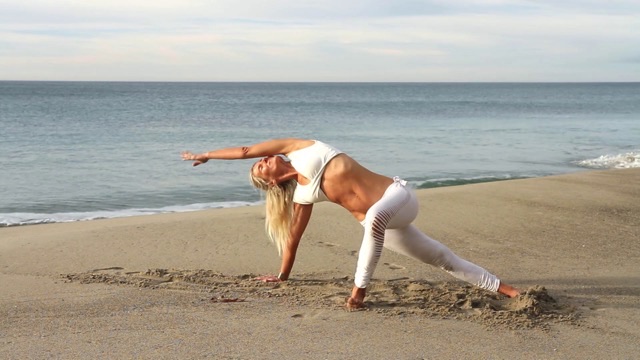
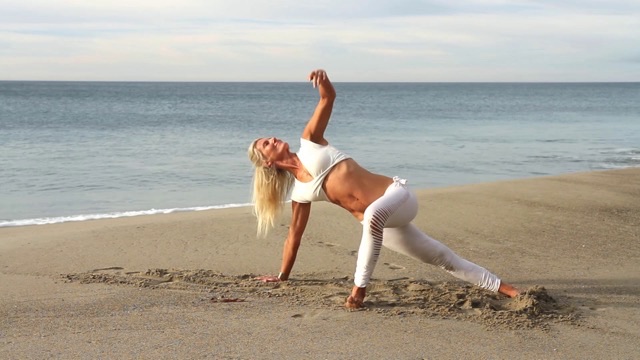
Ardha Chandrasana

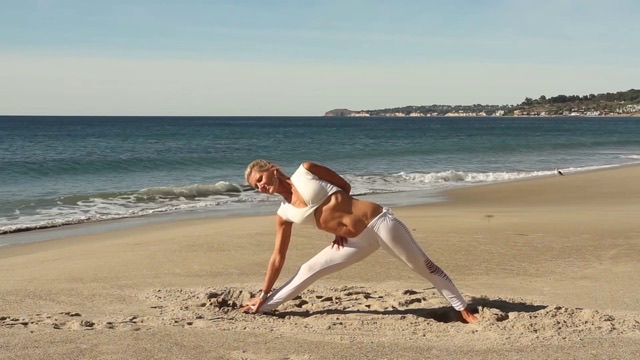
Pronunciation: (AR-DHA CHAHN-DRAH-SUN-AH) Meaning: Ardha: half - Chandra: Moon Related Asana: Pose info: Entering Ardha Chandrasana From Trikonasana, bend your front knee to shift your weight into your front foot and bring your front hand under your shoulder. Float back leg off the earth as you extend top hand to the sky.   KEY ACTIONS AND CUES: asymmetrical straight leg open hip asana activating lateral muscles of the torso to release and awaken the side body challenges the stability of the lower body to support opening of the spine brighten inner legs while drawing muscles to bone marrow activate uddiyana bandha: lengthening tailbone away from the heart in one line of energy extension of three rivers of the spine (central channel- lengthen from pubic to navel to sternum to crown; second and third rivers- side waist from top of pelvis to armpits): stretch evenly through the spine; maintain side-waist extension; draw body into one plane cobra backbend (deeper shoulder loop): relax lower ribs; heart expands crown of head finds base & spine; gaze in direction according to neck strength (up, forward, down); lengthen the tailbone away from the crown of head   Five Movements of Prana Apana - Pada Bandha roots down through the four corners of the supporting foot, lifted toes point straight to side, tailbone anchors towards the back heel drawing front hip under, bottom fingertips offer light support on the earth beneath the shoulder Prana - cobra action in chest, sternum revolves skyward aligning shoulders on top of one another, energy rises from the pubic bone to heart Samana - adductors hug towards center activating Mula Bandha, Uddiyana Bandha in the navel coils in and up balancing a neutral pelvis, lifting pelvis off of femur head and supporting the natural curvature of the spine while spiraling the torso to the side, lower ribs draw together, scapula draw down the back Vyana - radiate through the back leg, extension in three rivers of the spine (central channel - length- en from pubic bone to navel to sternum to crown; second and third rivers - side waist from top of pelvis to armpits), maintain side-waist extension drawing body into one plane, collarbones broaden through the chest, energy circulates through the fingers and toes Udana - quadriceps rise up the femurs, crown floats as natural extension of the spine, gaze in direction according to neck strength and balance (up, forward, down) Active - Triceps, Medial Deltoid, Rhomboids, Spinal Extensors, Piriformis, Core abdominals; STANDING LEG: Iliopsoas, Quadriceps, Tibialis Anterior; BACK LEG: Glutes, Quadriceps (lower fibers), Hamstrings (upper fibers) Receptive - Biceps, Pectorals, Internal Rotators; STANDING LEG: Glutes, Hamstrings (eccentrically contracted), Gastrocnemius, Soleus; BACK LEG: Iliopsoas, Quadriceps (upper fibers), Hamstrings (lower fibers) Ardha Chandrasana at wall with blocks, supporting knee bent, supporting leg straight symmetrical / parallel hip / Pada Bandha empowering, activating, solar, earth, fire, space, shanti or vira depending on variation Asymmetrical straight leg open hip asana activating lateral muscles of the torso to release and awaken the side body challenges the stability of the lower body to support opening of the spine Strengthens the abdomen, ankles, thighs, buttocks, and spine Stretches the groins, hamstrings and calves, shoulders, chest, and spine Improves coordination and sense of balance Improves digestion Misalignments and Assists: Common misalignments: too much Apana in the back leg too much Apana in the shoulders lordosis or kyphosis of spine lack of Vyana through whole asana Hands on Enhancements: one hand to hip one hand to shoulder lengthening side waist sliding hands from shoulder to wrist encouraging Vyana through arms one hand to navel one hand to sacrum one hand to crown one hand to heel encouraging Vyana throughout whole asana Three Part Vinyasa: Pulsation Vinyasa: Ardha Chandrasana Bent-Knee (Apana-Udana) Pulsation Vinyasa [sf_button colour="white" type="sf-icon-stroke" size="standard" link="moa-ardha-chandrasana/moa-ardha-chandrasana-bent-knee-apana-udana-pv.html" target="_self" icon="fa-external-link" dropshadow="no" extraclass=""]Teaching cues[/sf_button] Body Vinyasa: Arm Mandala Body Vinyasa Ardha Chandrasana Ganesh's Trunk Arm Body Vinyasa [sf_button colour="white" type="sf-icon-stroke" size="standard" link="moa-ardha-chandrasana/moa-ardha-chandrasana-ganeshs-trunk-arm-bv.html" target="_self" icon="fa-external-link" dropshadow="no" extraclass=""]Teaching cues[/sf_button] Variations and Kramas: [blank_spacer height="24px" width="1/1" el_position="first last"]

Docs

Ardha Chandrasana Bent-Knee (Apana-Udana) Pulsation Vinyasa

Teaching cues: Exhale: lower your top arm down by your hip feeling the danda of your spine parallel to your arm Inhale: trace the horizon with your top arm and once your arm is overhead spiral your bottom ribs towards the sky looking up under your shoulder Exhale: returning your right arm by your side feel samana drawing your navel in and up along your spine Inhale: radiate vyana through your finger tips as you reach over head revolving your heart open Exhale: as your arm traces down the horizon smooth the fluctuations of your mind Inhale: reaching over head let your whole being embodying the clarity of a still pond    

Docs

Ardha Chandrasana Single Arm Side-Waist Opening Body Vinyasa

Teaching cues: Exhale: lower your top arm down by your hip feeling the danda of your spine parallel to your arm Inhale: trace the horizon with your top arm and once your arm is overhead spiral your bottom ribs towards the sky looking up under your shoulder Exhale: returning your right arm by your side feel samana drawing your navel in and up along your spine Inhale: radiate vyana through your finger tips as you reach over head revolving your heart open Exhale: as your arm traces down the horizon smooth the fluctuations of your mind Inhale: reaching over head let your whole being embodying the clarity of a still pond    

Docs

Ardha Chandrasana Ganesh's Trunk Arm Body Vinyasa

Teaching cues: Exhale - reach your right arm across your torso to your left rib cage Inhale - spiral your left rib cage to the sky as you extend your right arm Exhale: draw into the power of samana vayu activating your legs as you coil into the side waist Inhale: feel vyana vayu extending up and out of the navel through both side bodies evenly opening your heart to the sky Exhale: listen to the pulsation of your heart Inhale: embody the expansion of your heart waves in all directions at once  

0:12

Ardha Malasana (skandasana)

Pronunciation: (AR-DHA MAH-LAH-SUN-AH) Meaning: Ardha: half, Mala: garland Related Asana: Pose info: Entering Ardha Malasana (Skandasana) From lunge or prasarita padottanasana, turn to the side with your heels in and your toes out. Bend one leg as you straighten the other keeping your spine even with your pelvis and your inner thighs pressing open like in malasana. Explore the pulsation, body and rhythmic vinyasas according to the energetic alignment or effect you are emphasizing in rounds of 3-5 cycles of breath or longer according to the sequence. Release out of the asana and continue your vinyasa. KEY ACTIONS AND CUES: "feel pada bandha rise and give energy to your inner legs and coiling action to your pelvis" "Activate mula bandha to keep the buoyancy in your hips" "extend your spine lengthening through your heart like in chaturanga" "feel the energy in your legs press outward, and keeping your bent knee in alignment with your heel" Ischial bandha: "as you root into your hips, press the soles of your feet into the earth, feeling the energy rise up your legs and coalesce at your sit bones"   Five Movements of Prana Apana - Pada Bandha roots down through the four corners of the feet, fingertips offer light support on the earth beneath the shoulders Prana - cobra action in chest, energy rises from the pubic bone to heart Samana - adductors hug towards center acti- vating Mula Bandha, Uddiyana Bandha in the navel coils in and up balancing a neutral pelvis, lifting pelvis off of femur head and supporting the natural curvature of the spine, lower ribs draw together, scapula draw down the back Vyana - radiate from the bent knee aligned 90 degrees over your ankle through the extended opposite leg, extension in three rivers of the spine (central channel - lengthen from pubic bone to navel to sternum to crown; second and third rivers - side waist from top of pelvis to armpits), collarbones broaden through the chest, energy circulates through the fingers and toes Udana - energy from the earth rises up through the legs, hips hover buoyantly parallel to the shoulders, crown floats as natural extension of the spine Active - Medial Deltoid, Rhomboids, Spinal Extensors, Piriformis, Quadriceps Receptive - Pectorals, Core Abdominals (eccentrically contracted), Internal Rotators, Glutes, Hamstrings (eccentrically contracted) hands on blocks under shoulders asymmetrical / open hip / Pada Bandha grounding, stabilizing, opening, empowering, expansive, deepening, solar, earth, water, fire, vira or sringara depending on variation Strengthens the ankles, legs, hips, spine Stretches hips Tones the belly Stabilizes shoulders Misalignments and Assists: Common misalignments: too much Apana in the extended leg too much Apana in the pelvis too much Apana in the shoulders lordosis or kyphosis of spine lack of Vyana through whole asana Hands on Enhancements: hands lift hamstrings encouraging Udana through the legs one hand to sacrum one hand to navel fingertips between shoulder blades encouraging them to roll onto the back body Three Part Vinyasa: Pulsation Vinyasa: Ardha Malasana Mula Bandha Pulsation Vinyasa Body Vinyasa: Ardha Malasana Samana-Vyana Arm Body Vinyasa [sf_button colour="white" type="sf-icon-stroke" size="standard" link="moa-ardha-malasana/moa-ardha-malasana-samana-vyana-arm-bv.html" target="_self" icon="fa-external-link" dropshadow="no" extraclass=""]Teaching cues[/sf_button] Ardha Malasana Sahaja Arm Body Vinyasa Rhythmic Vinyasa: Ardha Malasana - Right-Left Rhythmic Vinyasa [sf_button colour="white" type="sf-icon-stroke" size="standard" link="moa-ardha-malasana/moa-ardha-malasana-right-left-rv.html" target="_self" icon="fa-external-link" dropshadow="no" extraclass=""]Teaching cues[/sf_button] Variations and Kramas: [blank_spacer height="24px" width="1/1" el_position="first last"]

Docs

Ardha Malasana Mula Bandha Pulsation Vinyasa

Teaching cues: Inhale: pushing down into pada bandha hug your inner thighs together rising subtly on the buoyant support beneath you Exhale: maintain this activation through mula bandha and deepen the bent knee over the ankle Inhale: gather udana from the earth up the legs into your root and use this spaciousness in the hip joints to reach with vyana from crown to tail parallel to the earth Exhale: as you move into the depth of apana in the hips simultaneously lift the thigh of the straight leg with udana spanning from bent knee to opposite heel Inhale: float on the buoyancy of the breath within you Exhale: feel the lightness in the heart that emerges from the depth of the hips  

Docs

Ardha Malasana Samana-Vyana Arm Body Vinyasa

Teaching cues: Inhale: gather your hands towards your center feeling the energy between your palms Exhale: extend the arms long from the shoulders radiating through the fingertips continuing to feel the space between Inhale: as the hands draw in feel the inner thighs activate toward one other awakening samana between the thighs and in the belly Exhale: expand the arms from your center and as you radiate the legs from bent knee to opposite heel with vyana vayu Inhale - tap into the reservoir of your sustainable strength Exhale - circulate that power throughout your whole being  

Docs

Ardha Malasana Sahaja Arm Body Vinyasa

Teaching cues: Inhale: as you shift to high ardha malasana to the right free your arms reaching your left arm across your body to the right Exhale: feel the power in your belly pull you to the other side reaching your right arm across you to the left Inhale: as you allow the breath and movement to flow freely liberate the pathway of your arms Exhale: feel the anchor of your feet on the earth grounding your exploration as you dive over and under the surface of movement Inhale: allow the breath to wash through you revealing the spontaneous flow of movement like sea anemones in the ocean Exhale: release yourself to the purifying currents of breath inspired movement  

0:12

Ardha Malasana - Right-Left Rhythmic Vinyasa

Teaching cues: Inhale: in high ardha malasana keep your hips and shoulders in one plane and shift to the other side as one hand crosses over the other Exhale: crawl to the other side turning your head in the direction you are moving as if you are listening to the earth while deepening into the hips and shoulders as one with elbows bending closely to the ribs like in chatturanga Inhale: push down into the earth cultivating apana in the feet as you shift sides Exhale: feel udana rebound up the legs into the pelvis activating mula bandha as the hips float aligned with the shoulders Inhale: inhabit your inner prowess and devour the space around you Exhale: feel the intentionality of your actions awakening the animal of your body  

0:13

vrksasana - PV - pada pulsation

Pronunciation: (EK-AH PAHD-AH TAH-DAH-SUN-AH) Meaning: Eka: one, Pada: foot, Tada: mountain Related Asana: Pose info: Entering Eka Pada Tadasana From Tadasana, shift your weight into your left foot. Draw you right knee towards your core. KEY ACTIONS AND CUES: pada bandha to engage muscular actions in legs (prana- apana): press down through the four corners of the feet as you feel energy rise up the legs into the lower belly; feel energy rise through in the inner legs balancing on one leg, feel the coiling and stabilization through the core as the knee comes into the chest activate uddiyana bandha aligning pelvis with the lower and upper body as in tadasana extend three rivers of the spine: as you exhale extend evenly through the spine - navel to heart all the way through the crown of the head   Five Movements of Prana Apana - Pada Bandha to Uddiyana Bandha in standing leg grounds down through the four corners of the feet, tailbone points to the heels, hip of lift leg drops down in alignment with hip of standing leg, scapula slide down the back Prana - sternum lifts skyward, cobra action in the chest expands your heart center from the inside Samana - lifted foot actively presses into supporting leg activating Mula Bandha, Uddiyana Bandha in the navel coils in and up to balance pelvis between heaven and earth, lower belly lifts to extend and lengthen the natural curvature of the spine, lower ribs draw together Vyana - knee of lifted leg radiates to the side revolving the hip open, spine extends from crown to tail, collarbones broaden through the chest, energy circulates through the finger and toes Udana - feel earth energy rise up the inner standing leg into the pelvis, quadriceps rise up the femur, skull floats up and out as an extension of the spine, crown reaches away from the sacrum Active - Trapezius (lower fibers), Rhomboids, Spinal Extensors, STANDING LEG: Glutes, Quadriceps, Tibialis Anterior; LIFTED LEG: Iliopsoas, Glutes Receptive - Trapezius (upper fibers), Pectorals, Core Abdominals (eccentrically contracted), STANDING LEG: Hamstrings, Gastrocnemius, Soleus; LIFTED LEG: Adductors foot to ankle, foot to calf, foot to thigh (avoid knee) asymmetrical / open hip / Pada Bandha (standing leg), Surya Pada (lifted leg) grounding, balancing, stabilizing, centering, empowering, activating, solar, earth, fire, space, shanti or vira depending on variation Strengthens thighs, calves, ankles, and spine Stretches the groins and inner thighs, chest and shoulders Improves sense of balance Relieves sciatica and reduces flat feet Misalignments and Assists: Common misalignments: standing foot turned out or in hyperextension in knee of standing leg lifted leg placed on knee joint anterior or posterior tilt of pelvis lordosis or kyphosis of spine shoulders lifted to the ears head falling off of the spine Hands on Enhancements: one hand to navel one hand to sacrum finger tips to sternum and back of heart hands compressing trapezius finger tips to crown [sf_gallery gallery_id="203" slider_transition="slide" show_thumbs="yes" autoplay="yes" show_captions="yes" enable_lightbox="yes" width="1/3" el_position="last"] Three Part Vinyasa: Pulsation Vinyasa: Eka Padasana Tadasana Bent-Knee (Apana-Udana) Pulsation Vinyasa [sf_button colour="white" type="sf-icon-stroke" size="standard" link="moa-eka-pada-tadasana/moa-eka-padasana-tadasana-bent-knee-apana-udana-pv.html" target="_self" icon="fa-external-link" dropshadow="no" extraclass=""]Teaching cues[/sf_button] Body Vinyasa: Eka Padasana Tadasana Samana - Vyana Leg Body Vinyasa [sf_button colour="white" type="sf-icon-stroke" size="standard" link="moa-eka-pada-tadasana/moa-eka-padasana-tadasana-samana-vyana-leg-bv.html" target="_self" icon="fa-external-link" dropshadow="no" extraclass=""]Teaching cues[/sf_button] Eka Padasana Tadasana Hip Joint Mandala Body Vinyasa [sf_button colour="white" type="sf-icon-stroke" size="standard" link="moa-eka-pada-tadasana/moa-eka-padasana-tadasana-samana-vyana-leg-bv.html" target="_self" icon="fa-external-link" dropshadow="no" extraclass=""]Teaching cues[/sf_button] Eka Padasana Tadasana Prana - Apana Arm Body Vinyasa [sf_button colour="white" type="sf-icon-stroke" size="standard" link="moa-eka-pada-tadasana/moa-eka-padasana-tadasana-prana-apana-arm-bv.html" target="_self" icon="fa-external-link" dropshadow="no" extraclass=""]Teaching cues[/sf_button] Eka Padasana Tadasana Samana - Vyana Arm Body Vinyasa [sf_button colour="white" type="sf-icon-stroke" size="standard" link="moa-eka-pada-tadasana/moa-eka-padasana-tadasana-samana-vyana-arm-bv.html" target="_self" icon="fa-external-link" dropshadow="no" extraclass=""]Teaching cues[/sf_button] Eka Padasana Tadasana Egyptian Arms I Body Vinyasa [sf_button colour="white" type="sf-icon-stroke" size="standard" link="moa-eka-pada-tadasana/moa-eka-padasana-tadasana-egyptian-arms-I-bv.html" target="_self" icon="fa-external-link" dropshadow="no" extraclass=""]Teaching cues[/sf_button] Eka Padasana Tadasana Egyptian Arms II Body Vinyasa [sf_button colour="white" type="sf-icon-stroke" size="standard" link="moa-eka-pada-tadasana/moa-eka-padasana-tadasana-egyptian-arms-II-bv.html" target="_self" icon="fa-external-link" dropshadow="no" extraclass=""]Teaching cues[/sf_button] Eka Padasana Tadasana Prana Mudra Body Vinyasa [sf_button colour="white" type="sf-icon-stroke" size="standard" link="moa-eka-pada-tadasana/moa-eka-padasana-tadasana-prana-mudra-bv.html" target="_self" icon="fa-external-link" dropshadow="no" extraclass=""]Teaching cues[/sf_button] Variations and Kramas: [blank_spacer height="24px" width="1/1" el_position="first last"]

0:28

tadasana - BV - samana-vyana legs

Class practicing Mountain Pose with a Samana-Vyana movement through the legs.

0:28

tadasana - BV - hip circle (mandala)

Class practicing Mountain Pose with a hip-circle movement in a mandala pattern.

0:13

Eka Padasana Tadasana Bent-Knee (Apana-Udana) Pulsation Vinyasa

Teaching cues: Exhale: soften the knee of your standing leg and push down into pada bandha of the standing foot Inhale: feel mula bandha in the pelvic floor engage as you straighten the standing leg Exhale: open the four corners of your foot to apana vayu in the earth as you bend the knee Inhale: feel udana vayu rebound from the earth, up the leg and into the root of your being Exhale: experience the power of softening into the support of the earth Inhale: root down to rise up into the the strength of your standing leg  

0:28

Eka Padasana Tadasana Samana - Vyana Leg Body Vinyasa

Teaching cues: Exhale: bend both knees in towards center as you coil into your navel Inhale: push down into your standing foot and radiate along your spine Exhale: draw into the power of samana vayu supporting the sthanding Inhale: from this place of sustainable strength reach from earth to sky with vyana vayu Exhale: feel the potency of this seed like shape Inhale: sprout to the surface reaching for the light with your toes  

0:28

Eka Padasana Tadasana Hip Joint Mandala Body Vinyasa

Teaching cues: Inhale: shifting your weight onto your left foot, draw your right knee into your navel Exhale: circulate your right knee to the right tracing the mandala of your hip joint Inhale: as your right knee returns center feel samana vayu as the source of this coiling action Exhale: maintain this stability as you explore the full range of motion in your hips Inhale: draw the support of the earth into your center Exhale: feel fluidity emerging in your hips

Docs

Eka Padasana Tadasana Prana - Apana Arm Body Vinyasa

Teaching cues: Inhale: "extend your arms to the sky" Exhale: "with open palms bring your hands back down towards the earth" Inhale: "Feel your sides of your torso and spine lifting" Exhale: "release your hand back to the earth as you feel the extension of your spine" Inhale: "open your being to heaven Exhale: "draw heaven down to earth"  

Docs

Eka Padasana Tadasana Samana - Vyana Arm Body Vinyasa

Teaching cues: Inhale: gather your hands towards your center feeling the energy between your palms Exhale: extend the arms long from the shoulders radiating through the fingertips continuing to feel the space between Inhale: as the hands draw in feel the inner thighs activate toward one other awakening samana between the thighs and in the belly Exhale: expand the arms from your center and as you radiate the legs from bent knee to opposite heel with vyana vayu Inhale - tap into the reservoir of your sustainable strength Exhale - circulate that power throughout your whole being  

Docs

Eka Padasana Tadasana Egyptian Arms I Body Vinyasa

Teaching cues: Inhale: Lift your arms overhead Exhale: bend your elbows even with shoulders Inhale: Reach from the base of your scapula Exhale: keep the space around your neck free Inhale: Open your arms connected to your heart Exhale: Return back with spaciousness and freedom  

Docs

Eka Padasana Tadasana Egyptian Arms II Body Vinyasa

Teaching cues: Inhale: bend your elbows even with shoulders Exhale: draw your arms together Inhale: Open your arms while keeping your lower ribs relaxed Exhale: Draw your arms together and broaden your back-body Inhale: Feel your wings open Exhale: furl your wings together and go inside  

Docs

Eka Padasana Tadasana Prana Mudra Body Vinyasa

Teaching cues: Inhale: "soften the elbows and lift the arms as you draw the palms upward, even height with the ears" Exhale: "extend arms long away from each other" Inhale: "draw shoulder blades toward the spine (samana) as arms open toward the sky and heart lifts (vyana)" Exhale: "reach arms away from each other (vyana) as you reaffirm your roots in utkatasana (apana)" Inhale: "Feel the breath-expansion through the heart space" Exhale: "radiate that inspiration throughout your entire being"  

0:06

high malasana - PV - pada bandha pulsation

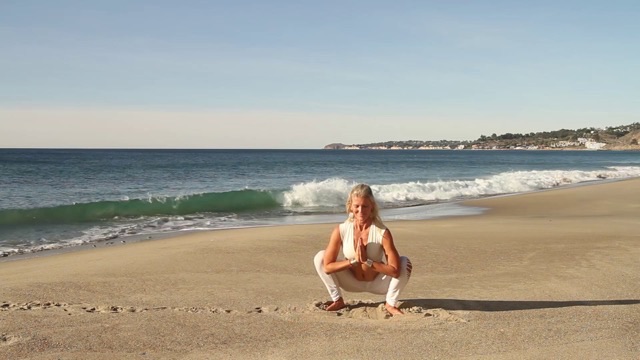
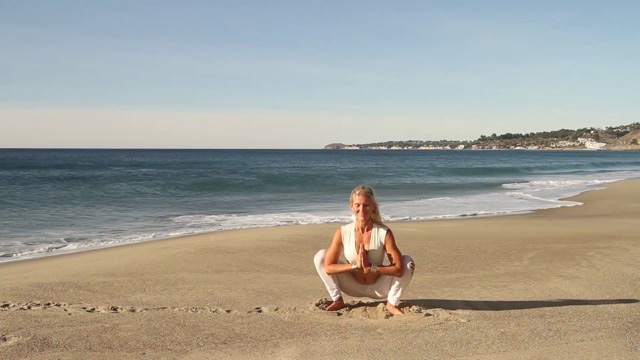
Pronunciation: (MAH-LAH-SUN-AH) Meaning: Mala: garland Related Asana: Pose info: Entering High Malasana From tadasana, step your feet three feet apart, turning your heels in and toes out. Maintaining a slight arch in your low back, bring your knees towards a 90-degree angle. Explore the pulsation, body and rhythmic vinyasas according to the energetic alignment or effect you are emphasizing in rounds of 3-5 cycles of breath or longer according to the sequence. Release out of the asana and continue your vinyasa.   KEY ACTIONS AND CUES: "press into your feet to activate inner legs" Ischial bandha: "as you root into your hips, press the soles of your feet into the earth, feeling the energy rise up your legs and coalesce at your sit bones" "feel the energy in your legs rotate outward, and notice the knees moving from big toe to little toe"   Five Movements of Prana Apana - Pada Bandha roots down through the four corners of the feet, tailbone points down towards the earth, ischial tuberosities deepen into gravity, scapula relax down the back away from the ears Prana - sternum lifts skyward balancing shoulders over hips, heart expands Samana - adductors hug towards center activating Mula Bandha, Uddiyana Bandha in the navel subtly coils in and up balancing a neutral pelvis between heaven and earth, lifting pelvis off of femur heads and supporting the natural curvature of the spine, lower ribs draw together Vyana - knees stretch in opposite directions over the ankles externally rotating the hips, extend the three rivers of the spine from navel to heart (central channel - lengthen from pubic bone to naval to sternum to crown; second and third rivers - side waist from top of pelvis to armpits), collarbones broaden through the chest, energy circulates evenly through the fingers and toes Udana - energy rises up the legs into the lower belly, skull floats up and out as a natural extension of the spine Active - Medial Deltoid, Rhomboids, Spinal Extensors, Piriformis, Quadriceps Receptive - Pectorals, Core Abdominals (eccentrically contracted), Internal Rotators, Glutes, Hamstrings (eccentrically contracted) knees bent 45 degrees, knees bent 90 degrees symmetrical / open hip / Pada Bandha grounding, stabilizing, opening, empowering, expansive, deepening, solar, earth, water, fire, vira or sringara depending on variation balancing and harmonizing this symmetrical open hip asana cultivates both strength to the legs and flexibility to the hips. provides a strong connection to apana vayu to acti- vate pada bandha and mulabandha activating and solar in nature can be combined with various arm body vinyasas to bring fluidity within strength Strengthens the ankles, legs, hips, spine Stretches hips Tones the belly Misalignments and Assists: Common misalignments: knees not aligned 90 degrees over ankles anterior or posterior tilt of pelvis lordosis or kyphosis of spine shoulders rising to the ears Hands on Enhancements: one hand to navel one hand to sacrum hands compressing trapezius [sf_gallery gallery_id="221" slider_transition="slide" show_thumbs="yes" autoplay="yes" show_captions="yes" enable_lightbox="yes" width="1/3" el_position="last"] Three Part Vinyasa: Pulsation Vinyasa: Malasana Mula Bandha Pulsation Vinyasa [sf_button colour="white" type="sf-icon-stroke" size="standard" link="moa-high-malasana/moa-malasana-mula-bandha-pv.html" target="_self" icon="fa-external-link" dropshadow="no" extraclass=""]Teaching cues[/sf_button] Malasana Pelvic Tilt Pulsation Vinyasa [sf_button colour="white" type="sf-icon-stroke" size="standard" link="moa-high-malasana/moa-malasana-pelvic-tilt-pv.html" target="_self" icon="fa-external-link" dropshadow="no" extraclass=""]Teaching cues[/sf_button] Body Vinyasa: Malasana Prana Mudra Body Vinyasa Malasana Garuda Arms Body Vinyasa [sf_button colour="white" type="sf-icon-stroke" size="standard" link="moa-high-malasana/moa-malasana-garuda-arms-bv.html" target="_self" icon="fa-external-link" dropshadow="no" extraclass=""]Teaching cues[/sf_button] Malasana Arm Mandala Body Vinyasa [sf_button colour="white" type="sf-icon-stroke" size="standard" link="moa-high-malasana/moa-malasana-arm-mandala-bv.html" target="_self" icon="fa-external-link" dropshadow="no" extraclass=""]Teaching cues[/sf_button] Malasana Single Arm Side-Waist Opening Body Vinyasa [sf_button colour="white" type="sf-icon-stroke" size="standard" link="moa-high-malasana/moa-malasana-single-arm-side-waist-opening-bv.html" target="_self" icon="fa-external-link" dropshadow="no" extraclass=""]Teaching cues[/sf_button] Malasana Samudra Mudra Body Vinyasa Malasana Anahata Mudra Body Vinyasa Malasana Prana-Apana Arm Body Vinyasa Malasana Samana-Vyana Arm Body Vinyasa Malasana Egyptian Arms I Body Vinyasa Malasana Egyptian Arms II Body Vinyasa Malasana Spiral Arms Body Vinyasa Rhythmic Vinyasa: High Malasana - Mid Malasana Rhythmic Vinyasa [sf_button colour="white" type="sf-icon-stroke" size="standard" link="moa-high-malasana/moa-high-malasana-mid-malasana-rv.html" target="_self" icon="fa-external-link" dropshadow="no" extraclass=""]Teaching cues[/sf_button] High Malasana - Garudasana Rhythmic Vinyasa [sf_button colour="white" type="sf-icon-stroke" size="standard" link="moa-high-malasana/moa-high-malasana-garudasana-rv.html" target="_self" icon="fa-external-link" dropshadow="no" extraclass=""]Teaching cues[/sf_button] Variations and Kramas: [blank_spacer height="24px" width="1/1" el_position="first last"]

0:10

high malasana - PV - mulabandha pulsation

A high malasana class featuring mulabandha pulsation throughout the pose.

0:06

high malasana - BV prana mudra vinyasa

A high malasana class featuring a prana mudra vinyasa sequence.

0:15

high malasana - BV - prana mudra - garuda arms

A high malasana class featuring prana mudra and garuda arms.

0:22

high malasana - BV - single-arm side vinyasa

A high malasana class featuring a single-arm side vinyasa sequence.

0:06

Malasana Mula Bandha Pulsation Vinyasa

Teaching cues: Inhale: "step your feet three feet apart" Exhale: "turn your feet out in a diagonal and bend your knees over your ankles Inhale: "press into your feet to draw the energy up your inner legs to your pelvic floor lifting your lower belly in and up, activating uddiyana bandha" (samana-prana) Exhale: "keep your spine extending as you ground the hips toward the earth" (apana) Inhale: "feel the stronger fire growing in your center" Exhale: "feel the steadiness and groundedness from your feet to your core"  

0:10

Malasana Pelvic Tilt Pulsation Vinyasa

Teaching cues: Inhale: with one hand to your navel and one hand to sacrum tip your pelvis forward so that your belly spills into your hand Exhale: reverse that movement and tip your pelvis back so that you feel your tailbone curl under you Inhale: as you tip forward feel the need to cultivate more samana vayu though uddiyana bandha drawing the abdominals in and up the spine Exhale: as you tip backwards feel the need to drop the tailbone straight down with apana vayu towards the earth Inhale: now seek balance between the two extremes finding the place in the middle, elongate the lumbar spine as the belly activates Exhale: deepen into the hips as the tailbone anchors  

0:15

Malasana Garuda Arms Body Vinyasa

Teaching cues: Inhale: "draw right elbow under the left and intertwine the arms" Exhale: "extend the arms out to to your sides as shoulders draw back and down" Inhale: "cross the arms as you draw into the core (samana) to lift the elbows (prana) as shoulder blades melt" Exhale: "release the arms back out (vyana) as you sink the hips (apana), and re-establish your foundation (apana-vyana) Inhale: "liberate the back of the heart as the elbows rise up" Exhale: "feel freedom in your shoulders"  

Docs

Malasana Arm Mandala Body Vinyasa

Teaching cues: Inhale: "lower one elbow to thigh and extend the opposite arm overhead" Exhale: "sweep the top arm back by the other hip" Inhale: "sweep the top arm to reach long over head again (vyana) as you draw into the core (samana) to encourage the bottom side waist underneath" Exhale: "reach the top arms alongside the body again and reach the fingers long away from the ear to free the neck and shoulders" (vyana) Inhale: "expand heart toward the sky" Exhale: "find freedom in the upper body"  

0:22

Malasana Single Arm Side-Waist Opening Body Vinyasa

Teaching cues: Exhale: "lower one elbow to thigh and extend the opposite arm overhead" Inhale: "sweep the top arm along the horizon to rise up, bringing shoulders over hips and arms out to the sides" Exhale: "lower to the opposite side, grounding through your feet (apana) and spinning the heart toward the sky" (vyana) Inhale: "draw the top arm in front of you to rise up (prana) and lift the core (samana) to lengthen the spine from the roots" Exhale: "liberate your heart toward the sun" Inhale: "feel the fullness of breath through your entire being"  

Docs

High Malasana - Mid Malasana Rhythmic Vinyasa

Teaching cues: Inhale: "come into malasana with your arms in prana mudra" Exhale: "cross the arms in front of your body as you bow towards the earth, and uncross the arms to catch your ankles" Inhale: "ground through pada bandha (apana) to draw through mulabandha into the core (samana) and release arms wide (vyana)" Exhale: "with steadiness in your base, release the spine forward toward the earth (apana) as you come to hold the ankles" Inhale: "rise up and heart toward the sky from the steadiness in your feet" Exhale: "bow forward and honor the foundation support of the earth below you"  

Docs

High Malasana - Garudasana Rhythmic Vinyasa

Teaching cues: Inhale: "shift your weight into one foot as you cross the other leg over and intertwine the arms in garudasana" Exhale: "release the arms back out to your sides as you step wide to malasana" Inhale: "press down into the standing foot (apana) as you draw deeper into your core (samana) and lift the shape in the arms (prana)" Exhale: "place the foot wide in malasana (apana) and you release the arms (vyana)" Inhale: "steadiness in your core center" Exhale: "radiate that core connection through the whole mudra of your body"  

0:13

low malasana - PV - mula bandha pulsation

Pronunciation: (MAH-LAH-SUN-AH) Meaning: Mala:garland Related Asana: Pose info: Entering Low Malasana From tadasana, step your feet outer hip-width apart, turning your heels in and toes out. Maintaining a lift through your core, bend your knees to lower towards the earth, bringing your hips to your heels, and hands to your heart. Explore the pulsation, body and rhythmic vinyasas according to the energetic alignment or effect you are emphasizing in rounds of 3-5 cycles of breath or longer according to the sequence. Release out of the asana and continue your vinyasa. KEY ACTIONS AND CUES: "press into your feet to activate inner legs" "as you root into your hips, feel the center of your breast bone rise skyward lengthening your spine" "press your hands into each other, spreading your knees apart, rolling the hips open"   Five Movements of Prana Apana - Pada Bandha roots down through the four corners of the feet, tailbone points down towards the earth, ischial tuberosities deepen into gravity, scapula relax down the back away from the ears Prana - sternum lifts skyward, heart expands Samana - adductors hug towards center activat- ing Mula Bandha, Uddiyana Bandha in the navel subtly coils in and up lifting pelvis off of femur heads and supporting the natural curvature of the spine Vyana - knees stretch in opposite directions over the ankles externally rotating the hips, extend the three rivers of the spine from navel to heart (central channel - lengthen from pubic bone to naval to sternum to crown; second and third rivers - side waist from top of pelvis to armpits), collarbones broaden through the chest, energy circulates evenly through the fingers and toes Udana - energy rises up the legs into the lower belly, skull floats up and out as a natural exten- sion of the spine Active - Biceps, Posterior Deltoids, Rhomboids, Spinal Extensors, Hamstrings, Tibialis Anterior Receptive - Triceps, Anterior Deltoids, Pectorals, Core Abdominal (eccentrically contracted), Glutes, Quadriceps, Gastrocnemius, Soleus blanket under heels if not touching the earth symmetrical / open hip / Pada Bandha grounding, nourishing, opening, introspective, deepening, lunar, earth, water, shanti or sringara depending on variation the lower variation of malasana is more receptive and lunar in nature, deepening the opening of the hips strong relationship to mulabandha that can serve the Vinyasa Krama of Arm Balances or deeper hip openers. connects to ancestral and tribal earth energy, bowing to the earth as this is a shape most that most of the world's population explores daily. Stretches the ankles, hip, spine Tones the belly Misalignments and Assists: Common misalignments: sinking into hip joints collapsed chest shoulders rising up to ears Hands on Enhancements: knee to back of heart, hands elongating collarbones hands compressing trapezius hand to crown encouraging Udana rising from earth Three Part Vinyasa: Pulsation Vinyasa: Low Malasana Mula Bandha Pulsation Vinyasa [sf_button colour="white" type="sf-icon-stroke" size="standard" link="moa-low-malasana/moa-low-malasana-mula-bandha-pv.html" target="_self" icon="fa-external-link" dropshadow="no" extraclass=""]Teaching cues[/sf_button] Low Malasana Neck Release Pulsation Vinyasa Body Vinyasa: Low Malasana Single Arm Body Vinyasa [sf_button colour="white" type="sf-icon-stroke" size="standard" link="moa-low-malasana/moa-low-malasana-single-arm-bv.html" target="_self" icon="fa-external-link" dropshadow="no" extraclass=""]Teaching cues[/sf_button] Rhythmic Vinyasa: Low Malasana - Tadasana Rhythmic Vinyasa [sf_button colour="white" type="sf-icon-stroke" size="standard" link="moa-low-malasana/moa-low-malasana-tadasana-rv.html" target="_self" icon="fa-external-link" dropshadow="no" extraclass=""]Teaching cues[/sf_button] Low Malasana - Urdhva Hastasana Rhythmic Vinyasa [sf_button colour="white" type="sf-icon-stroke" size="standard" link="moa-low-malasana/low-malasana-urdhva-hastasana-rhythmic-vinyasa.html" target="_self" icon="fa-external-link" dropshadow="no" extraclass=""]Teaching cues[/sf_button] Variations and Kramas: [blank_spacer height="24px" width="1/1" el_position="first last"]

0:24

low malasana - PV - heart pulsation

A low malasana class featuring heart pulsation throughout the pose.

0:13

Low Malasana Mula Bandha Pulsation Vinyasa

Teaching cues: Inhale: "step your feet apart" Exhale: "turn your feet out in a diagonal and bend your knees to sit close to your ankles Inhale: "press into your feet to draw the energy up your inner legs to your pelvic floor lifting your lower belly in and up, activating uddiyana bandha" (samana-prana) Exhale: "keep your spine extending as you ground the hips toward the earth" (apana) Inhale: "feel the stronger fire growing in your center" Exhale: "feel the steadiness and groundedness from your feet to your core"  

0:24

Low Malasana Neck Release Pulsation Vinyasa

Teaching cues: Inhale: activating your hands in anjali mudra press your elbows into your thighs and lift your heart into your palms Exhale: bow your brain to your heart rounding your spine Inhale: as you swell your chest with prana ground down into the feet with apana so that your heart can rise as your spine lengthens Exhale: allow your tailbone to deepen into gravity as you release your head forward with apana to open the back door of the heart Inhale: draw the sweetness of your heart upwards into your mind Exhale: surrender the brain to the heart  

Docs

Low Malasana Single Arm Body Vinyasa

Teaching cues: Inhale: "lower one arm to inner thigh and extend the opposite arm toward the sky as you spin the bottom side-waist underneath" Exhale: "lower the arm to bring hands together at heart center" Inhale: "sweep the top arm to reach long toward the sky again (vyana) as you draw into the core (samana) to encourage the bottom side waist underneath" Exhale: "lower the arm to come back to center" (samana-apana) Inhale: "expand heart toward the sky" Exhale: "softening the hips feel your connection to the earth below you"  

Docs

Low Malasana - Tadasana Rhythmic Vinyasa

Teaching cues: Inhale: standing with feet wide, reach your arms over head in urdhva hastasana Exhale: draw your hands in anjali mudra down the central channel as you bend the knees deepening into low malasana Inhale: press down into your feet with apana vayu as you rise with udana drawing up the legs into the pelvic floor Exhale: maintain the bouancy of mula bandha as you descend with apana towards the earth with prana filling the heart Inhale: rise from earth to sky with victory Exhale: humbly return to your roots  

Docs

Low Malasana - Urdhva Hastasana Rhythmic Vinyasa

Teaching cues: Inhale: "standing with feet wide, reach arms overhead in urdhva hastasana" Exhale: "draw hands to heart center as you bend the knees and lower to malasana" Inhale: "press into your feet (apana) to draw up through the legs to the core (samana) and reach the arms toward the sky (prana) Exhale: "melt the arms along the central channel toward the heart as you lower toward the earth (apana), keeping the buoyancy through your core (samana) and length through the spine (prana) Inhale: "reach to the sky in freedom and radiance" Exhale: "humbly lower back to your roots"  

0:12

Parsva Anjaneyasana

Pronunciation: (PARS-VAH EN-JAH-NAY-AH-SUN-AH) Meaning: Parsva:side, Anjaneya:the son of Anjana, a name of Hanuman Related Asana: Pose info: Entering Parsva Anjenayasana Step your foot forward into lunge. Turn both feet to the right as your draw your torso in alignment with the back foot (vasistha pada). Explore the pulsation, body and rhythmic vinyasas according to the energetic alignment or effect you are emphasizing in rounds of 3-5 cycles of breath or longer according to the sequence. Release out of the asana and continue your vinyasa. KEY ACTIONS AND CUES: vasisthasana foot pattern for back foot , front foot in diagonal or right. Angle (parsva pada) "turn your right foot in a diagonal or right angle (parsva pada) so that you can feel your outer hip open like in pigeon asana" "press through the outer edge of the back foot (vasistha pada) and lengthen through the crown of your head" (activating the inner danda); "stand on your left hand lift the weight off your wrist as your touch your heart and open your arm to the right so your crown of your head and back foot are in alignment. "engage and lift from the pubic bone to the heart as your tailbone reaches away" lengthen the three rivers of the spine: "inhale and stretch evenly through the spine" vyana vayu action as the top of the side body radiates out of the bottom side waist to support the lift keeping your shoulder even, move your shoulder blades down and in (samana - vyana)   Five Movements of Prana Apana - Parsva Pada roots down through the front foot angled to the side, big toe is grounding down, Vasistha Pada on the pinkie toe side of the back foot is active and also angled to the same side, supporting hand in Hasta Bandha anchors directly beneath elbow, tailbone points to the back heel, scapula slide down the back Prana - cobra action in the chest expands from your pubic bone to your heart center Samana - adductors hug towards center activating Mula Bandha, Uddiyana Bandha in the navel coils in and up balancing a neutral pelvis while supporting the natural curvature of the spine and spiraling the torso to the side Vyana - activation through the back leg, extend the three rivers of the spine from navel to heart (central channel - lengthen from pubic to naval to sternum to crown; second and third rivers - side waist from top of pelvis to armpits), bottom ribs spiral to the sky, collarbones broaden through the chest, energy circulates through the finger and toes Udana - back quadriceps rise up the femur, buoyancy draws up the supporting arm into the shoulder joint, skull floats up and out as a natural extension of the spine Active - Trapezius (lower fibers), Rhomboids, Spinal Extensors, Quadriceps, Tibialis Anterior   Receptive - Trapezius (upper fibers), Pectorals, Core Abdominals (eccentrically contracted), Hamstrings, Gastrocnemius, Soleus Krama One: turn front foot slightly as you open your arm to the side Krama Two: for wrist issues supporting arm comes to the earth in a right angle to balance on your forearm and lift your chest Krama Three: supporting arm bends in a right angle in Viagriasana as the extending arm wraps around asymmetrical / open hip / Parsva Pada (front foot), Vasistha Pada (back foot) grounding, empowering, activating Opens neural pathways through variation Stretches the hips and side waist Strengthens the legs and arms Tones Core Strengthen and stretches the spine Misalignments and Assists: Common misalignments: front foot not turned out or anchored through big toe front knee not aligned over ankle at 90 degree angle too much Apana in the back leg too much Apana in supporting shoulder joint anterior tilt of pelvis lordosis of spine shoulders lifted to the ears lack of Vyana through fingers Hands on Enhancements: facing the head of your student, align your thigh to their shoulder blades and guide their shoulders to find the danda (or staff) from crown to heel hand under thigh of bottom leg encouraging Prana to rise one hand to sacrum one hand to navel one hand compressing trapezius other hand holds the top wrist lengthening the free arm towards the sky Three Part Vinyasa: Pulsation Vinyasa: Parsva Anjaneyasana Apana-Udana Pulsation Vinyasa [sf_button colour="white" type="sf-icon-stroke" size="standard" link="moa-parsva-anjaneyasana/moa-parsva-anjaneyasana-apana-udana-pv.html" target="_self" icon="fa-external-link" dropshadow="no" extraclass=""]Teaching cues[/sf_button] Body Vinyasa: Parsva Anjaneyasana Single Arm Body Vinyasa [sf_button colour="white" type="sf-icon-stroke" size="standard" link="moa-parsva-anjaneyasana/moa-parsva-anjaneyasana-single-arm-bv.html" target="_self" icon="fa-external-link" dropshadow="no" extraclass=""]Teaching cues[/sf_button] Parsva Anjaneyasana Mandala Body Vinyasa [sf_button colour="white" type="sf-icon-stroke" size="standard" link="moa-parsva-anjaneyasana/moa-parsva-anjaneyasana-single-arm-bv.html" target="_self" icon="fa-external-link" dropshadow="no" extraclass=""]Teaching cues[/sf_button] Rhythmic Vinyasa: Parsva Anjaneyasana - Lunge Rhythmic Vinyasa [sf_button colour="white" type="sf-icon-stroke" size="standard" link="moa-parsva-anjaneyasana/moa-parsva-anjaneyasana-lunge-rv.html" target="_self" icon="fa-external-link" dropshadow="no" extraclass=""]Teaching cues[/sf_button] Variations and Kramas: [blank_spacer height="24px" width="1/1" el_position="first last"]

Docs

Parsva Anjaneyasana Apana-Udana Pulsation Vinyasa

Teaching cues: Inhale: "step your front foot forward with your knee over your ankle" Exhale: "press up through center of the back leg" Inhale: "samana vayu, gather the energy to the core; lift through the kidneys" Exhale: from that gathering of energy "radiate your front knee forward resisting through the shin as you press through the back heel" (vayana vayu) or "ground the right thigh and lift the center of the back leg up" (apana-prana) Inhale: "feel the energy coiling in your core Exhale: "effortlessly fill you body with prana forward, back, down and up"  

Docs

Parsva Anjaneyasana Single Arm Body Vinyasa

Teaching cues: Inhale: trace along the horizon as you reach your right arm over head Exhale: reverse that pathway as you return the right arm down by your hip Inhale: as your right arm rises feel vyana vayu emerging in the side waists creating space to spiral the bottom ribs to the sky Exhale: release the neck looking down as your arm returns to your side and you ground down into the opposite supporting arm Inhale: with that right arm smooth out any tension in the breath, body and mind Exhale: seek balance like even waves on the horizon  

Docs

Parsva Anjaneyasana Arm Mandala Body Vinyasa

Teaching cues: Exhale: stream your right arm down by your side Inhale: trace the pathway of the sun arcing through the sky Exhale: as you glide your right arm down by your hips grow long in your side waists feeling vyana vayu from hips to shoulders Inhale: bring this openness into the shoulders now as you circulate the top arm over head Exhale: Feel the support of your bottom side waist rising up beneath you Inhale: Expand as the rainbow of your top side waist emerges  

0:12

Parsva Anjaneyasana Lunge Rhythmic Vinyasa

Teaching cues: Inhale: turn both feet to the right as you sweep your right hand from your heart directly out from your shoulder reaching over your back leg Exhale: intuitively spin the feet back to lunge as you gather the right hand back to the heart center reaching forward Inhale: standing on the left hand push down into apana vayu and feel udana vayu rise up the supporting arm into the heart and through your right wingspan reaching behind you Exhale: gather prana back into the heart as you return center into lunge Inhale: scan the horizon with your right arm as you adventure out Exhale: feel the vastness of your heart field as you return inwards  

0:19

rhythmic vinyasa- utthita parvsakonasana - parsva vira 2

Pronunciation: (PAHRS-VAH VIRAH-BAH-DRAH-SUN-AH) Meaning: Parsva: side, Virabhadra: the name of a hero. Related Asana: Pose info: Entering Parsva Virabhadrasana II From Virabhadrasana II, root through your front thigh as you draw your front arm overhead in the side plane with you back hand at your side-waist or back thigh. KEY ACTIONS AND CUES: Pada 2 foot pattern: spin your front foot from big toe to little toe side, while the back foot stretches ball to heel four movement of lunge anchor the "third movement of lunge" (the grounding of the front thigh) to extend through the side-waist to the fingertips activate mula-bandha from pada-bandha keep body in one plane, keeping both shoulders even, lifting up and over the back side waist spin your top arm to your face, like in utthita parsvakonasana back leg neutral (for open hips) to internal rotation (for tight hips) of back leg; front leg external rotation   Five Movements of Prana Apana - heel to arch alignment, Pada II roots down through the front foot from heel to ball gliding the hip of the front leg back and down, simultaneously spin your front foot from big toe to little toe side, while the back foot stretches ball to heel, tailbone points to the earth, scapula slide down the back Prana - sternum stays parallel to side wall while spine arches up and back, heart expands Samana - from pada bandha draw the energy up through the inner legs activating Mula Bandha, Uddiyana Bandha in the navel coils in and up balancing a neutral pelvis between heaven and earth, lifting pelvis off of femur head and supporting the lateral flexion of the spine, lower ribs draw together, tricep of top arm wraps in towards face Vyana - expansion from front knee to back heel, extension of three rivers of the spine (central channel - lengthen from pubic bone to navel to sternum to crown; second and third rivers - side waist from top of pelvis to armpits), collarbones broaden through the chest, energy circulates evenly through the fingers and toes Udana - earth energy rises up legs, back quadriceps rise up the femur supporting weight of back arm, front arm rises, skull floats out as a natural extension of the spine, gaze up or to the side depending on neck mobility Active - Triceps, Medial Deltoid, Rhomboids, Spinal Extensors, Piriformis, Obliques; FRONT LEG: Iliopsoas, Quadriceps, Tibialis Anterior; BACK LEG: Glutes, Quadriceps (lower fibers), Hamstrings (upper fibers) Receptive - Biceps, Pectorals, Core Abdominals (eccentrically contracted), Internal Rotators; FRONT LEG: Glutes, Hamstrings (eccentrically contracted), Gastrocnemius, Soleus; BACK LEG: Iliopsoas, Quadriceps (upper fibers), Hamstrings (lower fibers) front knee bent to 45 degrees, front knee bent to 90 degrees, back hand on side waist, back hand on back leg, back hand wrapped around opposite hip crease asymmetrical / open hip / Pada II grounding, stabilizing, opening, empowering, expansive, deepening, solar or lunar, earth, water, fire, vira or sringara depending on variation Foundational open hip asymmetrical asana offering steadiness, focus and strength Activating and heating connecting foot patterns to align the pelvis over the legs Opens Side-Waist Strengthens and stretches the legs and ankles Stretches the groins, chest and lungs, shoulders and neck Stimulates abdominal organs Increases stamina Relieves backaches, especially through second trimester of pregnancy Therapeutic for carpal tunnel syndrome, flat feet, infertility, osteoporosis, and sciatica Misalignments and Assists: Common misalignments: front knee not aligned over ankle at 90 degree angle too much Apana in the back leg lordosis in spine collapsing into back side waist revolving heart to sky shoulders lifted to the ears lack of Vyana through fingers Hands on Enhancements: (from front) one hand at hip crease of front leg pressing back and down, other hand at knee crease of front leg guiding knee over ankle one hand at quadriceps of back leg lifting up one hand to navel, one hand to sacrum hands to side waists lifting up one hand to trapezius of top arm pressing down, one hand to wrist of top arm drawing up and back Three Part Vinyasa: Pulsation Vinyasa: Mula Bandha Pulsation Vinyasa Side Waist Pulsation Vinyasa [sf_button colour="white" type="sf-icon-stroke" size="standard" link="moa-parsva-virabhadrasana-ii/moa-parsva-virabhadrasana-II-side-waist-pv.html" target="_self" icon="fa-external-link" dropshadow="no" extraclass=""]Teaching cues[/sf_button] Body Vinyasa: Single Arm Mandala Side-Waist Opening Body Vinyasa [sf_button colour="white" type="sf-icon-stroke" size="standard" link="moa-parsva-virabhadrasana-ii/moa-parsva-virabhadrasana-II-single-arm-mandala-side-waist-opening-bv.html" target="_self" icon="fa-external-link" dropshadow="no" extraclass=""]Teaching cues[/sf_button] Rhythmic Vinyasa: Parsva Virabhadrasana II - Virabhadrasana II Rhythmic Vinyasa [sf_button colour="white" type="sf-icon-stroke" size="standard" link="moa-parsva-virabhadrasana-ii/moa-parsva-virabhadrasana-II-virabhadrasana-rv.html" target="_self" icon="fa-external-link" dropshadow="no" extraclass=""]Teaching cues[/sf_button] Parsva Virabhadrasana II - Utthita Parsvakonasana Rhythmic Vinyasa [sf_button colour="white" type="sf-icon-stroke" size="standard" link="moa-parsva-virabhadrasana-ii/moa-parsva-virabhadrasana-II-utthita-parsvakonasana-rv.html" target="_self" icon="fa-external-link" dropshadow="no" extraclass=""]Teaching cues[/sf_button] Parsva Virabhadrasana II - Utthita Trikonasana Rhythmic Vinyasa [sf_button colour="white" type="sf-icon-stroke" size="standard" link="moa-parsva-virabhadrasana-ii/moa-parsva-virabhadrasana-II-utthita-trikonasana-rv.html" target="_self" icon="fa-external-link" dropshadow="no" extraclass=""]Teaching cues[/sf_button] Variations and Kramas: [blank_spacer height="24px" width="1/1" el_position="first last"]

0:28

rhythmic vinyasa- vira 2 - parsva vira-trikonasana

A rhythmic vinyasa moving from Vira II into Parsva Vira Trikonasana.

Docs

Parsva Virabhadrasana II Mula Bandha Pulsation Vinyasa

Teaching cues: Inhale: pushing down into pada II hug your inner thighs together rising subtly on the buoyant support beneath you Exhale: maintain this activation through mula bandha and deepen the front knee right over the ankle as you spiral from big toe to pinkie toe side of front foot Inhale: gather udana from the earth up the legs into your root and use this spaciousness in the hip joints to anchor your tailbone straight down with apana Exhale: as you move into the depth of apana in the hips simultaneously lift the back thigh with udana spanning from front knee to back heel and feel vyana vayu extending through the side waists Inhale: float on the buoyancy of the breath within you Exhale: feel the lightness in the heart that emerges from the depth  

Docs

Parsva Virabhadrasana II Side Waist Pulsation Vinyasa

Teaching cues: Exhale: subtly coil into your navel looking down into your heart Inhale: from the navel spiral up the spine spinning the right shoulder on top of the left gazing up under the right arm Exhale: draw into the power of samana vayu activating your legs into the earth Inhale: feel vyana vayu opening your side waists to the sky and heart to the side Exhale: listen to the pulsation of your heart Inhale: embody the expansion of your heart waves in all directions at once Exhale: feel the lightness in the heart that emerges from the depth  

Docs

Parsva Virabhadrasana II Single Arm Mandala Side-Waist Opening Body Vinyasa

Teaching cues: Inhale: reach the right arm down, around and up to the sky Exhale: continue the mandala of the shoulder joint as the arm sweeps across your body Inhale: as the right arm rises feel prana filling the space around the heart and beyond into the fingertips Exhale: feel the grounding of apana in your shoulders and hips as your arm descends through center Inhale: bless the space around you following the path of your fingertips with your gaze Exhale: bless the space within you as your hand directs your gaze inwards  

Docs

Parsva Virabhadrasana II - Virabhadrasana Rhythmic Vinyasa

Teaching cues: Inhale: "take the front arm overhead as you reach back" Exhale: "come back to vira II" Inhale: "keep the foundation through the legs (apana-samana) as you turn front palm to the sky and reach up and back (vyana)" Exhale: "press into pada two (apana) as you rise up to vira II (samana) and extend the arms long away from your center (vyana)" Inhale: "reach up and back and smile through the open side waist" Exhale: "rise up to vira II and breathe into your core integration"  

0:19

Parsva Virabhadrasana II - Utthita Parsvakonasana Rhythmic Vinyasa

Teaching cues: Inhale: "feel your foundation in vira II as you lift the core to extend the spine and reach your front arm overhead, arching towards your back leg" Exhale: "lower front elbow to the center of the front thigh and extend the other arm in a diagonal overhead" Inhale: "press into pada two (apana) as you rise up to parsva vira II (samana) and extend the arm long overhead (vyana)" Exhale: "spin your front hip under (apana) as you lift through the center of the back leg (prana) and bend front elbow to thigh as you spin bottom side-waist under (samana) and reach the other arm long overhead (vyana) Inhale: "rise up to parsva vira II and breathe more fully through the side gills" Exhale: "feel the integrated actions through your whole body"  

0:28

Parsva Virabhadrasana II - Utthita Trikonasana Rhythmic Vinyasa

Teaching cues: Inhale: "bend into the front knee and coming through vira II and lift the front arm up and back" Exhale: "rise up and straighten the front leg to reach forward into trikonasana" Inhale: "rise up to vira II grounding through the front hip and reaching back to open the side waist" (apana - vyana) Exhale: "reach the spine long as you straighten your front leg and radiate through the arms" (apana-vyana) Inhale: "ground into the earth and feel the expansion from your ground" Exhale: "reach into trikonasana in a fluid grounded flow"  

0:07

vira 2 - PV - uddiyana bandha pulsation

Pronunciation: (VIRAH-BAH-DRAH-SUN-AH) Meaning: Virabhadra: the name of a hero. Related Asana: Pose info: KEY ACTIONS AND CUES: Foundational open hip asymmetrical asana offering steadiness, focus and strength Activating and heating connecting foot patterns to align the pelvis over the legs. Brings balance and stability to the entire body while challenging the torso to stay evenly over the legs "pada 2" foot pattern: spin your front foot from big toe to little toe side, while the back foot stretches ball to heel Back leg neutral (for open hips) to internal rotation (for tight hips) of back leg; front leg external rotation uddiyana bandha (aligning pelvis with earth and heaven- lift pelvis off femur head): inhale and lift through your pelvis extension of three rivers of the spine (central channel- lengthen from pubic to navel to sternum to crown; second and third rivers- side waist from top of pelvis to armpits) shoulder release - head of forearm bones release back: shoulders blades draw in; relax lower ribs; heart expands; evenly radiate through arms crown of head finds base & spine; gaze out to fingertips or look straight ahead   Five Movements of Prana Apana - heel to arch alignment, Pada II roots down through the front foot from heel to ball gliding the hip of the front leg back and down, simultaneously spin your front foot from big toe to little toe side, while the back foot stretches ball to heel, tailbone points to the earth, scapula slide down the back Prana - sternum lifts skyward balancing shoulders over hips, heart expands Samana - adductors hug towards center activating Mula Bandha, Uddiyana Bandha in the navel coils in and up balancing a neutral pelvis between heaven and earth, lifting pelvis off of femur head and supporting the natural curvature of the spine, lower ribs draw together Vyana - expansion from front knee to back heel, extension of three rivers of the spine (central channel - lengthen from pubic bone to navel to sternum to crown; second and third rivers - side waist from top of pelvis to armpits), collarbones broaden through the chest, energy circulates evenly through the fingers and toes Udana - back quadriceps rise up the femur, skull floats up and out as a natural extension of the spine, gaze out to fingertips or look straight ahead Active - Triceps, Medial Deltoid, Rhomboids, Spinal Extensors, Piriformis; FRONT LEG: Iliopsoas, Quadriceps, Tibialis Anterior; BACK LEG: Glutes, Quadriceps (lower fibers), Hamstrings (upper fibers) Receptive - Biceps, Pectorals, Core Abdominals (eccentrically contracted), Internal Rotators; FRONT LEG: Glutes, Hamstrings (eccentrically contracted), Gastrocnemius, Soleus; BACK LEG: Iliopsoas, Quadriceps (upper fibers), Hamstrings (lower fibers) front knee bent to 45 degrees, front knee bent to 90 degrees asymmetrical / open hip / Pada II grounding, stabilizing, opening, empowering, expansive, deepening, solar or lunar, earth, water, fire, vira or sringara depending on variation Strengthens and stretches the legs and ankles Stretches the groins, chest and lungs, shoulders Stimulates abdominal organs Increases stamina Relieves backaches, especially through second trimester of pregnancy Therapeutic for carpal tunnel syndrome, flat feet, infertility, osteoporosis, and sciatica Misalignments and Assists: Common misalignments: front knee not aligned over ankle at 90 degree angle too much Apana in the back leg anterior or posterior tilt of pelvis lordosis or kyphosis of spine shoulders lifted to the ears lack of Vyana through fingers Hands on Enhancements: (from front) one hand at hip crease of front leg pressing back and down, other hand at knee crease of front leg guiding knee over ankle one hand at quadriceps of back leg lifting up one hand to navel one hand to sacrum finger tips to sternum and back of heart hands compressing trapezius sliding hands from shoulders to wrists encouraging Vyana through extremities [sf_gallery gallery_id="288" slider_transition="slide" show_thumbs="yes" autoplay="yes" show_captions="yes" enable_lightbox="yes" width="1/3" el_position="last"] Three Part Vinyasa: Pulsation Vinyasa: Pelvic Tilt Pulsation Vinyasa [sf_button colour="white" type="sf-icon-stroke" size="standard" link="moa-virabhadrasana-ii/moa-virabhadrasana-II-pelvic-tilt-pv.html" target="_self" icon="fa-external-link" dropshadow="no" extraclass=""]Teaching cues[/sf_button] Mulabandha Pulsation Vinyasa [sf_button colour="white" type="sf-icon-stroke" size="standard" link="moa-virabhadrasana-ii/moa-virabhadrasana-II-mulabandha-pv.html" target="_self" icon="fa-external-link" dropshadow="no" extraclass=""]Teaching cues[/sf_button] Body Vinyasa: Samana-Vyana Arms Body Vinyasa [sf_button colour="white" type="sf-icon-stroke" size="standard" link="moa-virabhadrasana-ii/moa-virabhadrasana-II-samana-vyana-arms-bv.html" target="_self" icon="fa-external-link" dropshadow="no" extraclass=""]Teaching cues[/sf_button] Garuda Arms Body Vinyasa [sf_button colour="white" type="sf-icon-stroke" size="standard" link="moa-virabhadrasana-ii/moa-virabhadrasana-II-garuda-arms-bv.html" target="_self" icon="fa-external-link" dropshadow="no" extraclass=""]Teaching cues[/sf_button] Prana Mudra Body Vinyasa [sf_button colour="white" type="sf-icon-stroke" size="standard" link="moa-virabhadrasana-ii/moa-virabhadrasana-II-prana-mudra-bv.html" target="_self" icon="fa-external-link" dropshadow="no" extraclass=""]Teaching cues[/sf_button] Virabhadrasana II Hip-Inner Leg Body Vinyasa [sf_button colour="white" type="sf-icon-stroke" size="standard" link="moa-virabhadrasana-ii/moa-virabhadrasana-ii-hip-inner-leg-bv.html" target="_self" icon="fa-external-link" dropshadow="no" extraclass=""]Teaching cues[/sf_button] Rhythmic Vinyasa: Virabhadrasana II - Parsva Virabhadrasana II Rhythmic Vinyasa [sf_button colour="white" type="sf-icon-stroke" size="standard" link="moa-virabhadrasana-ii/moa-virabhadrasana-II-parsva-virabhadrasana-II-rv.html" target="_self" icon="fa-external-link" dropshadow="no" extraclass=""]Teaching cues[/sf_button] Virabhadrasana II - Utthita Parsvakonasana Rhythmic Vinyasa [sf_button colour="white" type="sf-icon-stroke" size="standard" link="moa-virabhadrasana-ii/moa-virabhadrasana-II-utthita-parsvakonasana-rv.html" target="_self" icon="fa-external-link" dropshadow="no" extraclass=""]Teaching cues[/sf_button] Virabhadrasana II - Utthita Trikonasana Rhythmic Vinyasa [sf_button colour="white" type="sf-icon-stroke" size="standard" link="moa-virabhadrasana-ii/moa-virabhadrasana-II-utthita-trikonasana-rv.html" target="_self" icon="fa-external-link" dropshadow="no" extraclass=""]Teaching cues[/sf_button] Variations and Kramas: [blank_spacer height="24px" width="1/1" el_position="first last"]

0:10

vira 2 - PV - pada bandha pulsation

This class presents Warrior II with Pada Bandha pulsation movement.

0:09

rhythmic vinyasa- vira 2 with samana-vyana arms

A rhythmic vinyasa sequence practicing Vira II with Samana-Vyana arms.

0:07

Virabhadrasana II Pelvic Tilt Pulsation Vinyasa

Teaching cues: Inhale: with one hand to your navel and one hand to sacrum tip your pelvis forward so that your belly spills into your hand Exhale: reverse that movement and tip your pelvis back so that you feel your tailbone curl under you Inhale: as you tip forward feel the need to cultivate more samana vayu though uddiyana bandha drawing the abdominals in and up the spine Exhale: as you tip backwards feel the need to drop the tailbone straight down with apana vayu towards the earth Inhale: now seek balance between the two extremes finding the place in the middle, elongate the lumbar spine as the belly activates Exhale: deepen into the front hip as the tailbone anchors  

0:10

Virabhadrasana II Mulabandha Pulsation Vinyasa

Teaching cues: Inhale: "face the side of your mat as you lift your shoulders over your hips and radiate arms out to the sides" Exhale: "Ground into your feet, shifting front knee over ankle, pressing the outer edge of the back foot down and activate Pada 2" Inhale: "lift through the pelvic floor (mulabandha) to draw the lower belly in and up, activating uddiyana bandha" (samana-prana) Exhale: "send the front shin forward and press the edge of the back foot down as you dial the front foot into the earth to open your front thigh" (apana-prana) Inhale: "draw up from your roots deeper into your core center" Exhale: "radiate long through your arms and legs as you connect your feet to the earth"  

0:09

Virabhadrasana II Samana-Vyana Arms Body Vinyasa

Teaching cues: Inhale: "draw your hands toward your heart's center" Exhale: "extend the arms back out, radiating through the fingertips" Inhale: "feel the inner thighs activate toward each other as the palms draw in towards the heart" (samana) Exhale: "as you lift through the core (samana-prana), ground through the shoulders and hips (apana) as the arms extend again (vyana)" Inhale: "feel the deeper awareness at your heart's center as the hands draw in" Exhale: "feel the expansive quality of your own heart field"  

Docs

Virabhadrasana II Garuda Arms Body Vinyasa

Teaching cues: Inhale: "draw right elbow under the left and intertwine the arms" Exhale: "extend the arms out to vira II as shoulders draw back and down" Inhale: "cross the arms as you draw into the core (samana) to lift the elbows (prana) as shoulder blades melt" Exhale: "release the arms back out (vyana) as you sink the hips (apana), and re-establish your vira II foundation" (apana-vyana) Inhale: "Liberate the back of the heart as the elbows rise up" Exhale: "Feel freedom in your shoulders"  

Docs

Virabhadrasana II Prana Mudra Body Vinyasa

Teaching cues: Inhale: "soften the elbows and lift the arms as you draw the palms upward, even height with the ears" Exhale: "extend arms long away from each other" Inhale: "draw shoulder blades toward the spine (samana) as arms open toward the sky and heart lifts (vyana)" Exhale: "reach arms away from each other (vyana) as you reaffirm your roots in vira II (apana)" Inhale: "Feel the breath-expansion through the heart space" Exhale: "radiate that inspiration throughout your entire being"  

Docs

Virabhadrasana II Hip-Inner Leg Body Vinyasa

Teaching cues: Inhale: swing your sitting bones out to the right feeling the range of motion available in your hip joints Exhale: press from heel to ball in the front foot as you draw your tailbone to point towards the earth Inhale: feel the need to cultivate more samana vayu in the navel and inner thighs as you swing your hips to the side Exhale: from the feet to the pelvic floor awaken pada II and spin from big toe to pinky toe in the front foot opening the front hip in external rotation Inhale: draw earth energy up through the roots of your legs into your pelvic floor Exhale: feel that support in the center of your earthy body as you deepen into your open hips  

Docs

Virabhadrasana II - Parsva Virabhadrasana II Rhythmic Vinyasa

Teaching cues: Inhale: "take the front arm overhead as you reach back" Exhale: "come back to Vira 2" Inhale: "keep the foundation through the legs (apana-samana) as you turn front palm to the sky and reach up and back (vyana)" Exhale: "press into pada two (apana) as you rise up to vira II (samana) and extend the arms long away from your center (vyana)" Inhale: "reach up and back and smile through the open side waist" Exhale: "rise up to vira II and breathe into your core integration"  

Docs

Virabhadrasana II - Utthita Parsvakonasana Rhythmic Vinyasa

Teaching cues: Inhale: "feel your foundation in vira II as you lift the core to extend the spine longer" Exhale: "lower front elbow to the center of the front thigh and extend the other arm in a diagonal overhead" Inhale: "press into pada two (apana) as you rise up to vira II (samana) and extend the arms long away from your center (vyana)" Exhale: "spin your front hip under (apana) as you lift through the center of the back leg (prana) and bend front elbow to thigh as you spin bottom side-waist under (samana) and reach the other arm long overhead" (vyana) Inhale: "rise up to vira II and breathe more fully through the side gills" Exhale: "feel the integrated actions through your whole body"  

Docs

Virabhadrasana II - Utthita Trikonasana Rhythmic Vinyasa

Teaching cues: Inhale: "feel your foundation in vira II as you lift the core to extend the spine longer" Exhale: "straighten the front leg and reach the side-waist over that extended leg to bring front arm to the front shin or ankle" Inhale: "press into pada two (apana) as you rise up to vira II (samana) and extend the arms long away from your center (vyana)" Exhale: "draw into the low belly (samana) and ground through pada 1 (apana) as you reach the torso straight over the front leg to lower the front arm to shin and extend longer through arms and spine" (vyana) Inhale: "ground into your feet as you come back steady to vira II" Exhale: "liberate the spine fully in utthita trikonasana"  

0:10

parsvottanasana - PV - pada bandha pulsation

Pronunciation: (PAHRS-VOH-TAH-NAH-SUN-AH) Meaning: Parsva:side,Uttana:intense stretch Related Asana: Pose info: Entering Parsvottanasana With an exhalation, step your front foot forward and your back foot in 3 -3/1/2 feet apart. Apply Pada One as you shift your back foot in 45 to 60 degrees to the right and your front foot straight ahead. Align the right heel with the left heel so that the center of the front knee cap is in line with the center of the front ankle. Explore the pulsation, body and rhythmic vinyasas according to the energetic alignment or effect you are emphasizing in rounds of 3-5 cycles of breath or longer according to the sequence. Release out of the asana and continue your vinyasa. KEY ACTIONS AND CUES: "pada 1"foot pattern draw muscles toward the bone: "as you press down through the feet feel energy rise up the legs" uddiyana bandha (aligning pelvis with earth and heaven- lift pelvis off femur head): "as you engage through the core, feel the pelvis lift up away from the head of the femur bone" internal rotation of back leg, front leg neutral: "spin the back leg from the outer to inner thigh" steer hips to bring sacrum level: "press the front hip back as you bring front hip forward" extension of three rivers of the spine (central channel- lengthen from pubic to navel to sternum to crown; second and third rivers- side waist from top of pelvis to armpits) cobra backbends: "shoulders release back and in" ; "relax lower ribs" ; "heart expands" from inside, internal rotation of arms: "reach from outer shoulders and ground inner shoulders" crown of head to feet   Five Movements of Prana Apana - Pada I roots down through the front foot from heel to ball helping to draw the hip of the front leg back and down, Pada I roots down through the back foot from ball to heel helping to simultaneously stretch the hip of the back leg forward, tailbone points to the earth, spine re- leases over front leg, crown empties into gravity Prana - cobra action in chest creates space around cervical spine Samana - adductors hug towards center activating Mula Bandha spinning the back leg from the outer to inner thigh, Uddiyana Bandha in the navel coils in and up, lifts the pelvis off of the femur head, supports the deep release of the spine and stabilizes the asana, draw scapula down the back away from the ears Vyana - extension through back leg, extend the three rivers of the spine from navel to heart (central channel - lengthen from pubic to naval to sternum to crown; second and third rivers - side waist from top of pelvis to armpits), energy circulates through the fingers and toes Udana - energy rises up the inner legs into the lower belly, quadriceps rise up the femur, ischial tuberosities reach skyward as the pelvis rotates forward Active - Rhomboids, Posterior Deltoid, Quadratus Lumborum, Core Abdominals; FRONT LEG: Quadriceps, Gastrocnemius, Soleus; BACK LEG: Quadriceps (lower fibers), Hamstrings (upper fibers), Tibialis Anterior Receptive - Pectorals, Anterior Deltoid, Spinal Extensors; FRONT LEG: Hamstrings, Tibialis Anterior; BACK LEG: Quadriceps (upper fibers), Hamstrings (lower fibers), Gastrocnemius, Soleus feet hip width apart with front leg bent, using block, heel to heel alignment asymmetrical / parallel hip / Pada I grounding, balancing, stabilizing, centering, releasing, deepening, solar or lunar, earth, water, fire, shanti or vira depending on variation Calms the brain Stretches the spine, shoulders and wrists (in the full pose), hips, and hamstrings Strengthens the legs Stimulates the abdominal organs Improves posture and sense of balance Improves digestion Misalignments and Assists: Common misalignments: back heel not rooted to the earth too much Apana in the back leg shoulders falling to the ears tension in cervical spine Hands on Enhancements: (from back) one hand at hip crease of front leg drawing back and down, other hand at quadriceps of back leg lifting up one hand to sacrum one hand releasing down the spine hand to base of skull releasing cervical spine [sf_gallery gallery_id="287" slider_transition="slide" show_thumbs="yes" autoplay="yes" show_captions="yes" enable_lightbox="yes" width="1/3" el_position="last"] Three Part Vinyasa: Pulsation Vinyasa: Parsvottanasana Bent-Knee (Apana-Udana) Pulsation Vinyasa [sf_button colour="white" type="sf-icon-stroke" size="standard" link="moa-parsvottanasana/moa-parsvottanasana-bent-knee-apana-udana-pv.html" target="_self" icon="fa-external-link" dropshadow="no" extraclass=""]Teaching cues[/sf_button] Parsvottanasana Heart Pulsation Vinyasa [sf_button colour="white" type="sf-icon-stroke" size="standard" link="moa-parsvottanasana/moa-parsvottanasana-heart-pulsation-pv.html" target="_self" icon="fa-external-link" dropshadow="no" extraclass=""]Teaching cues[/sf_button] Parsvottanasana Waving Spine Pulsation Vinyasa [sf_button colour="white" type="sf-icon-stroke" size="standard" link="moa-parsvottanasana/moa-parsvottanasana-waving-spine-pv.html" target="_self" icon="fa-external-link" dropshadow="no" extraclass=""]Teaching cues[/sf_button] Body Vinyasa: Parsvottanasana Root-Rise Arm Body Vinyasa [sf_button colour="white" type="sf-icon-stroke" size="standard" link="moa-parsvottanasana/moa-parsvottanasana-root-rise-arm-bv.html" target="_self" icon="fa-external-link" dropshadow="no" extraclass=""]Teaching cues[/sf_button] Parsvottanasana Anahata Mudra Body Vinyasa [sf_button colour="white" type="sf-icon-stroke" size="standard" link="moa-parsvottanasana/moa-parsvottanasana-anahata-mudra-bv.html" target="_self" icon="fa-external-link" dropshadow="no" extraclass=""]Teaching cues[/sf_button] Rhythmic Vinyasa: Parsvottanasana - Ardha Parsvottanasana Rhythmic Vinyasa [sf_button colour="white" type="sf-icon-stroke" size="standard" link="moa-parsvottanasana/moa-parsvottanasana-ardha-parsvottanasana-rv.html" target="_self" icon="fa-external-link" dropshadow="no" extraclass=""]Teaching cues[/sf_button] Variations and Kramas: [blank_spacer height="24px" width="1/1" el_position="first last"]

0:17

rhythmic vinyasa- parsvottanasana backbend - ardha parsvottanasana

A rhythmic Vinyasa linking a Parsvottanasana backbend with Ardha Parsvottanasana.

0:09

parsvottanasana - BV - spine wave

Parsvottanasana paired with a spine wave in a rhythmic movement sequence.

0:09

parsvottanasana - BV - single arm exchange

A pyramid pose class featuring a single-arm exchange between the sides.

0:16

parsvottanasana - BV - arms circle to pristanjali mudra

A pyramid pose class featuring arms circling to pristanjali mudra position.

0:10

Parsvottanasana Bent Knee (Apana-Udana) Pulsation Vinyasa

Teaching cues: Inhale: bend the front knee pressing into your feet Exhale: dial the feet into pada 1 as you straighten the front leg and spin the hips forward Inhale: bend the front knee as you feel your feet on the earth (apana) Exhale: dial the front hip under (samana) as the feet reaffirm pada 1 (apana) and straighten the front leg (samana-vyana) Inhale: connect to the earth Exhale: from the foundation feel the deeper activation in your core center  

0:17

Parsvottanasana Heart Pulsation Vinyasa

Teaching cues: Inhale: coil through the belly rounding the spine Exhale: elongate from crown to tail Inhale: feel the support of samana vayu in your navel Exhale: hug a feather between your shoulder blades inviting vyana vayu into the collarbones Inhale: expand the space behind the heart Exhale: shine your heart light forward  

0:09

Parsvottanasana Waving Spine Pulsation Vinyasa

Teaching cues: Inhale: shift your rib cage to the right Exhale: now pull through your belly and shift your ribs to the left Inhale: feel the expansion of vyana vayu through the side waist Exhale: samana vayu in the obliques draws you side to side Inhale: allow this rippling action to continue freeing the spine Exhale: surrender to the flowing tide of your breath and movement  

0:09

Parsvottanasana Root-Rise Arm Body Vinyasa

Teaching cues: Inhale: extend your right arm over head as your left arm reaches down by your hip Exhale: deepen into your hips as you exchange your arms through space Inhale: feel prana rising in your right arm as your left arm roots with apana Exhale: experience both prana and apana vayus simultaneously flowing through your spine as the tailbone anchors and the heart reaches upwards Inhale: feel your body as a conduit between heaven and earth Exhale: embody these two directions from hands to feet and crown to tail experiencing both heaven and earth within you  

0:16

Parsvottanasana Anahata Mudra Body Vinyasa

Teaching cues: Inhale: draw your arms along side your body bringing hands in front of the heart Exhale: circle arms back around behind you Inhale: lengthen the spine (prana) as the hands draw forward (vyana) Exhale: reactivate pada 1 (apana) as the arms sweep back (samana) Inhale: expand through the heart center Exhale:reach your fingertips through the full expanse of the heart field  

Docs

Parsvottanasana - Ardha Parsvottanasana Rhythmic Vinyasa

Teaching cues: Inhale: lengthen the spine parallel to the earth Exhale: bow forward navel over your front thigh Inhale: feel vyana from crown to tail as you create a little arch at the back of the heart Exhale: samana in the navel draws you deeper into the release through your back body and hamstrings Inhale: catch the updraft of prana into the heart Exhale: settle into gravity as you descend on the breath  

0:12

prasarita padottasana - PV - pada bandha pulsation

Pronunciation: (PAHRS-VAH VIRAH-BAH-DRAH-SUN-AH) Meaning: Prasarita:extended,Pada:foot Related Asana: Pose info: Entering Prasarita Padottansana Step your feet apart anywhere from 3 to 4 1/2 feet (depending on your height: taller people should step wider, feet parallel in pada bandha. Stage 2 - Bring your hands onto the earth in alignment with your feet. Lift your spine evenly so that your spine moves into yoru body and you lengthen from the tailbone to the base of the skull. Reach through the crown, keeping the back of the neck long Stage 3 - Explore the pulsation, body and rhythmic vinyasas according to the energetic alignment or effect you are emphasizing in rounds of 3-5 cycles of breath or longer according to the sequence. Release out of the asana and continue your vinyasa.   KEY ACTIONS AND CUES: pada bandha to mula bandha: "ground through the four corners of the foot to activate the inner thighs" ; "activate mula bandha to lift from the pelvic floor" brighten inner legs while drawing muscles to bone marrow rotate pelvis towards the sky to spread sit bones & deepen inner groins; apply ischial bandha to balance action: "press forward with your hands as the torso draws down and in, rotating the tailbone to the sky" ; "firm the muscles around your sit bones to activate ischial bandha" extension of three rivers of the spine (central channel- lengthen from pubic to navel to sternum to crown; second and third rivers- side waist from top of pelvis to armpits): "exhale extend evenly through torso" move spine into body to take torso towards legs reach crown of head to earth   Five Movements of Prana Apana - Pada Bandha roots down through the four corners of the feet; tailbone points down towards the heels, spine releases over the legs, Hasta Bandha in hands on earth between feet, crown empties into gravity Prana - cobra action in chest creates space around cervical spine Samana - adductors hug towards center activat- ing Mula Bandha, Ischial Bandha grips the ischial tuberosities to protect hamstring attachment, Uddiyana Bandha in the navel subtly coils in and up supporting the deep release of the spine, draw the scapula down the back away from the ears Vyana - extend the three rivers of the spine from navel to heart (central channel - lengthen from pubic bone to naval to sternum to crown; second and third rivers - side waist from top of pelvis to armpits), energy circulates through the finger and toes Udana - energy rises up the inner legs into the lower belly, quadriceps rise up the femur, ischial tuberosities reach skyward as the pelvis rotates forward Active - Biceps, Anterior Deltoid, Core Abdominals, Iliopsoas, Abductors, Quadriceps, Tibialis Anterior Receptive - Triceps, Posterior Deltoid, Spinal Extensors, Adductors, Hamstrings, Gastrocnemius, Soleus hands on blocks under shoulders, knees bent, legs straight symmetrical / parallel hip / Pada Bandha grounding, softening, releasing, surrendering, deepening, lunar, earth, water, shanti or sringara depending on variation Strengthens and stretches the inner and back legs and the spine Tones the abdominal organs Calms the brain Relieves mild backache Misalignments and Assists: Common misalignments: feet turned out hyperextension in knees posterior tilt of pelvis kyphosis of spine shoulders falling to the ears tension in cervical spine Hands on Enhancements: supporting their thigh with your thigh, place one hand to their sacrum while one hand releases down the spine hand to base of skull releasing cervical spine Three Part Vinyasa: Pulsation Vinyasa: Prasarita Padottanasana Mula Bandha Pulsation Vinyasa [sf_button colour="white" type="sf-icon-stroke" size="standard" link="moa-prasarita-padottanasana/moa-prasarita-padottanasana-mula-bandha-pv.html" target="_self" icon="fa-external-link" dropshadow="no" extraclass=""]Teaching cues[/sf_button] Body Vinyasa: Prasarita Padottanasana - Ardha Prasarita Padottanasana Body Vinyasa [sf_button colour="white" type="sf-icon-stroke" size="standard" link="moa-prasarita-padottanasana/moa-prasarita-padottanasana-ardha-prasarita-padottanasana-bv.html" target="_self" icon="fa-external-link" dropshadow="no" extraclass=""]Teaching cues[/sf_button] Prasarita Padottanasana - Parivrtta Prasarita Padottanasana Body Vinyasa [sf_button colour="white" type="sf-icon-stroke" size="standard" link="moa-prasarita-padottanasana/moa-prasarita-padottanasana-parivrtta-prasarita-padottanasana-bv.html" target="_self" icon="fa-external-link" dropshadow="no" extraclass=""]Teaching cues[/sf_button] Rhythmic Vinyasa: Prasarita Padottanasana - Ardha Malasana (skandasana) Rhythmic Vinyasa [sf_button colour="white" type="sf-icon-stroke" size="standard" link="moa-prasarita-padottanasana/moa-prasarita-padottanasana-ardha-malasana-rv.html" target="_self" icon="fa-external-link" dropshadow="no" extraclass=""]Teaching cues[/sf_button] Prasarita Padottanasana - Handstand Straddle Prep Rhythmic Vinyasa [sf_button colour="white" type="sf-icon-stroke" size="standard" link="moa-prasarita-padottanasana/moa-prasarita-padottanasana-handstand-straddle-prep-rv.html" target="_self" icon="fa-external-link" dropshadow="no" extraclass=""]Teaching cues[/sf_button] Variations and Kramas: [blank_spacer height="24px" width="1/1" el_position="first last"]

0:16

prasarita padottasana - BV - spine wave

Prasarita Padottanasana with a spine-wave movement in a rhythmic sequence.

0:08

prasarita padottasana - BV - single arm exchange

Prasarita Padottanasana with a single-arm exchange in a movement sequence.

0:16

prasarita padottasana - high malasana

A movement from Prasarita Padottanasana into a high Malasana position.

0:12

Prasarita Padottanasana - Mulabandha Pulsation Vinyasa

Teaching cues: Exhale: Bend your front knee, feeling the ground force Inhale: Straighten your legs drawing the energy up your legs into the center of the pelvis Exhale: Bend your knees again - grounding your feet balls and heels of the feet and lifting the arches (apana) Inhale: draw the energy up your legs (udana) to the core (samana) Exhale: Bend again and feel your roots connecting to the earth Inhale: draw the power of the earth through your bones into your center  

0:16

Prasarita Padottanasana - Ardha Prasarita Body Vinyasa

Teaching cues: Inhale: lengthen the spine as you draw the heart forward Exhale: Release the spine toward the earth Inhale: press into your feet (apana) to draw the lower belly in and up, activating uddiyana bandha (samana) and extend the spine as you lift half-way (vyana) Exhale: extend the crown of the head down as the spine lengthens (apana) Inhale: activate the core and all the breath to more fully expand the lungs Exhale: soften the muscles along the spine and surrender to gravity  

0:08

Prasarita Padottanasana - Parivrtta Prasarita Body Vinyasa

Teaching cues: Inhale: Press one hand into the ground and twisting the spin, extend the other arm toward the sky Exhale: release the arm to the ground Inhale: Pressing into the earth with one hand (apana), spin around your spine and reach the other arm toward the sky (vyana) Exhale: lower the arm toward the the ground and lengthen the spine toward the ground (apana) Inhale: spin your heart toward the sky Exhale: bow to the earth  

0:16

Prasarita Padottanasana - Ardha Malasana (skandasana) Rhythmic Vinyasa

Teaching cues: Inhale: turn your toes out as you shift your weight to one side and bend your knee with your torso coming directly out of your hips, hands beneath you Exhale: lower down so that your hips, heart and crown of the head are even Inhale: coil through mula bandha and shift over to the other side Exhale: keep your hips buoyant as you lower your hips towards the earth (apana) as you extend your spine (vyana) Inhale: rising in your power Exhale: feel like a tiger emanating power close to the earth  

Docs

Prasarita Padottanasana - Handstand Straddle Prep Rhythmic Vinyasa

Teaching cues: Inhale: shift your weight into your hands as you lift your heels and rise onto your toes Exhale: root the heels towards the earth while reactivating hasta bandha in the hands Inhale: as you rise onto your toes feel udana vayu rising up the inner legs activating mula and uddiyana bandhas with samana vayu Exhale: return heels to earth feeling the support of apana beneath the hands and feet Inhale: feel empowered through your center as you stand on your hands Exhale: enjoy the shift in perspective standing on your feet as if they were your hands  

Docs

Virabhadrasana III

Pronunciation: (VIRAH-BAH-DRAH-SUN-AH) Meaning: Virabhadra: the name of a hero. Related Asana: Pose info: Entering Virabhadrasana III Usually we come into Virabhadrasana III by shifting the torso forward from lunge or parsvottasana with the standing leg bent or straight in pada bandha with any of the Vira III arm variations according the pattern of the sequence. You can also come from taadanasa, uttanasana, and standing splits. Stage 2 - The torso, pelvis and extended leg will be parallel to the earth. For many students, the pelvis tends to tilt to one side. Internally rotate the hip of the extended leg toward the earth until the two hip points are parallel to the earth. Radiate the back leg with surya or padma pada. Extend through your head and look forward without compressing the back of your neck. Stage 3 - Explore the pulsation, body and rhythmic vinyasas according to the energetic alignment or effect you are emphasizing in rounds of 3-5 cycles of breath or longer according to the sequence. Release out of the asana and continue your vinyasa.   KEY ACTIONS AND CUES: "as you press through the feet feel energy rise up the legs to the pelvis" uddiyana bandha (aligning pelvis with earth and heaven- lift pelvis off femur head): "as you engage through the core, feel the pelvis lift up away from the head of the femur bone" internal rotation of back leg, front leg neutral: "spin the back leg from the outer to inner thigh" steer hips to bring sacrum level extension of three rivers of the spine (central channel- lengthen from pubic to navel to sternum to crown; second and third rivers- side waist from top of pelvis to armpits) cobra backbends: "shoulders release back and in" ; "relax lower ribs" ; "heart expands"   Five Movements of Prana Apana - Pada Bandha roots down through the four corners of the supporting foot, lifted toes point straight down aligning hips into internal rotation, tailbone points towards the back heel Prana - sternum is expanding forward, cobra ac- tion in chest creates space around cervical spine Samana - adductors hug towards center activat- ing Mula Bandha, Uddiyana Bandha in the navel coils in and up supporting the natural curvature of the spine, lower ribs draw together, scapula engage down the back Vyana - radiate through back leg, extend the three rivers of the spine from navel to heart (central channel - lengthen from pubic to naval to sternum to crown; second and third rivers - side waist from top of pelvis to armpits), collarbones broaden through the chest, energy circulates through the fingers and toes Udana - quadriceps rise up the femurs, crown floats as natural extension of the spine Active - Rhomboids, Posterior Deltoid, Quadratus Lumborum, Core Abdominals; STANDING LEG: Quadriceps, Gastrocnemius, Soleus; BACK LEG: Quadriceps (lower fibers), Hamstrings (upper fibers), Tibialis Anterior Receptive - Pectorals, Anterior Deltoid, Spinal Extensors; STANDING LEG: Hamstrings, Tibialis Anterior; BACK LEG: Quadriceps (upper fibers), Hamstrings (lower fibers), Gastrocnemius, Soleus Virabhadrasana III at wall with blocks, supporting knee bent, supporting leg straight asymmetrical / parallel hip / Pada Bandha (front foot), Surya Pada (back foot) grounding, balancing, stabilizing, centering, empowering, activating, solar, earth, fire, space, shanti or vira depending on variation Strengthens the ankles and legs Strengthens the shoulders and muscles of the back Tones the abdomen Improves balance and posture Misalignments and Assists: Common misalignments: hips in external rotation too much Apana in the back leg too much Apana in the shoulders kyphosis of spine lack of Vyana through whole asana Hands on Enhancements: (from back) one hand at hip crease of front leg drawing back and down, other hand at quadriceps of back leg rolling under into internal rotation fingertips to back of heart encouraging scapula to draw down back and heart to expand forward one hand to crown one hand to heel encouraging Vyana throughout whole asana Three Part Vinyasa: Pulsation Vinyasa: Virabhadrasana III Mula Bandha Pulsation Vinyasa [sf_button colour="white" type="sf-icon-stroke" size="standard" target="_self" icon="fa-external-link" dropshadow="no" extraclass=""]Teaching cues[/sf_button] Body Vinyasa: Virabhadrasana III Root-Rise Arm Body Vinyasa Rhythmic Vinyasa: Virabhadrasana III - Eka Pada Tadasana (knee to chest) Rhythmic Vinyasa [sf_button colour="white" type="sf-icon-stroke" size="standard" link="moa-virabhadrasana-iii/moa-virabhadrasana-III-eka-pada-tadasana-rv.html" target="_self" icon="fa-external-link" dropshadow="no" extraclass=""]Teaching cues[/sf_button] Variations and Kramas: [blank_spacer height="24px" width="1/1" el_position="first last"]

Docs

Virabhadrasana III Mulabandha Pulsation Vinyasa

Teaching cues: Exhale: soften the knee of your standing leg and push down into pada bandha of the standing foot Inhale: feel mula bandha in the pelvic floor engage as you straighten the standing leg Exhale: open the four corners of your foot to apana vayu in the earth as you bend the knee Inhale: feel udana vayu rebound from the earth, up the leg and into the root of your being Exhale: experience the power of softening into the support of the earth Inhale: root down to rise up into the the strength of your standing leg  

Docs

Virabhadrasana III Root-Rise Arm Body Vinyasa

Teaching cues: Inhale: extend your right arm over head and your left arm down by your side Exhale: actively reaching the fingertips away from one another, trace along the horizon line as you switch arms through space Inhale: feel the vyana vayu of your wingspan encouraging length in the extension of your spine Exhale: deepen into the sustainable support of samana vayu in the navel to support this expansion Inhale: hovering over the earth experience the lightness of flight in your embodiment Exhale: stand tall in your supporting leg connecting you back to the earth  

Docs

Virabhadrasana III - Eka Pada Tadasana (knee to chest) Rhythmic Vinyasa

Teaching cues: Inhale: draw your right knee into your navel as you rise to standing in Tadasana Exhale: bend your supporting knee as you extend the right leg behind into Vira III Inhale: push down through pada bandha as you root to rise gathering samana vayu into the navel Exhale: maintain that core support as you radiate vyana vayu from the navel though crown to tail and heel Inhale: slow down into the meditative rhythm of the supportive earth as you balance in this transition Exhale: soar in the power of standing your ground  

0:15

vira 1 - BV - single arm prana-apana

Pronunciation: (VIRAH-BAH-DRAH-SUN-AH) Meaning: Virabhadra: the name of a hero. Related Asana: Pose info: KEY ACTIONS AND CUES: foundational asymmetrical standing asana that challenges hip flexibility as well as strength. challenges strength to maintain integrity of lower body while extending and lengthening the torso. "pada 1" foot pattern: press front foot heel to ball as you extend into the back foot ball to heel four movements of lunge: inhale bend the front knee, exhale radiate the back leg; as you draw the back hip forward rotate back leg outer to inner thigh; draw the front hip back as you deepen the bend in the thigh to 90 degrees; internal rotation of back leg and torso; front leg neutral uddiyana bandha (aligning pelvis with earth and heaven - lift pelvis off femur head): as you inhale lift through the navel and release weight off the front hip extension of three rivers in spine (central channel - lengthen from pubic to naval to sternum to crown; second and third rivers - side waist from top of pelvis to armpits): energy rises from the pubic bone to heart extending through the fingertips and evenly stretch through the spine shoulder blades draw in; relax lower ribs, heart expands from inside, internal rotation of arms; reach from outer shoulders and ground inner shoulders crown of head finds base & spine; gaze up to fingertips or look straight ahead   Five Movements of Prana Apana - Pada I roots down through the front foot from heel to ball helping to draw the hip of the front leg back and down, Pada I roots down through the back foot from ball to heel helping to simultaneously stretch the hip of the back leg forward, tailbone points to the earth, scapula slide down the back Prana - sternum lifts skyward, cobra action in the chest expands from your pubic bone to your heart center Samana - adductors hug towards center activating Mula Bandha spinning the back leg from the outer to inner thigh, Uddiyana Bandha in the navel coils in and up balancing a neutral pelvis between heaven and earth, lifting pelvis off femur head and supporting the natural curvature of the spine, lower ribs draw together, triceps revolve into the ears wrapping the upper arms towards the face Vyana - expansion from front knee to back heel, extend the three rivers of the spine from navel to heart (central channel - lengthen from pubic to naval to sternum to crown; second and third rivers - side waist from top of pelvis to armpits), collarbones broaden through the chest, energy circulates through the finger and toes Udana - back quadriceps rise up the femur, skull floats up and out as a natural extension of the spine Active - Triceps, Anterior Deltoid, Trapezius (lower fibers), Rhomboids, Spinal Extensors, Adductors; FRONT LEG: Iliopsoas, Quadriceps, Tibialis Anterior; BACK LEG: Glutes, Quadriceps (lower fibers), Hamstrings (upper fibers) Receptive - Biceps, Posterior Deltoid, Trapezius (upper fibers), Pectorals, Core Abdominals (eccentrically contracted), Abductors; FRONT LEG: Glutes, Hamstrings (eccentrically contracted), Gastrocnemius, Soleus; BACK LEG: Iliopsoas, Quadriceps (upper fibers), Hamstrings (lower fibers) feet hip width apart, heel to heel alignment, front knee bent to 45 degrees, front knee bent to 90 degrees asymmetrical / parallel hip / Pada I grounding, balancing, stabilizing, clarifying, empowering, expansive, activating, solar, earth, fire, vira Stretches the chest and lungs, shoulders and neck, belly, groins (psoas) Strengthens the shoulders and arms, and the muscles of the back Strengthens and stretches the thighs, calves, and ankles Misalignments and Assists: Common misalignments: front knee not aligned over ankle at 90 degree angle too much Apana in the back leg anterior or posterior tilt of pelvis lordosis or kyphosis of spine shoulders lifted to the ears lack of Vyana through fingers tension in cervical spine Hands on Enhancements: (from front) one hand at hip crease of front leg pressing back and down, other hand at knee crease of front leg guid- ing knee over ankle (from back) one hand at hip crease of front leg drawing back and down, other hand at quadriceps of back leg lifting up one hand to navel one hand to sacrum finger tips to sternum and back of heart hands compressing trapezius hands to upper arms wrapping triceps to ears sliding hands up arms to wrists encouraging length through extremities hands at base of skull lengthening cervical spine Three Part Vinyasa: Pulsation Vinyasa: Mulabandha Pulsation Vinyasa [sf_button colour="white" type="sf-icon-stroke" size="standard" link="moa-virabhadrasana-i/moa-virabhadrasana-i-mulabandha-pv.html" target="_self" icon="fa-external-link" dropshadow="no" extraclass=""]Teaching cues[/sf_button] Body Vinyasa: Prana-Apana Arms (with twist) Body Vinyasa [sf_button colour="white" type="sf-icon-stroke" size="standard" link="moa-virabhadrasana-i/moa-virabhadrasana-I-prana-apana-arms-with-twist-bv.html" target="_self" icon="fa-external-link" dropshadow="no" extraclass=""]Teaching cues[/sf_button] Root-Rise Arms Body Vinyasa [sf_button colour="white" type="sf-icon-stroke" size="standard" link="moa-virabhadrasana-i/moa-virabhadrasana-I-root-rise-arms-bv.html" target="_self" icon="fa-external-link" dropshadow="no" extraclass=""]Teaching cues[/sf_button] Egyptian Arms I Body Vinyasa [sf_button colour="white" type="sf-icon-stroke" size="standard" link="moa-virabhadrasana-i/moa-virabhadrasana-I-egyptian-arms-I-bv.html" target="_self" icon="fa-external-link" dropshadow="no" extraclass=""]Teaching cues[/sf_button] Egyptian Arms II Body Vinyasa [sf_button colour="white" type="sf-icon-stroke" size="standard" link="moa-virabhadrasana-i/moa-virabhadrasana-I-egyptian-arms-II-bv.html" target="_self" icon="fa-external-link" dropshadow="no" extraclass=""]Teaching cues[/sf_button] Prana Mudra Body Vinyasa [sf_button colour="white" type="sf-icon-stroke" size="standard" link="moa-virabhadrasana-i/moa-virabhadrasana-I-prana-mudra-bv.html" target="_self" icon="fa-external-link" dropshadow="no" extraclass=""]Teaching cues[/sf_button] Garuda Arms Body Vinyasa Anahata Mudra Body Vinyasa [sf_button colour="white" type="sf-icon-stroke" size="standard" link="moa-virabhadrasana-i/moa-virabhadrasana-I-anahata-mudra-bv.html" target="_self" icon="fa-external-link" dropshadow="no" extraclass=""]Teaching cues[/sf_button] Arm Mandala Body Vinyasa [sf_button colour="white" type="sf-icon-stroke" size="standard" link="moa-virabhadrasana-i/moa-virabhadrasana-I-arm-mandala-bv.html" target="_self" icon="fa-external-link" dropshadow="no" extraclass=""]Teaching cues[/sf_button] Spiral Arms Body Vinyasa [sf_button colour="white" type="sf-icon-stroke" size="standard" link="moa-virabhadrasana-i/moa-virabhadrasana-i-spiral-arms-bv.html" target="_self" icon="fa-external-link" dropshadow="no" extraclass=""]Teaching cues[/sf_button] Rhythmic Vinyasa: Virabhadrasana I - Ardha Virabhadrasana I (spine on 45 degree angle) Rhythmic Vinyasa [sf_button colour="white" type="sf-icon-stroke" size="standard" link="moa-virabhadrasana-i/moa-virabhadrasana-I-ardha-virabhadrasana-I-rv.html" target="_self" icon="fa-external-link" dropshadow="no" extraclass=""]Teaching cues[/sf_button] Virabhadrasana I - Hip Opening Variation Rhythmic Vinaysa [sf_button colour="white" type="sf-icon-stroke" size="standard" link="moa-virabhadrasana-i/moa-virabhadrasana-I-hip-opening-variation-rv.html" target="_self" icon="fa-external-link" dropshadow="no" extraclass=""]Teaching cues[/sf_button] Virabhadrasana I / Parsvottanasana Rhythmic Vinyasa [sf_button colour="white" type="sf-icon-stroke" size="standard" link="moa-virabhadrasana-i/moa-virabhadrasana-I-parsvottanasana-rv.html" target="_self" icon="fa-external-link" dropshadow="no" extraclass=""]Teaching cues[/sf_button] Variations and Kramas: [blank_spacer height="24px" width="1/1" el_position="first last"]

0:16

rhythmic vinyasa- vira 1 - ardha vira 1

A rhythmic vinyasa moving between Vira I and Ardha Vira I.

0:13

rhythmic vinyasa- vira 1 - shoulder opening lunge

A rhythmic vinyasa combining Vira I with a shoulder-opening lunge.

0:14

rhythmic vinyasa- vira 1 parsvottanasana

A rhythmic vinyasa sequence moving through Vira I and Parsvottanasana.

Docs

Virabhadrasana I - Mulabandha Pulsation Vinyasa

Teaching cues: Inhale: "lift your shoulders over your hips and radiate arms overhead" Exhale: "Root into your feet, shifting front knee over ankle and pressing the outer edge of the back foot down" Inhale: "press into your feet to draw the lower belly in and up, activating uddiyana bandha" (samana-prana) Exhale: "send the front shin forward and press back heel back as you dial the front hip down and lift up from the inner back thigh" (apana-prana) Inhale: "embody deeper layers of core awakening at the center of your being" Exhale: "steadiness and groundedness to sustain the growing fire"  

0:15

Virabhadrasana I - Prana Apana Arms with Twist Body Vinyasa

Teaching cues: Inhale: "extend your hand to the sky" Exhale: "with open palms bring your hand back down towards the earth" Inhale: "Feel your sides of your torso and spine lifting" Exhale: "release your hand back to the earth as you feel the extension of your spine" Inhale: "open your being to heaven" Exhale: "draw heaven down to earth"  

Docs

Virabhadrasana I - Root Rise Arms Body Vinyasa

Teaching cues: Inhale: extend your right arm over head as your left arm reaches down by your hip Exhale: deepen into your hips as you exchange your arms through space Inhale: feel prana rising in your right arm as your left arm roots with apana Exhale: experience both prana and apana vayus simultaneously flowing through your spine as the tailbone anchors and the heart reaches upwards Inhale: feel your body as a conduit between heaven and earth Exhale: embody these two directions from hands to feet and crown to tail experiencing both heaven and earth within you  

Docs

Virabhadrasana I - Egyptian Arms I Body Vinyasa

Teaching cues: Inhale: lift your arms overhead Exhale: bend your elbows even with shoulders Inhale: reach from the base of your scapula Exhale: keep the space around your neck free Inhale: open your arms in joy Exhale: return back to your center  

Docs

Virabhadrasana I - Egyptian Arms II Body Vinyasa

Teaching cues: Inhale: bend your elbows even with shoulders Exhale: draw your arms together Inhale: open your arms while keeping your lower ribs relaxed Exhale: draw your arms together and broaden your back-body Inhale: feel your wings open Exhale: furl your wings together and go inside  

Docs

Virabhadrasana I - Prana Mudra Body Vinyasa

Teaching cues: Inhale: "soften the elbows and lift the arms as you draw the palms upward, even height with the ears" Exhale: "extend arms long away from each other" Inhale: "draw shoulder blades toward the spine (samana) as arms open toward the sky and heart lifts (vyana)" Exhale: "reach arms away from each other (vyana) as you reaffirm your roots in utkatasana (apana)" Inhale: "Feel the breath-expansion through the heart space" Exhale: "radiate that inspiration throughout your entire being"  

Docs

Virabhadrasana I - Garuda Body Vinyasa

Teaching cues: Inhale: "draw right elbow under the left and intertwine the arms" Exhale: "extend the arms out to vira II as shoulders draw back and down" Inhale: "cross the arms as you draw into the core (samana) to lift the elbows (prana) as shoulder blades melt" Exhale: "release the arms back out (vyana) as you sink the hips (apana), and re-establish your vira II foundation (apana-vyana) Inhale: "Liberate the back of the heart as the elbows rise up" Exhale: "Feel freedom in your shoulders"  

Docs

Virabhadrasana I - Anahata Mudra Body Vinyasa

Teaching cues: Inhale: from your heart extend your hands forward as an offering and trace the horizon with open palms Exhale: reach behind yourself and circulate your hands under your shoulders piercing through the center Inhale: feel prana filling the heart space as vyana radiates through soft receptive fingers Exhale: gather through the center stabilizing samana in the navel grounding the tailbone to the heels with apana Inhale: bless the space around you as you purify the electromagnetic field of your heart Exhale: stand in the center of your heart as a beacon of truth  

Docs

Virabhadrasana I - Arm Mandala Body Vinyasa

Teaching cues: Inhale: lift your hands in front of you Exhale: extend your arms back and down in full circle Inhale: lift your lower belly as your hands pass in front of your pelvis Exhale: open your shoulders as your arms stretch back Inhale: invoke the rising energy Exhale: free your wings  

Docs

Virabhadrasana I - Spiral Arms Body Vinyasa

Teaching cues: Inhale: "lift your arms overhead with palms turned up" Exhale: "bend the elbows to lower the arms as the hands draw figure-8's along side your body" Inhale: "circle arms up overhead again (prana-vyana) as you lift in and up through the core (samana)" Exhale: "spiral arms to lower (apana-vyana) as you sit a little deeper into your feet (apana)" Inhale: "feel the fullness of breath as arms rise" Exhale: "liberate your shoulders as your arms paint the space"  

0:16

Virabhadrasana I - Ardha Virabhadrasana I (spine on 45 degree angle) Rhythmic Vinyasa

Teaching cues: Inhale: extend your spine toward the sky as your arms reach overhead Exhale: lower the arms by your side as you extend the torso in a diagonal over the front leg Inhale: draw into the belly (samana) to lift the torso over the hips and extend long through the spine as arms radiate (prana) Exhale: lower the arms by your side as you reach the spine forward and feel the danda (staff) of the body from back heel, along the spine and through the crown of the head Inhale: rise up from this deeper core integration Exhale: stand down in your roots and empower deeper connection to your inner fire to radiate through the core center of your being  

0:13

Virabhadrasana I - Hip Opening Variation Rhythmic Vinyasa

Teaching cues: Inhale: extend your spine toward the sky as your arms reach overhead Exhale: lower the arms to interlace fingers behind you and bow the torso inside the front knee, staying in vira 1 foundation Inhale: Root into pada 1 (apana) to lift the torso and free arms to the sky (prana) Exhale: interlacing fingers, bow forward and dial 'right' hip down as the 'left' hip spins forward (samana) and connect to pada 1 (apana) Inhale: liberate the spine from the steadiness in your feet Exhale: bow to the earth and release any unnecessary tension  

0:14

Virabhadrasana I - Parsvottanasana Rhythmic Vinyasa

Teaching cues: Inhale: come into Vira 1 with your hands on your hips Exhale: straighten your front leg as you lengthen your spine half way down Inhale: bend your front knee (apana) and rise back up to vira 1, freeing your arms to the sky (prana) Exhale: lowering your arms to your hips, straighten the front leg and lengthen the spine (vyana) as dial the hips forward and activate the connection along the inner legs (samana) Inhale: rise up and liberate the spine from the steadiness in your feet Exhale: bow forward and dive deeper into the core honoring the steady inner fire

0:20

tadasana - PV - pada banda pulsation

Pronunciation: (tah-dah-sun-ah) Meaning: Tada: Mountain Related Asana: Adho Mukha Vrksasana Pinchamayurasana Plankasana Sirsasana Pose info: ENTERING TADASANA Drawing your feet together, bring your hands to your heart. Pressing into all four corners of your feet into the earth, feel the activation of Pada Bandha. From that foundation, draw up from your roots to engage the inner thighs and Mula Bandha. Feel Uddiyana Bandha lifting the core as the spine lengthens and you feel the crown of your head aligned with the soles of your feet. KEY ACTIONS AND CUES primary blue print standing asana that cultivates vertical alignment of the body that is further integrated into all standing asanas. teaches axial extension of the spine aligning the body from top to bottom (apana to prana/udana vayu) serves to center and ground the mind and body within standing vinyasa as a start and end point as in various Namaksar cycles pada bandha to uddiyana bandha: grounding through the four corners of the feet to feel energy rises up the inner legs into the pelvis uddiyana bandha to align pelvis between heaven and earth: feel lower belly lift to extend and lengthen the spine release femurs and inner thighs to widen sacral area: press thighs to spread sacrum extension of spine: allow the crown of the head to reach away from the base of the spine; stretch evenly through the spine cobra action in the chest: expand your heart center from the inside; as the shoulder blades draw down and in allow the heart and collar bones to broaden MOVEMENTS OF PRANA Apana - Pada Bandha to Uddiyana Bandha grounds down through the four corners of the feet, tailbone points to the heels, scapula slide down the back Prana - sternum lifts skyward, cobra action in the chest expanding your heart center from the inside Samana - adductors hug towards center activating Mula Bandha, Uddiyana Bandha in the navel coils in and up to align pelvis between heaven and earth, lower belly lifts to extend and lengthen the natural curvature of the spine, lower ribs draw together Vyana - spine extends from crown to tail, collarbones broaden through the chest, energy circulates through the finger and toes Udana - feel earth energy rise up the inner legs into the pelvis, quadriceps rise up the femur, skull floats up and out as an extension of the spine, crown reaches away from the sacrum Active - Trapezius (lower fibers), Rhomboids, Spinal Extensors, Quadriceps, Tibialis Anterior Receptive - Trapezius (upper fibers), Pectorals, Core Abdominals (eccentrically contracted), Hamstrings, Gastrocnemius, Soleus 1) feet hip width; 2) feet together symmetrical / parallel hip / Pada Bandha grounding, balancing, stabilizing, centering, empowering, activating, earth, space, shanty Improves posture Strengthens thighs, knees, and ankles Firms abdomen and buttocks Relieves sciatica Reduces flat feet Misalignments and Assists: Common misalignments: feet turned out or in hyperextension in knees anterior or posterior tilt of pelvis lordosis or kyphosis of spine shoulders lifted to the ears head falling off of the spines Hands on Enhancements: one hand to navel one hand to sacrum finger tips to sternum and back of heart hands compressing trapezius finger tips to crown Three Part Vinyasa: Pulsation Vinyasa: Tadasana Pada Bandha Pulsation Vinyasa [sf_button colour="white" type="sf-icon-stroke" size="standard" link="moa-tadasana/moa-tadasana-pada-bandha-pv-html" target="_self" icon="fa-external-link" dropshadow="no" extraclass=""]Teaching cues[/sf_button] Body Vinyasa: Arm Mandala Body Vinyasa Spiral Arms Body Vinyasa [sf_button colour="white" type="sf-icon-stroke" size="standard" link="moa-tadasana/moa-tadasana-spiral-arms-bv.html" target="_self" icon="fa-external-link" dropshadow="no" extraclass=""]Teaching cues[/sf_button] Egyptian Arms I Body Vinyasa [sf_button colour="white" type="sf-icon-stroke" size="standard" link="moa-tadasana/moa-tadasana-egyptian-arms-I-bv.html" target="_self" icon="fa-external-link" dropshadow="no" extraclass=""]Teaching cues[/sf_button] Egyptian Arms II Body Vinyasa [sf_button colour="white" type="sf-icon-stroke" size="standard" link="moa-tadasana/moa-tadasana-egyptian-arms-II-bv.html" target="_self" icon="fa-external-link" dropshadow="no" extraclass=""]Teaching cues[/sf_button] Hip Joint Mandala Body Vinyasa [sf_button colour="white" type="sf-icon-stroke" size="standard" link="moa-tadasana/moa-tadasana-hip-joint-mandala-bv.html" target="_self" icon="fa-external-link" dropshadow="no" extraclass=""]Teaching cues[/sf_button] Root/Rise Arm Body Vinyasa [sf_button colour="white" type="sf-icon-stroke" size="standard" link="moa-tadasana/moa-tadasana-root-rise-arm-bv.html" target="_self" icon="fa-external-link" dropshadow="no" extraclass=""]Teaching cues[/sf_button] Side Waist Opening Body Vinyasa [sf_button colour="white" type="sf-icon-stroke" size="standard" link="moa-tadasana/moa-tadasana-side-waist-opening-bv.html" target="_self" icon="fa-external-link" dropshadow="no" extraclass=""]Teaching cues[/sf_button] Anahata Mudra Vinyasa Body Vinyasa [sf_button colour="white" type="sf-icon-stroke" size="standard" link="moa-tadasana/moa-tadasana-anahata-mudra-vinyasa-bv.html" target="_self" icon="fa-external-link" dropshadow="no" extraclass=""]Teaching cues[/sf_button] Rhythmic Vinyasa: Tadasana / Uttanasana Rhythmic Vinyasa [sf_button colour="white" type="sf-icon-stroke" size="standard" link="moa-tadasana/moa-tadasana-uttanasana-rv.html" target="_self" icon="fa-external-link" dropshadow="no" extraclass=""]Teaching cues[/sf_button] Tadasana/Vira III Rhythmic Vinyasa [sf_button colour="white" type="sf-icon-stroke" size="standard" link="moa-tadasana/moa-tadasana-virabhadrasana-III-rv.html" target="_self" icon="fa-external-link" dropshadow="no" extraclass=""]Teaching cues[/sf_button] Tadasana Utkatasana Rhythmic Vinyasa [sf_button colour="white" type="sf-icon-stroke" size="standard" link="moa-tadasana/moa-tadasana-utkatasana-rv.html" target="_self" icon="fa-external-link" dropshadow="no" extraclass=""]Teaching cues[/sf_button] Tadasana/Utthitha Hasta Padangusthasana (bent knee variation) Rhythmic Vinyasa [sf_button colour="white" type="sf-icon-stroke" size="standard" link="moa-tadasana/moa-tadasana-utthitha-hasta-padangusthasana-rv.html" target="_self" icon="fa-external-link" dropshadow="no" extraclass=""]Teaching cues[/sf_button] Tadasana/Standing Anahata Rhythmic Vinyasa [sf_button colour="white" type="sf-icon-stroke" size="standard" link="moa-tadasana/moa-tadasana-utthitha-hasta-padangusthasana-rv.html" target="_self" icon="fa-external-link" dropshadow="no" extraclass=""]Teaching cues[/sf_button] Tadasana Low Malasana Rhythmic Vinyasa [sf_button colour="white" type="sf-icon-stroke" size="standard" link="moa-tadasana/moa-tadasana-low-malasana-rv.html" target="_self" icon="fa-external-link" dropshadow="no" extraclass=""]Teaching cues[/sf_button] Variations and Kramas: [blank_spacer height="24px" width="1/1" el_position="first last"]

0:28

tadasana - BV - hip circle (mandala)

Class practicing Mountain Pose with a hip-circle movement in a mandala pattern.

0:27

tadasana - BV - side waist opener - single arm and both arms

A Tadasana sequence with a side-waist opener using one arm and both arms.

0:52

rhythmic vinysa- tadasana - uttanasana 2

A rhythmic vinyasa sequence moving from Tadasana into Uttanasana II.

0:30

rhythmic vinysa- tadasana - utkatasana

A rhythmic vinyasa sequence moving directly from Tadasana into Utkatasana.

Docs

Anahata Mudra Vinyasa Body Vinyasa

Teaching cues: Inhale: from your heart extend your hands forward as an offering and trace the horizon with open palms Exhale: reach behind yourself and circulate your hands under your shoulders piercing through the center Inhale: feel prana filling the heart space as vyana radiates through soft receptive fingers Exhale: gather through the center stabilizing samana in the navel grounding the tailbone to the heels with apana Inhale: bless the space around you as you purify the electromagnetic field of your heart Exhale: stand in the center of your heart as a beacon of truth  

0:20

Tadasana Pada Bandha Pulsation Vinyasa

Teaching cues: ENTERING TADASANA Drawing your feet together, bring your hands to your heart. Pressing into all four corners of your feet into the earth, feel the activation of Pada Bandha. From that foundation, draw up from your roots to engage the inner thighs and Mula Bandha. Feel Uddiyana Bandha lifting the core as the spine lengthens and you feel the crown of your head aligned with the soles of your feet. Entering Tadasana Pada Bandha Pulsation Vinyasa Exhale soften the feet as the knees bend Inhale press the feet into the earth as the legs straighten Exhale feel apana rooting your feet as the knees bend in pulsation Inhale as prana straightens the legs and lengthens the spine Exhale reaffirm your roots Inhale rise fully from your earth connection

Docs

Tadasana Urdhva Hastasana Body Vinyasa

Teaching cues: ENTERING TADASANA Drawing your feet together, bring your hands to your heart. Pressing into all four corners of your feet into the earth, feel the activation of Pada Bandha. From that foundation, draw up from your roots to engage the inner thighs and Mula Bandha. Feel Uddiyana Bandha lifting the core as the spine lengthens and you feel the crown of your head aligned with the soles of your feet. Entering Tadasana Urdhva Hastasana Body Vinyasa Inhale stretch the arms overhead Exhale draw the hands together at your heart's center Inhale apana through the feet, activating pada bandha as prana reaches the arms to the sky Exhale samana in the core as the hands come back to the heart Inhale feel joy rising naturally Exhale drawing that vibration back to the heart  

Docs

Tadasana Spiral Arms Body Vinyasa

Teaching cues: ENTERING TADASANA Drawing your feet together, bring your hands to your heart. Pressing into all four corners of your feet into the earth, feel the activation of Pada Bandha. From that foundation, draw up from your roots to engage the inner thighs and Mula Bandha. Feel Uddiyana Bandha lifting the core as the spine lengthens and you feel the crown of your head aligned with the soles of your feet. Entering Tadasana Spiral Arms Body Vinyasa Inhale soften the elbows as the arms come over the head in a circular shape, and palms facing the sky Exhale draw the elbows toward your navel and continue to trace a figure-8 pattern as the arms lower and fingertips graze the hips Inhale prana as arms rise overhead to continue this fluid, circular motion, feel vyana in their expansive, free movement Exhale samana through the core and apana through the legs, as the arms lower and circle around you Inhale freedom flowing through the head and heart Exhale releasing any bound contractions of the heart  

Docs

Tadasana Egyptian Arms I Body Vinyasa

Teaching cues: ENTERING TADASANA Drawing your feet together, bring your hands to your heart. Pressing all four corners of your feet into the earth, feel the activation of Pada Bandha. From that foundation, draw up from your roots to engage the inner thighs and Mula Bandha. Feel Uddiyana Bandha lifting the core as the spine lengthens and you feel the crown of your head aligned with the soles of your feet. Entering Egyptian Arms I Body Vinyasa, Inhale extend both arms overhead Exhale draw the elbow even with the shoulders Inhale activate pada bandha through apana as the arms reach toward the sky with prana Exhale feel samana draw into your core center and bring the shoulder blades toward the spine as vyana fills the chest and the space between the hands Inhale feel the fullest extension of your being Exhale stability and empowerment  

Docs

Tadasana Egyptian Arms II Body Vinyasa

Teaching cues: ENTERING TADASANA Drawing your feet together, bring your hands to your heart. Pressing into all four corners of your feet into the earth, feel the activation of Pada Bandha. From that foundation, draw up from your roots to engage the inner thighs and Mula Bandha. Feel Uddiyana Bandha lifting the core as the spine lengthens and you feel the crown of your head aligned with the soles of your feet. Entering Egyptian Arms II Body Vinyasa, Inhale draw your hands apart and bring your elbows even with shoulders, hands lifted above the elbows Exhale hug the "L" shape of your arms toward each other Inhale vyana as the chest expands to open this shape of the arms and samana grounds into pada bandha Exhale feel prana maintaining the lift of the spine as samana brings the arms together Inhale feel the arms as wings expanding in fullness Exhale draw your attention to the inner activation

0:28

Tadasana Hip Joint Mandala Body Vinyasa

Teaching cues: ENTERING TADASANA Drawing your feet together, bring your hands to your heart. Pressing into all four corners of your feet into the earth, feel the activation of Pada Bandha. From that foundation, draw up from your roots to engage the inner thighs and Mula Bandha. Feel Uddiyana Bandha lifting the core as the spine lengthens and you feel the crown of your head aligned with the soles of your feet. Entering Hip Joint Mandala Body Vinyasa Inhale shift your balance into your left foot as you draw the right knee toward your navel Exhale circle the right knee out and around in a circle, tracing the hip joint Inhale apana through the left leg and samana into your core as the right knee draws up into your coiled center Exhale udana rising along the spine and vyana liberating the space within the hip socket Inhale feel the natural undulating movement of the body with this circular movement Exhale enjoy the freedom of space newly liberated within and around the body

Docs

Tadasana Root-Rise Arm Body Vinyasa

Teaching cues: ENTERING TADASANA Drawing your feet together, bring your hands to your heart. Pressing into all four corners of your feet into the earth, feel the activation of Pada Bandha. From that foundation, draw up from your roots to engage the inner thighs and Mula Bandha. Feel Uddiyana Bandha lifting the core as the spine lengthens and you feel the crown of your head aligned with the soles of your feet. Entering Tadasana Root-Rise Arm Body Vinyasa Inhale extend your right arm overhead as your left arm lowers to extend by your hip Exhale as the right arm lowers and left arm rises, both moving along the frontal plane of the body Inhale as the right arms continues it's descent with apana and left arm rises overhead with the reach of prana, feel the spine rising with udana as the arms reach in opposite directions Exhale the arms begin to switch as you feel samana as the centering force between the two arms Inhale in fullness as the arms invite the balance of "root to rise" Exhale embrace inner steadiness amidst the dual action movement  

0:27

Tadasana Side Waist Opening Body Vinyasa

Teaching cues: ENTERING TADASANA Drawing your feet together, bring your hands to your heart. Pressing into all four corners of your feet into the earth, feel the activation of Pada Bandha. From that foundation, draw up from your roots to engage the inner thighs and Mula Bandha. Feel Uddiyana Bandha lifting the core as the spine lengthens and you feel the crown of your head aligned with the soles of your feet. Entering Tadasana Side Waist Opening Body Vinyasa Inhale bring left hand to left hip as the right arm reaches out to the side and rises overhead Exhale as the spine arcs toward the left and right arm continues a long circle in front of the body Inhale stretching the left arm overhead as the legs root through apana Exhale vyana vayu as the side waists lengthen to the right, stabilizing with samana through through inner thighs and core Inhale into rising potentiality Exhale deep release through the side gills of the body  

0:52

Tadasana - Uttanasana Rhythmic Vinyasa

Teaching cues: ENTERING TADASANA Drawing your feet together, bring your hands to your heart. Pressing into all four corners of your feet into the earth, feel the activation of Pada Bandha. From that foundation, draw up from your roots to engage the inner thighs and Mula Bandha. Feel Uddiyana Bandha lifting the core as the spine lengthens and you feel the crown of your head aligned with the soles of your feet. Entering Tadasana - Uttanasana Rhythmic Vinyasa Inhale sweep the arms up to the sky Exhale bow to the earth, lengthening the spine over the legs Inhale from Pada Bandha activation, feel apana in your roots as the arms reach overhead with prana vayu Exhale moving with samana vayu, inwardly, as you bow in uttanasana Inhale rise in fullness Exhale in surrender to the earth

Docs

Tadasana - Vira III Rhythmic Vinyasa

Teaching cues: ENTERING TADASANA Drawing your feet together, bring your hands to your heart. Pressing into all four corners of your feet into the earth, feel the activation of Pada Bandha. From that foundation, draw up from your roots to engage the inner thighs and Mula Bandha. Feel Uddiyana Bandha lifting the core as the spine lengthens and you feel the crown of your head aligned with the soles of your feet. Entering Tadasana - Virabhadrasana III Rhythmic Vinyasa Inhale draw right knee to your core Exhale lower the torso and extend the right leg behind you to vira III Inhale root into your left foot through apana as you lift the right knee into your core center with samana vayu Exhale radiate vyana through the right leg as udana extends the spine fully Inhale steadiness through the transition Exhale peacefulness in the expanse  

0:30

Tadasana - Utkatasana Rhythmic Vinyasa

Teaching cues: ENTERING TADASANA Drawing your feet together, bring your hands to your heart. Pressing into all four corners of your feet into the earth, feel the activation of Pada Bandha. From that foundation, draw up from your roots to engage the inner thighs and Mula Bandha. Feel Uddiyana Bandha lifting the core as the spine lengthens and you feel the crown of your head aligned with the soles of your feet. Entering Tadasana - Utkatasana Rhythmic Vinyasa Inhale bend your knees and stretch the arms overhead, coming into utkatasana Exhale lower the arms to bring the hands back to the heart as you stand in tadasana Inhale apana as the hips lower to come parallel with the knees and you press into pada bandha as the arms reach toward the sky with prana vayu Exhale coming to standing in tadasana as udana creates greater length through the spine Inhale and feel deeper activation of your inner strength Exhale stand in that empowerment  

Docs

Tadasana - Utthita Hasta Padangusthasana (bent knee variation) Rhythmic Vinyasa

Teaching cues: ENTERING TADASANA Drawing your feet together, bring your hands to your heart. Pressing into all four corners of your feet into the earth, feel the activation of Pada Bandha. From that foundation, draw up from your roots to engage the inner thighs and Mula Bandha. Feel Uddiyana Bandha lifting the core as the spine lengthens and you feel the crown of your head aligned with the soles of your feet. Entering Tadasana - Utthita Hasta Padangusthasana (bent knee var) Rhythmic Vinyasa Inhale draw your right knee to your core Exhale lower that foot back to the earth Inhale ground into your right foot through apana as the left knee rises to the core with samana Exhale bringing the feet together in Pada Bandha and feel prana lengthen the spine in Tadasana Inhale finding steadiness in your center Exhale enjoying equanimity

Docs

Tadasana - Standing Anahata Rhythmic Vinyasa

Teaching cues: ENTERING TADASANA Drawing your feet together, bring your hands to your heart. Pressing into all four corners of your feet into the earth, feel the activation of Pada Bandha. From that foundation, draw up from your roots to engage the inner thighs and Mula Bandha. Feel Uddiyana Bandha lifting the core as the spine lengthens and you feel the crown of your head aligned with the soles of your feet. Entering Tadasana - Standing Anahatasana Rhythmic Vinyasa Inhale bring your hands to the base of your spine, fingers facing up, and lengthen the spine as you drop your head and shoulders backward Exhale rise back to Tadasana, centering the hands in front of the heart Inhale as hands root hips to heels in apana, and the spine rises up and back with udana, arching into the backbend Exhale lengthen with prana through the spine as samana bring stability to and integration to the core as the crown of the head comes in alignment with the feet Inhale releasing into expansion of the heart space Exhale integrating that expanse

Docs

Tadasana - Low Malasana Rhythmic Vinyasa

Teaching cues: ENTERING TADASANA Drawing your feet together, bring your hands to your heart. Pressing into all four corners of your feet into the earth, feel the activation of Pada Bandha. From that foundation, draw up from your roots to engage the inner thighs and Mula Bandha. Feel Uddiyana Bandha lifting the core as the spine lengthens and you feel the crown of your head aligned with the soles of your feet. Entering Tadasana - Low Malasana Rhythmic Vinyasa Inhale step your feet hip-distance apart extend your arms overhead to reach for the sky Exhale turn your toes out as you draw the hands to your heart and lower hips toward the earth Inhale apana through the feet as you rise with prana to standing and reaching the arms overhead Exhale as hands come toward the heart, feel the core activating samana as you soften the hips to lower toward your heels Inhale rise empowered from your roots Exhale connecting with the earth  

0:08

trikonasana - PV - pada bandha pulsation

Pronunciation: (OO-TEE-tah TRIK-ON-AH-SUN-AH) Meaning: Tri:three, Kona:angle Related Asana: Pose info: Entering Utthita Trikonasana Step your feet 3 1/2 to 4 feet apart from standing or step your right foot forward between your hands. Align the right heel with the left heel. Turn your right foot out to the right 90 degrees and shift your left foot slightly in. Firm your thighs and turn your right thigh outward, so that the center of the right knee cap is in line with the center of the right ankle. Stage 2 - Hold your right angle, shin or block as you sweep your back arm into full triangle asana. Extend your torso to the right directly over the right leg in line with the tops of your shoulders. Keep your head in extending from your spine either looking up or turning to the left, eyes in a relaxed focus on the tip of your fingertips Stage 3 - Explore the pulsation, body and rhythmic vinyasas according to the energetic alignment or effect you are emphasizing in rounds of 3-5 cycles of breath or longer according to the sequence. Release out of the asana and continue your vinyasa.   KEY ACTIONS AND CUES: asymmetrical straight leg open hip asana activating lateral muscles of the torso to release and awaken the side body challenges the stability of the lower body to support opening of the spine "pada 1" foot pattern: "exhale pada 1 to ground evenly through your roots" ; "with front foot- draw your front sit bones in with our back foot, draw femur back" brighten inner legs while drawing muscles to bone mar- row: "ground through feet and roll back thigh to the sky as front hips rolls under" activate uddiyana bandha: "lengthening tailbone away from the heart in one line of energy" extension of three rivers of the spine (central channel- lengthen from pubic to navel to sternum to crown; second and third rivers- side waist from top of pelvis to armpits): "stretch evenly through the spine" ; "maintain side-waist extension" ; "draw body into one plane" cobra backbend (deeper shoulder loop): "relax lower ribs" ; "heart expands" crown of head finds base & spine; gaze in direction ac- cording to neck strength (up, forward, down); "lengthen the tailbone away from the crown of head" Five Movements of Prana Apana - heel to arch alignment, Pada II roots down through the front foot from heel to ball drawing the front hip under, simultaneously spin your front foot from big toe to little toe side, while the back foot stretches ball to heel, tailbone points down towards back heel Prana - cobra action in chest, sternum revolves skyward aligning shoulders on top of one another balanced over the front leg, energy rises from the pubic bone to heart Samana - adductors hug towards center activating Mula Bandha, Uddiyana Bandha in the navel coils in and up balancing a neutral pelvis, lifting pelvis off femur head and supporting the natural curvature of the spine while spiraling the torso to the side, lower ribs draw together, scapula draw down the back Vyana - expansion through both legs into the earth, extension in three rivers of the spine (central channel - lengthen from pubic bone to navel to sternum to crown; second and third rivers - side waist from top of pelvis to armpits), maintain side-waist extension drawing body into one plane, collarbones broaden through the chest, energy circulates through the fingers and toes Udana - quadriceps rise up the femurs, skull floats out as a natural extension of the spine, gaze in direction according to neck strength (up, forward, down) Active - Triceps, Rhomboids, Spinal Extensors, Adductors; FRONT LEG: Quadriceps, Gastrocnemius, Soleus; BACK LEG: Glutes, Quadriceps (lower fibers), Hamstrings (upper fibers) Receptive - Biceps, Pectorals, Core Abdominals (eccentrically contracted - especially obliques), Abductors; FRONT LEG: Hamstring, Tibialis Anterior; BACK LEG: Iliopsoas, Quadri- ceps (upper fibers), Hamstrings (lower fibers) supporting hand on block asymmetrical / open hip / Pada II grounding, stabilizing, opening, empowering, expansive, solar, earth, fire, spacious, vira Stretches and strengthens the thighs, knees, and ankles Stretches the hips, groins, hamstrings, and calves; shoulders, chest, and spine Stimulates the abdominal organs Helps relieve stress Improves digestion Helps relieve the symptoms of menopause Relieves backache, especially through second trimester of pregnancy Therapeutic for anxiety, flat feet, infertility, neck pain, osteoporosis, and sciatica Misalignments and Assists: Common misalignments: too much Apana in the back leg anterior or posterior tilt of pelvis lordosis or kyphosis of spine torso not aligned over front leg / too much Samana in side waists shoulders lifted to the ears lack of Vyana through fingers Hands on Enhancements: one hand at quadriceps of back leg lifting up one hand to navel one hand to sacrum one hand to hip one hand to shoulder lengthening side waist one hand to front ribs one hand to back ribs spiraling heart to the sky sliding hands from shoulder to wrist encouraging Vyana through arms foot to front hip crease, hands to front wrists, shift front hip back as you extend side waists forward [sf_gallery gallery_id="395" slider_transition="slide" show_thumbs="yes" autoplay="yes" show_captions="yes" enable_lightbox="yes" width="1/3" el_position="last"] Three Part Vinyasa: Pulsation Vinyasa: Utthita Trikonasana Bent-Knee (Apana-Udana) Pulsation Vinyasa [sf_button colour="white" type="sf-icon-stroke" size="standard" link="moa-utthita-trikonasana/moa-utthita-trikonasana-bent-knee-apana-udana-pv.html" target="_self" icon="fa-external-link" dropshadow="no" extraclass=""]Teaching cues[/sf_button] Utthita Trikonasana Side Waist Pulsation Vinyasa [sf_button colour="white" type="sf-icon-stroke" size="standard" link="moa-utthita-trikonasana/moa-utthita-trikonasana-side-waist-pv.html" target="_self" icon="fa-external-link" dropshadow="no" extraclass=""]Teaching cues[/sf_button] Body Vinyasa: Utthita Trikonasana Arm Mandala Body Vinyasa Utthita Trikonasana Side-Waist Opening Body Vinyasa [sf_button colour="white" type="sf-icon-stroke" size="standard" link="moa-utthita-trikonasana/moa-utthita-trikonasana-side-waist-opening-bv.html" target="_self" icon="fa-external-link" dropshadow="no" extraclass=""]Teaching cues[/sf_button] Utthita Trikonasana Ganesh's Trunk Arm Body Vinyasa [sf_button colour="white" type="sf-icon-stroke" size="standard" link="moa-utthita-trikonasana/moa-utthita-trikonasana-ganeshs-trunk-arm-bv.html" target="_self" icon="fa-external-link" dropshadow="no" extraclass=""]Teaching cues[/sf_button] Rhythmic Vinyasa: Utthita Trikonasana - Virabhadrasana II Rhythmic Vinyasa [sf_button colour="white" type="sf-icon-stroke" size="standard" link="moa-utthita-trikonasana/moa-utthita-trikonasana-virabhadrasana-II-rv.html" target="_self" icon="fa-external-link" dropshadow="no" extraclass=""]Teaching cues[/sf_button] Utthita Trikonasana - Parsva Virabhadrasana II Rhythmic Vinyasa Variations and Kramas: [blank_spacer height="24px" width="1/1" el_position="first last"]

0:08

trikonasana - PV - samana vyana with top arm bound

This class practices Trikonasana with Samana Vyana and a bound top arm.

0:12

trikonasana - BV - single-arm mandala

Class practicing Triangle Pose through a single-arm mandala movement sequence.

0:17

trikonasana - BV - single-arm vinyasa

This class practices Trikonasana with a single-arm vinyasa movement sequence.

0:16

trikonasana - BV - ganesha's trunk

Class practicing Triangle Pose with a Ganesha's Trunk movement sequence.

0:28

rhythmic vinyasa- vira 2 - parsva vira-trikonasana

A rhythmic vinyasa moving from Vira II into Parsva Vira Trikonasana.

0:08

Utthita Trikonasana Bent-Knee (Apana-Udana) Pulsation Vinyasa

Teaching cues: Exhale: Bend your front knee Feeling the ground force Inhale: Straighten your front leg drawing the energy up your legs into the center of the pelvis Exhale: Bend you front knee again feeling Pada One - grounding your front feet heel to ball and back foot ball to heel Inhale: draw the energy up your legs (udana) to the core (samana) Exhale: Bend again and feel your roots connecting to the earth Inhale: draw the power of the earth through your bones into your center  

0:08

Utthita Trikonasana Side Waist Pulsation Vinyasa

Teaching cues: Exhale: subtly coil into your navel looking down into your heart Inhale: from the navel spiral up the spine spinning the left shoulder on top of the right gazing up under the left arm Exhale: draw into the power of samana vayu activating your legs into the earth and side waist extension into the sky Inhale: feel vyana vayu extending up and out of the navel through both side bodies evenly revolving your heart to the sky Exhale: listen to the pulsation of your heart Inhale: embody the expansion of your heart waves in all directions at once

0:12

Utthita Trikonasana Arm Mandala Body Vinyasa

Teaching cues: Exhale: stream your right arm down by your side Inhale: trace the pathway of the sun arcing through the sky Exhale: as you glide your right arm down by your hips grow long in your side waists feeling vyana vayu from hips to shoulders Inhale: bring this openness into the shoulders now as you circulate the top arm over head Exhale: feel the support of your bottom side waist rising up beneath you Inhale: expand as the rainbow of your top side waist emerges  

0:17

Utthita Trikonasana Side-Waist Opening Body Vinyasa

Teaching cues: Inhale: reach top arm toward the sky Exhale: circle the arm behind you to catch the front thigh with the hand Inhale: free the top arm in line with the shoulder (vyana) as you draw deeper to your core (samana) Exhale: release the arm around behind you to catch your thigh and contract slightly (samana) Inhale: Roll back thigh, belly chest to the sky in freedom Exhale: continue to lengthen and radiate your heart toward the sky  

0:16

Utthita Trikonasana Ganesh's Trunk Arm Body Vinyasa

Teaching cues: Exhale - reach your right arm across your torso to your left rib cage Inhale - spiral your left rib cage to the sky as you extend your right arm Exhale: draw into the power of samana vayu activating your legs as you coil into the side waist Inhale: feel vyana vayu extending up and out of the navel through both side bodies evenly opening your heart to the sky Exhale: listen to the pulsation of your heart Inhale: embody the expansion of your heart waves in all directions at once    

Docs

Utthita Trikonasana - Virabhadrasana II Rhythmic Vinyasa

Teaching cues: Inhale: bend into the front knee and lift shoulders over hips to come up to vira II Exhale: straighten the front leg and reach forward into trikonasana Inhale: rise up to vira II keeping spine extending Exhale: straighten the legs to the pelvis (samana) as you reach your spine long over the front leg (vyana) Inhale: ground into the earth to rise Exhale: reach into trikonasana and liberate heart toward the sky  

0:28

Utthita Trikonasana - Parsva Virabhadrasana II Rhythmic Vinyasa

Teaching cues: Inhale: bend into the front knee and coming through vira II and lift the front arm up and back Exhale: rise up and straighten the front leg to reach forward into trikonasana Inhale: rise up to vira II grounding through the front hip and reaching back to open the side waist (apana - vyana) Exhale: reach the spine long as you straighten your front leg and radiate through the arms (apana-vyana) Inhale: ground into the earth and feel the expansion from your ground Exhale: reach into trikonasana in a fluid grounded flow

0:12

utthita parsvakonasana - BV - single arm vinyasa

Pronunciation: (OO-TEE-tah PAHRS-VAH-KOH-NAH-SUN-AH) Meaning: Utthita: extended, Parsva: side, Kona: angle. Related Asana: Pose info: From Virabhadrasana II, lower front hand to the earth, inside of the front leg. Extend the opposite arm overhead, creating a long diagonal from back heel to fingertips. KEY ACTIONS AND CUES: "pada 2" foot pattern: spin your front foot from big toe to little toe side, while the back foot stretches ball to heel Back leg neutral (for open hips) to internal rotation (for tight hips) of back leg; front leg external rotation uddiyana bandha (aligning pelvis with earth and heaven- lift pelvis off femur head): inhale and lift through your pelvis extension of three rivers of the spine (central channel- lengthen from pubic to navel to sternum to crown; second and third rivers- side waist from top of pelvis to armpits) shoulder release - head of forearm bones release back: shoulders blades draw in; relax lower ribs; heart expands; radiate through extended arm   Five Movements of Prana Apana - heel to arch alignment, Pada II roots down through the front foot from heel to ball gliding the hip of the front leg back and down, simultaneously spin your front foot from big toe to little toe side, while the back foot stretches ball to heel, tailbone points to back heel, scapula slide down the back, press elbow down into thigh to lift out of shoulder joint Prana - sternum revolves skyward aligning shoulders on top of one another, energy rises from the pubic bone to heart Samana - adductors hug towards center activating Mula Bandha, Uddiyana Bandha in the navel coils in and up balancing a neutral pelvis, lifting pelvis off of femur head and supporting the lateral flexion of the spine, lower ribs draw together, tricep of top arm wraps in towards face Vyana - expansion from front knee to back heel, extension of three rivers of the spine (central channel - lengthen from pubic bone to navel to sternum to crown; second and third rivers - side waist from top of pelvis to armpits), collarbones broaden through the chest, energy circulates evenly through the fingers and toes Udana - earth energy rises up legs, back quadriceps rise up the femur, back arm rises, skull floats out as a natural extension of the spine, gaze up or to the side depending on neck mobility   Active - Triceps, Medial Deltoid, Rhomboids, Spinal Extensors, Piriformis, Obliques; FRONT LEG: Iliopsoas, Quadriceps, Tibialis Anterior; BACK LEG: Glutes, Quadriceps (lower fibers), Hamstrings (upper fibers) Receptive - Biceps, Pectorals, Core Abdominals (eccentrically contracted), Internal Rotators; FRONT LEG: Glutes, Hamstrings (eccentrically contracted), Gastrocnemius, Soleus; BACK LEG: Iliopsoas, Quadriceps (upper fibers), Hamstrings (lower fibers)   front knee bent to 45 degrees, front knee bent to 90 degrees, elbow to thigh, fingers to block, fingers to earth, top arm reaching for opposite hip crease, Baddha Parsvakonasana asymmetrical / open hip / Pada II grounding, stabilizing, opening, empowering, expansive, deepening, solar or lunar, earth, water, fire, vira or sringara depending on variation Foundational open hip asymmetrical asana offering steadiness, focus and strength Brings balance and stability to the entire body while challenging the torso to stay evenly over the legs Strengthens and stretches the legs, knees, and ankles Stretches the groins, spine, waist, chest and lungs, and shoulders Stimulates abdominal organs Increases stamina Misalignments and Assists: Common misalignments: front knee not aligned over ankle at 90 degree angle too much Apana in the back leg lordosis in spine collapsing into front side waist and shoulder shoulders lifted to the ears lack of Vyana through fingers Hands on Enhancements: (from front) one hand at hip crease of front leg pressing back and down, other hand at knee crease of front leg guiding knee over ankle side-lateral twist hands on assist as your activate back side waist and revolve torso to the sky adjust the top upper arm so that it spins toward the face with shoulder joint integrated (space around the neck) and extension through the fingertips one hand at quadriceps of back leg lifting up one hand to navel, one hand to sacrum one hand to front ribs, one hand to back ribs, revolving heart towards sky Three Part Vinyasa: Pulsation Vinyasa: Utthita Parsvakonasana Side Waist Pulsation Vinyasa [sf_button colour="white" type="sf-icon-stroke" size="standard" link="moa-utthita-parsvakonasana/moa-utthita-parsvakonasana-side-waist-pv.html" target="_self" icon="fa-external-link" dropshadow="no" extraclass=""]Teaching cues[/sf_button] Body Vinyasa: Utthita Parsvakonasana Single Arm Horizon Side-Waist Opening Body Vinyasa [sf_button colour="white" type="sf-icon-stroke" size="standard" link="moa-utthita-parsvakonasana/moa-utthita-parsvakonasana-single-arm-horizon-side-waist-opening-bv.html" target="_self" icon="fa-external-link" dropshadow="no" extraclass=""]Teaching cues[/sf_button] Utthita Parsvakonasana Arm Mandala Body Vinyasa [sf_button colour="white" type="sf-icon-stroke" size="standard" link="moa-utthita-parsvakonasana/moa-utthita-parsvakonasana-arm-mandala-bv.html" target="_self" icon="fa-external-link" dropshadow="no" extraclass=""]Teaching cues[/sf_button] Utthita Parsvakonasana - Virabhadrasana II Hip-Inner Leg Body Vinyasa [sf_button colour="white" type="sf-icon-stroke" size="standard" link="moa-utthita-parsvakonasana/moa-utthita-parsvakonasana-virabhadrasana-II-hip-inner-leg-bv.html" target="_self" icon="fa-external-link" dropshadow="no" extraclass=""]Teaching cues[/sf_button] Rhythmic Vinyasa: Utthita Parsvakonasana - Virabhadrasana II Rhythmic Vinyasa [sf_button colour="white" type="sf-icon-stroke" size="standard" link="moa-utthita-parsvakonasana/moa-utthita-parsvakonasana-virabhadrasana-II-rv.html" target="_self" icon="fa-external-link" dropshadow="no" extraclass=""]Teaching cues[/sf_button] Utthita Parsvakonasana - Parsva Virabhadrasana II Rhythmic Vinyasa [sf_button colour="white" type="sf-icon-stroke" size="standard" link="moa-utthita-parsvakonasana/moa-utthita-parsvakonasana-parsva-virabhadrasana-II-rv.html" target="_self" icon="fa-external-link" dropshadow="no" extraclass=""]Teaching cues[/sf_button] Variations and Kramas: [blank_spacer height="24px" width="1/1" el_position="first last"]

0:43

Rhythmic Vinyasa - Vira II - Utthita Parsvakonasana

A rhythmic vinyasa moving from Vira II into Utthita Parsvakonasana.

0:19

rhythmic vinyasa- utthita parvsakonasana - parsva vira 2

A rhythmic vinyasa moving through Utthita Parsvakonasana and Parsva Vira II.

Docs

Utthita Parsvakonasana Side Waist Pulsation Vinyasa

Teaching cues: Exhale: subtly coil into your navel looking down into your heart Inhale: from the navel spiral up the spine spinning the left shoulder on top of the right gazing up under the left arm Exhale: draw into the power of samana vayu activating your legs into the earth and side waist extension into the sky Inhale: feel vyana vayu extending up and out of the navel through both side bodies evenly opening your heart to the sky Exhale: listen to the pulsation of your heart Inhale: embody the expansion of your heart waves in all directions at once  

0:12

Utthita Parsvakonasana Single Arm Horizon Side-Waist Opening Body Vinyasa

Teaching cues: Exhale: lower your top arm down by your hip feeling the danda of your spine parallel to your arm Inhale: trace the horizon with your top arm and once your arm is overhead spiral your bottom ribs towards the sky looking up under your shoulder Exhale: returning your right arm by your side feel samana drawing your navel in and up along your spine Inhale: radiate vyana through your finger tips as you reach over head revolving your heart open Exhale: as your arm traces down the horizon smooth the fluctuations of your mind Inhale: reaching over head let your whole being embodying the clarity of a still pond  

Docs

Utthita Parsvakonasana Arm Mandala Body Vinyasa

Teaching cues: Exhale: stream your right arm down by your side Inhale: trace the pathway of the sun arcing through the sky Exhale: as you glide your right arm down by your hips grow long in your side waists feeling vyana vayu from hips to shoulders Inhale: bring this openness into the shoulders now as you circulate the top arm over head Exhale: feel the support of your bottom side waist rising up beneath you Inhale: expand as the rainbow of your top side waist emerges  

Docs

Utthita Parsvakonasana Virabhadrasana II Hip-Inner Leg Body Vinyasa

Teaching cues: Inhale: swing your sitting bones out to the right feeling the range of motion available in your hip joints Exhale: press from heel to ball in the front foot as you draw your tailbone to point towards your back heel Inhale: feel the need to cultivate more samana vayu in the navel and inner thighs as you swing your hips to the side Exhale: from the feet to the pelvic floor awaken pada II and spin from big toe to pinky toe in the front foot opening the front hip in external rotation Inhale: draw earth energy up through the roots of your legs into your pelvic floor Exhale: feel that support in the center of your earthy body as you deepen into your open hips  

0:43

Utthita Parsvakonasana Virabhadrasana II Rhythmic Vinyasa

Teaching cues: Inhale: "feel your foundation in vira II as you lift the core to extend the spine longer" Exhale: "lower front elbow to the center of the front thigh and extend the other arm in a diagonal overhead" Inhale: "press into pada two (apana) as you rise up to vira II (samana) and extend the arms long away from your center (vyana)" Exhale: "spin your front hip under (apana) as you lift through the center of the back leg (prana) and bend front elbow to thigh as you spin bottom side-waist under (samana) and reach the other arm long overhead (vyana) Inhale: "rise up to vira II and breathe more fully through the side gills" Exhale: "feel the integrated actions through your whole body"  

0:19

Utthita Parsvakonasana - Parsva Virabhadrasana II Rhythmic Vinyasa

Teaching cues: Inhale: "feel your foundation in vira II as you lift the core to extend the spine and reach your front arm overhead, arching towards your back leg" Exhale: "lower front elbow to the center of the front thigh and extend the other arm in a diagonal overhead" Inhale: "press into pada two (apana) as you rise up to parsva vira II (samana) and extend the arm long overhead (vyana)" Exhale: "spin your front hip under (apana) as you lift through the center of the back leg (prana) and bend front elbow to thigh as you spin bottom side-waist under (samana) and reach the other arm long overhead (vyana) Inhale: "rise up to parsva vira II and breathe more fully through the side gills" Exhale: "feel the integrated actions through your whole body"  

Docs

Utthita Hasta Padangusthasana

Pronunciation: (OO-TEE-tah HA-sta PAH-DANGH-OO-STA-SUN-AH) Meaning: Utthita: extended, Hasta: hand, Padangustha: big toe. Related Asana: Pose info: Entering Utthita Hasta Padangusthasana From Tadasana, shift your weight into your left foot and draw your right knee toward your core. Bring left hand to left hip as the first right two fingers hook the right big toe. Keep hips level as you extend the right leg in front of you. KEY ACTIONS AND CUES: pada bandha to engage muscular actions in legs (prana- apana): press down through the four corners of the feet as you feel energy rise up the legs into the lower belly; feel energy rise through in the inner legs extend three rivers of the spine: as you exhale extend evenly through the spine - navel to heart actively engage the hip flexor and quadricep of the extended leg to maintain even hips in the posture to support the lower spine; as you exhale, engage surya pada through the extended leg and work to keep your hips even   Apana - Pada Bandha to Uddiyana Bandha in standing leg grounds down through the four corners of the feet, tailbone points to the heels, hip of lift leg drops down in alignment with hip of standing leg, scapula slide down the back Prana - sternum lifts skyward, cobra action in the chest expands your heart center from the inside Samana - lifted foot actively presses forward with Surya Pada, while being counteracted by strong activation of both the hip flexors and the pectoral muscles to keep the hips even, Uddiyana Bandha in the navel coils in and up to balance pelvis between heaven and earth, lower belly lifts to extend and lengthen the natural curvature of the spine, lower ribs draw together Vyana - knee of lifted leg radiates to the side revolving the hip open, spine extends from crown to tail, collarbones broaden through the chest, energy circulates through the finger and toes Udana - feel earth energy rise up the inner standing leg into the pelvis, quadriceps rise up the femur, skull floats up and out as an extension of the spine, crown reaches away from the sacrum Active - Trapezius (lower fibers), Rhomboids, Spinal Extensors, Pectoralis Major and Minor, Psoas STANDING LEG: Glutes, Quadriceps, Tibialis Anterior LIFTED LEG: Iliopsoas, Glutes, Gluteus Maximus, Piriformis, Obturators Receptive - Trapezius (upper fibers), Pectorals, Core Abdominals (eccentrically contracted), STANDING LEG: Hamstrings, Gastrocnemius, Soleus; LIFTED LEG: Hamstrings, Gastrocnemius, Soleus hand to knee, hand to big toe (maintain bent knee), fully extended leg with big toe hold asymmetrical / square hip / Pada Bandha (standing leg), Surya Pada (lifted leg) grounding, balancing, stabilizing, centering, empowering, activating, solar, earth, fire, space, shanti or vira depending on variation Strengthens thighs, calves, ankles, shoulder girdle, and spine Stretches the hamstrings Improves sense of balance Relieves sciatica and reduces flat feet Misalignments and Assists: Common misalignments: standing foot turned out or in hyperextension in knee of standing leg hips not square shoulder hyperextending to make the lifted leg straight anterior or posterior tilt of pelvis lordosis or kyphosis of spine shoulder of extended arm lifted to the ear head falling off of the spine Hands on Enhancements: one hand to navel one hand to sacrum finger tips to sternum and back of heart hands compressing trapezius hands stabilizing hips into proper alignment finger tips to crown [sf_gallery gallery_id="428" slider_transition="slide" show_thumbs="yes" autoplay="yes" show_captions="yes" enable_lightbox="yes" width="1/3" el_position="last"] Three Part Vinyasa: Pulsation Vinyasa: Utthita Hasta Padangusthasana Bent-Knee (Apana-Udana) Pulsation Vinyasa [sf_button colour="white" type="sf-icon-stroke" size="standard" link="moa-utthita-hasta-padangusthasana/moa-utthita-hasta-padangusthasana-bent-knee-apana-udana-pv.html" target="_self" icon="fa-external-link" dropshadow="no" extraclass=""]Teaching cues[/sf_button] Body Vinyasa: Utthita Hasta Padangusthasana Samana - Vyana Leg Body Vinyasa Variations and Kramas: [blank_spacer height="24px" width="1/1" el_position="first last"]

Docs

Utthita Hasta Padangusthasana Bent-Knee (Apana-Udana) Pulsation Vinyasa

Teaching cues: Exhale: Bend your knees, feeling the ground force Inhale: Straighten your legs drawing the energy up your legs into the center of the pelvis Exhale: Bend your knees again feeling Pada Bandha - grounding the heels and balls of your feet and activating the arches Inhale: draw the energy up your legs (udana) to the core (samana) Exhale: Bend again and feel your roots connecting to the earth Inhale: draw the power of the earth through your bones into your center  

Docs

Utthita Hasta Padangusthasana Samana Vyana Body Vinyasa

Teaching cues: Exhale: bend both knees as you coil into your navel Inhale: push down into your standing foot and radiate through your extended leg Exhale: draw into the power of samana vayu through the supporting leg Inhale: from this place of sustainable strength reach from earth to sky with vyana vayu and deepen into your hamstrings Exhale: feel the potency of this seed like shape Inhale: sprout to the surface reaching for the light with your toes  

0:12

standing split - PV - pada 1 pulsation

Pronunciation: (OORD-VAH PRAH-SAHR-EE-TAH EK-AH PAHD-AH-SUN-AH) Meaning: Urdhva:upwards,Prasarita:extended,Eka:one,Pada:foot Related Asana: Pose info: Entering Urdhva Prasarita Eka Padasana From your standing leg (pada bandha) either bent (for hamstring issues) or extended, shift forward, lift the back leg to the sky as you extend your torso towards the earth in a forward bend as in the key actions of uttansana. Explore the pulsation, body and rhythmic vinyasas according to the energetic alignment or effect you are emphasizing in rounds of 3-5 cycles of breath or longer according to the sequence. Release out of the asana and continue your vinyasa. KEY ACTIONS AND CUES: pada bandha to engage muscular actions in legs (prana- apana): "press down through the four corners of the feet as you feel energy rise up the leg to the extended leg radiating in the sky" ; "feel energy rise through in the inner legs" pelvis rotates to the sky (dog tilt) to broaden sacrum: "rotate pubic bone to tailbone" ; "even your hips (internal rotation through the top leg for more stabilization" "open your hips (external rotation) for the top leg to radiate with greater extension" Ischial bandha "grip the sit bones" to avoid overstretching the hamstring attachments. extend three rivers of the spine: "as you exhale extend evenly through the spine - navel to heart" ; "exhale leading through your heart into forward bend" Five Movements of Prana Apana - Pada Bandha roots down through the four corners of supporting foot, spine releases over the leg, crown empties into gravity Prana - cobra action in chest creates space around cervical spine Samana - adductors hug towards center activating Mula Bandha, Uddiyana Bandha in the navel subtly coils in and up supporting the deep release of the spine and steadiness in the asana, scapula draw down the back away from the ears Vyana - lifted leg and foot extend, radiating through the toes, pressing with respect through the back of the knee while extending through your spine from your heart (central channel - lengthen from pubic to naval to sternum to crown; second and third rivers - side waist from top of pelvis to armpits) Udana - quadriceps rise up the femurs, lifted leg rises, ischial tuberosities reach skyward as the pelvis rotates forward Active Muscles - Biceps, Abdominals, STANDING LEG: Quadriceps, Tibialis Anterior; FREE LEG: Quadriceps (lower fibers), Hamstrings (upper fibers), Gastrocnemius, Soleus Receptive Muscles - Triceps, Spinal Extensors; STANDING LEG: Hamstrings, Gastrocnemius, Soleus; FREE LEG: Hamstrings (lower fibers), Gastrocnemius hands on blocks under shoulders, supporting knee bent, supporting leg straight, parallel hips, open hips asymmetrical / parallel & open hip / Pada Bandha (standing foot), Padma Pada (lifted foot) grounding, balancing, stabilizing, centering, activating, solar, earth, fire, space, shanti or vira depending on variation Calms the brain Stimulates the liver and kidneys Stretches the hamstrings, calves, and thighs Strengthens the thighs, knees, and ankles Stretches the back of the leg, the front thigh and groin Misalignments and Assists: Common misalignments: foot turned out or in hyperextension in standing knee lack of Vyana through lifted leg posterior tilt of pelvis kyphosis of spine shoulders falling to the ears tension in cervical spine Hands on Enhancements: one hand to hip crease of standing leg drawing back and down, one hand to quad of lifted leg guiding internal or external rotation respectively fingertips to sole of lifted foot encouraging activation through Vyana Three Part Vinyasa: Pulsation Vinyasa: Urdhva Prasarita Eka Padasana Bent-Knee (Apana-Udana) Pulsation Vinyasa [sf_button colour="white" type="sf-icon-stroke" size="standard" link="moa-urdhva-prasarita-eka-padasana/moa-urdhva-prasarita-eka-padasana-bent-knee-apana-udana-pv.html" target="_self" icon="fa-external-link" dropshadow="no" extraclass=""]Teaching cues[/sf_button] Body Vinyasa: Urdhva Prasarita Eka Padasana Samana - Vyana Leg Body Vinyasa [sf_button colour="white" type="sf-icon-stroke" size="standard" link="moa-urdhva-prasarita-eka-padasana/moa-urdhva-prasarita-eka-padasana-samana-vyana-leg-bv.html" target="_self" icon="fa-external-link" dropshadow="no" extraclass=""]Teaching cues[/sf_button] Rhythmic Vinyasa: Urdhva Prasarita Eka Padasana - Uttanasana Rhythmic Vinyasa [sf_button colour="white" type="sf-icon-stroke" size="standard" link="moa-urdhva-prasarita-eka-padasana/moa-urdhva-prasarita-eka-padasana-uttanasana-rv.html" target="_self" icon="fa-external-link" dropshadow="no" extraclass=""]Teaching cues[/sf_button] Urdhva Prasarita Eka Padasana - Little Hops to Adho Mukha Vrksasana Rhythmic Vinyasa [sf_button colour="white" type="sf-icon-stroke" size="standard" link="moa-urdhva-prasarita-eka-padasana/moa-urdhva-prasarita-eka-padasana-little-hops-to-adho-mukha-vrksasana-rv.html" target="_self" icon="fa-external-link" dropshadow="no" extraclass=""]Teaching cues[/sf_button] Variations and Kramas: [blank_spacer height="24px" width="1/1" el_position="first last"]

0:16

standing split - BV - samana-vyana

Class practicing the Standing Split through a Samana-Vyana movement sequence.

0:12

Urdhva Prasarita Eka Padasana Bent-Knee (Apana-Udana) Pulsation Vinyasa

Teaching cues: Exhale: Bend your knees, feeling the ground force Inhale: Straighten your legs drawing the energy up your legs into the center of the pelvis Exhale: Bend your knees again feeling Pada Bandha - grounding the heels and balls of your feet and activating the arches Inhale: draw the energy up your legs (udana) to the core (samana) Exhale: Bend again and feel your roots connecting to the earth Inhale: draw the power of the earth through your bones into your center  

0:16

Urdhva Prasarita Eka Padasana Samana - Vyana Leg Body Vinyasa

Teaching cues: Exhale: bend both knees in towards center as you coil into your navel Inhale: push down into your standing foot and radiate through your extended top leg Exhale: draw into the power of samana vayu supporting this forward fold from underneath Inhale: from this place of sustainable strength reach from earth to sky with vyana vayu and deepen into your hamstrings Exhale: feel the potency of this seed like shape Inhale: sprout to the surface reaching for the light with your toes  

Docs

Urdhva Prasarita Eka Padasana - Uttanasana Rhythmic Vinyasa

Teaching cues: Inhale: with the rhythm of your breath free your right leg to the sky Exhale: slowly return the right leg to meet the left Inhale: grounding into the right foot with apana vayu feel the levity of udana vayu lifting the left leg Exhale: as the left leg descends with apana feel samana gathering into the navel as you deepen into the forward fold Inhale: breathe into your liberated hips and hamstrings as you span from earth to sky Exhale: release into the homecoming of the foot returning to earth  

Docs

Urdhva Prasarita Eka Padasana - Little Hops to Adho Mukha Vrksasana Rhythmic Vinyasa

Teaching cues: Inhale: lengthen the spine and focus your gaze as the tip of the triangle between your hands while rising up on your right toes Exhale: bend your right knee and spring up floating the hips over the shoulders Inhale: root down into hasta bandha feeling apana vayu in your hands Exhale: as you hop up reach with vyana vayu through the toes of the extended left leg Inhale: visualize your body as one beam of light rising out of the earth Exhale: find the perfect balance of effort and grace as you float upwards  

0:24

uttanasana - PV - pada pulsation 1

Pronunciation: (OOT-TAH-NAH-SUN-AH) Meaning: Ut: Intense, Tan: Stretch. Related Asana: Pose info: KEY ACTIONS AND CUES: pada bandha to engage muscular actions in legs (prana- apana): press down through the four corners of the feet as you feel energy rise up the legs into the lower belly; feel energy rise through in the inner legs pelvis rotates to the sky (dog tilt) to broaden sacrum: rotate pubic bone to tailbone; Ischial bandha grip the sit bones extend three rivers of the spine: as you exhale extend evenly through the spine - navel to heart; exhale leading through your heart into forward bend cobra action of upper body: shoulder rotate away from the neck; draw the shoulders down your back as you spread the collar bones   Five Movements of Prana Apana - Pada Bandha roots down through the four corners of the feet, tailbone points down towards the heels, spine releases over the legs, crown empties into gravity Prana - cobra action in chest creates space around cervical spine Samana - adductors hug towards center activating Mula Bandha, Ischial Bandha grips the ischial tuberosities to protect hamstring attachment, Uddiyana Bandha in the navel subtly coils in and up supporting the deep release of the spine, draw scapula down the back away from the ears Vyana - extend the three rivers of the spine from navel to heart (central channel - lengthen from pu- bic to naval to sternum to crown; second and third rivers - side waist from top of pelvis to armpits) Udana - energy rises up the inner legs into the lower belly, quadriceps rise up the femur, ischial tuberosities reach skyward as the pelvis rotates forward Active Muscles - tibialis anterior, quadriceps, hip flexors, abdominals, biceps Receptive Muscles - gastrocnemius, hamstrings, spinal extensors, triceps feet hip width, feet together, knees bent, legs straight symmetrical / parallel hip / Pada Bandha grounding, softening, releasing, surrendering, deepening, lunar, earth, water, shanty Calms the brain and helps relieve stress and mild depression Stimulates the liver and kidneys Stretches the hamstrings, calves, and hips Strengthens the thighs and knees Improves digestion Helps relieve the symptoms of menopause Reduces fatigue and anxiety Relieves headache and insomnia Therapeutic for asthma, high blood pressure, infertility, osteoporosis, and sinusitis Misalignments and Assists: Common misalignments: feet turned out or in hyperextension in knees posterior tilt of pelvis kyphosis of spine shoulders falling to the ears tension in cervical spine Hands on Enhancements: one hand to sacrum one hand releasing down the spine hand to base of skull releasing cervical spine Three Part Vinyasa: Pulsation Vinyasa: Uttanasana Pada Bandha Pulsation Vinyasa [sf_button colour="white" type="sf-icon-stroke" size="standard" link="moa-uttanasana/moa-uttanasana-pada-bandha-pv.html" target="_self" icon="fa-external-link" dropshadow="no" extraclass=""]Teaching cues[/sf_button] Body Vinyasa: Uttanasana Spinal Wave Body Vinyasa [sf_button colour="white" type="sf-icon-stroke" size="standard" link="moa-uttanasana/moa-uttanasana-spinal-wave-bv.html" target="_self" icon="fa-external-link" dropshadow="no" extraclass=""]Teaching cues[/sf_button] Uttanasana Single Leg Body Vinyasa [sf_button colour="white" type="sf-icon-stroke" size="standard" link="moa-uttanasana/moa-uttanasana-single-leg-bv.html" target="_self" icon="fa-external-link" dropshadow="no" extraclass=""]Teaching cues[/sf_button] Rhythmic Vinyasa: Uttanasana - Ardha Uttanasana Rhythmic Vinyasa [sf_button colour="white" type="sf-icon-stroke" size="standard" link="moa-uttanasana/moa-uttanasana-ardha-uttanasana-rv.html" target="_self" icon="fa-external-link" dropshadow="no" extraclass=""]Teaching cues[/sf_button] Uttanasana - Utkatasana Rhythmic Vinyasa [sf_button colour="white" type="sf-icon-stroke" size="standard" link="moa-uttanasana/moa-uttanasana-utkatasana-rv.html" target="_self" icon="fa-external-link" dropshadow="no" extraclass=""]Teaching cues[/sf_button] Uttanasana - Urdhva Prasarita Eka Padasana Rhythmic Vinyasa Variations and Kramas: [blank_spacer height="24px" width="1/1" el_position="first last"]

0:13

uttanasana - PV - spine wave

This class presents Uttanasana with a spine wave movement sequence.

0:14

forearm DD - BV - single leg lift

A forearm downward-facing dog class featuring a single-leg lift through the pose.

0:18

rhythmic vinyasa - uttanasana - ardha uttanasana with hands massaging backs of legs

A rhythmic Vinyasa through Uttanasana and Ardha Uttanasana, with hands massaging the backs of the legs.

0:40

rhythmic vinyasa- utkatasana - uttanasana

A rhythmic Vinyasa sequence moving between Utkatasana and Uttanasana postures.

0:24

Uttanasana Pada Bandha Pulsation Vinyasa

Teaching cues: Inhale: "softly bend the knees, press into the feet to activate pada bandha" Exhale: "lengthen the legs as you draw pada bandha up to mulabandha" Inhale: "press into pada bandha (apana)" Exhale: "lengthen the legs to draw the energy up the legs to the pelvic floor" (prana) Inhale: "bend the knees and release into your roots" Exhale: "grow from your roots"  

0:13

Uttanasana Spinal Wave Body Vinyasa

Teaching cues: Inhale: "look forward to draw the spine up half way and press fingertips to the earth or hands to shins" Exhale: "release the spine over the legs" Inhale: "extend the spine forward" (vyana-udana) Exhale: "lengthen the spine and crown of the head toward the earth" (samana-apana) Inhale: "from the earth lift the spine half way and radiate through the heart center and crown" Exhale: "deeply surrender over the legs"  

Docs

Uttanasana Single Leg Body Vinyasa

Teaching cues: Inhale: with the rhythm of your breath free your right leg to the sky Exhale: slowly return the right leg to meet the left Inhale: grounding into the right foot with apana vayu feel the levity of udana vayu lifting the left leg Exhale: as the left leg descends with apana feel samana gathering into the navel as you deepen into the forward fold Inhale: breathe into your liberated hips and hamstrings as you span from earth to sky Exhale: release into the homecoming of the foot returning to earth  

0:18

Uttanasana Ardha Uttanasana Rhythmic Vinyasa

Teaching cues: Inhale: "lift your spine forward as fingertips come to the earth or hands to shins" Exhale: "lengthen the spine over the legs" Inhale: "Rise through your spine and draw the rising energy from your feet you're your belly (samana) to support the extension of the spine forward (udana-vyana)" Exhale: "release the spine over the legs (apana)" Inhale: "Coil in your belly to rise through your spine Exhale: "reach through the heart forward toward the earth"  

0:40

Uttanasana Utkatasana Rhythmic Vinyasa

Teaching cues: Inhale: "bend your knees and lower your hips as you you're your torso arms overhead" Exhale: "extend the spine forward and straighten the legs to bow in uttanasana" Inhale: "bend the knees and release your pelvis back (samana) and free the arms toward the sky (vyana)" Exhale: "keep the rotation in your pelvis (samana) as you straighten your legs and reach the spine toward the earth (apana)" Inhale: "from the earth activate your core and expand through the heart center" Exhale: " Marry your chest to your thighs as you expand in both directions"  

Docs

Uttanasana - Urdhva Prasarita Eka Padasana Rhythmic Vinyasa

Teaching cues: Inhale: "staying in the forward bend, extend one leg to the sky" Exhale: "lower the leg and draw the feet together again" Inhale: "press into the earth (apana) to radiate the leg up (prana)" Exhale: "lift into the belly (samana) to float the foot back to the earth (vyana-apana)" Inhale: "free the leg up behind you" Exhale: "ground into your feet and release the spine"  

0:21

utkatasana - PV - mulabandha pulsation

Pronunciation: (OOT-KAH-TAH-SUN-AH) Meaning: Utkata:fierce Related Asana: Pose info: KEY ACTIONS + CUES: foundational, symmetrical standing forward bend with it's counterpart Paschimottanasana on the ground. offers opening and awakening to the entire backside of the body while awakening strength to maintain balance can be receptive in nature as a standing asana to counterpose many standing asanas pada bandha: root down through the four corners of the feet as you feel energy rise up the legs (prana vayu) Samana vayu: hug the thighs toward the midline as you draw the navel in and up (uddiyana bandha) Allow the hips/pelvis to hang down behind the heels (apana vayu) as you reach the arms overhead (udana vayu) Bend deep at the hips as you open the heart Cobra backbend action of the upper spine Extend arms overhead as you draw the shoulder blades down the back Five Movements of Prana Apana - Pada Bandha roots down through the fur corners of the feet, tailbone roots towards the Earth as pelvis deepens back and down, ischial tuberosities deepen into gravity scapula slide down the back. Thighs ground down. Prana - sternum lifts skyward, cobra action in the chest expanding your heart center from the inside Samana - adductors hug towards center activating Mula Bandha, Uddiyana Bandha in the navel coils in and up to balance pelvis between heaven and earth and support the natural curvature of the spine, lower ribs draw together, triceps revolve into the ears wrapping the upper arms towards the face Vyana - extend the three rivers of the spine from navel to heart (central channel - lengthen from pubic to naval to sternum to crown; second and third rivers - side waist from top of pelvis to armpits), collarbones broaden through the chest, energy circulates through the finger and toes Udana - energy rises up the legs from the earth, skull floats up and out as a natural extension of the spine Active Muscles - Triceps, Anterior Deltoid, Trapezius (lower fibers), Rhomboids, Spinal Extensors, Iliopsoas, Adductors, Quadriceps, Tibialis Anterior Receptive Muscles - Biceps, Posterior Deltoid, Trapezius (upper fibers), Pectorals, Core Abdominals (eccentrically contracted), Glutes, Abductors, Hamstrings (eccentrically contracted), Gastrocnemius, Soleus feet hip width, feet together (block between knees), feet together, arms in a 'V', hands together over head symmetrical / parallel hip / Pada Bandha activating, empowering, grounding, stabilizing, centering, energizing, solar, fire, vira Strengthens the ankles, thighs, calves, and spine Stretches shoulders and chest Stimulates the abdominal organs, diaphragm, and heart Reduces flat feet Misalignments and Assists: Common misalignments: feet turned out or in knees rolling in not aligned over ankles (if feet are hips width) anterior or posterior tilt of pelvis lordosis or kyphosis of spine shoulders lifted to the ears tension in cervical spine Hands on Enhancements: one hand to navel one hand to sacrum hands compressing trapezius hands to upper arms wrapping triceps to ears holding wrists encouraging the pelvis to deepen hands at base of skull lengthening cervical spine Three Part Vinyasa: Pulsation Vinyasa: Utkatasana Mulabandha Pulsation Vinyasa   Body Vinyasa: Utkatasana Prana-Apana Arms Body Vinyasa [sf_button colour="white" type="sf-icon-stroke" size="standard" link="moa-utkatasana/moa-utkatasana-prana-apana-arms-bv.html" target="_self" icon="fa-external-link" dropshadow="no" extraclass=""]Teaching cues[/sf_button] Utkatasana Spiral Arms Body Vinyasa [sf_button colour="white" type="sf-icon-stroke" size="standard" link="moa-utkatasana/moa-utkatasana-spiral-arms-bv.html" target="_self" icon="fa-external-link" dropshadow="no" extraclass=""]Teaching cues[/sf_button] Utkatasana Egyptian Arms I Body Vinyasa [sf_button colour="white" type="sf-icon-stroke" size="standard" link="moa-utkatasana/moa-utkatasana-egyptian-arms-I-bv.html" target="_self" icon="fa-external-link" dropshadow="no" extraclass=""]Teaching cues[/sf_button] Utkatasana Egyptian Arms II Body Vinyasa [sf_button colour="white" type="sf-icon-stroke" size="standard" link="moa-utkatasana/moa-utkatasana-egyptian-arms-II-bv.html" target="_self" icon="fa-external-link" dropshadow="no" extraclass=""]Teaching cues[/sf_button] Utkatasana Prana Mudra Body Vinyasa [sf_button colour="white" type="sf-icon-stroke" size="standard" link="moa-utkatasana/moa-utkatasana-prana-mudra-bv.html" target="_self" icon="fa-external-link" dropshadow="no" extraclass=""]Teaching cues[/sf_button] Utkatasana Root-Rise Arms Body Vinyasa [sf_button colour="white" type="sf-icon-stroke" size="standard" link="moa-utkatasana/moa-utkatasana-root-rise-arms-bv.html" target="_self" icon="fa-external-link" dropshadow="no" extraclass=""]Teaching cues[/sf_button] Rhythmic Vinyasa: Utkatasana - Uttanasana Rhythmic Vinyasa [sf_button colour="white" type="sf-icon-stroke" size="standard" link="moa-utkatasana/moa-utkatasana-uttanasana-rv.html" target="_self" icon="fa-external-link" dropshadow="no" extraclass=""]Teaching cues[/sf_button] Utkatasana - Parivrtta Utkatasana Rhythmic Vinyasa Utkatasana - Eka Pada Tadasana Rhythmic Vinyasa [sf_button colour="white" type="sf-icon-stroke" size="standard" link="moa-utkatasana/moa-utkatasana-eka-pada-tadasana-rv.html" target="_self" icon="fa-external-link" dropshadow="no" extraclass=""]Teaching cues[/sf_button] Variations and Kramas: [blank_spacer height="24px" width="1/1" el_position="first last"]

0:19

utkatasana - BV - prana-apana arms

This class presents Utkatasana with Prana-Apana arms as the named movement variation.

0:13

utkatasana - BV - Egyptian arms 1

This class presents Utkatasana with Egyptian Arms I, the first numbered variation.

0:17

utkatasana - BV - Egyptian arms 2

This class presents Utkatasana with Egyptian Arms II, the second numbered variation.

0:25

utkatasana - BV - single arm

Class centered on Chair Pose with a single-arm movement sequence.

0:40

rhythmic vinyasa- utkatasana - uttanasana

A rhythmic Vinyasa sequence moving between Utkatasana and Uttanasana postures.

0:18

parivrtta utkatasana PV and parivrtta uktasasna BV

A revolved chair pose class featuring two variations of the posture.

0:30

rhythmic vinysa- tadasana - utkatasana

A rhythmic vinyasa sequence moving directly from Tadasana into Utkatasana.

0:21

Utkatasana Mulabandha Pulsation Vinyasa

Teaching cues: Exhale: "Bend your knees deeper" Inhale: "Gently rise up a few inches" Exhale: "Hug inner thighs together (samana) as you lower hips toward your heels (apana)" Inhale: "press into your feet (apana) to draw up through the legs and lift the core (samana-prana)" Exhale: "connect to your foundation" Inhale: "rise from your roots"  

0:19

Utkatasana Prana-Apana Arms Body Vinyasa

Teaching cues: Inhale: "lift your arms up over head and" Exhale: "lower the arms by your hips" Inhale: "lift from the pit of the lower belly" Exhale: "keep the extension in your torso as your arms come down" Inhale: "feel full body activation as the legs ground into the feet and the arms reach toward the sky" Exhale: "steadiness through the core and the arms release back toward the earth"  

Docs

Utkatasana Spiral Arms Body Vinyasa

Teaching cues: Inhale: "lift your arms overhead with palms turned up" Exhale: "bend the elbows to lower the arms as the hands draw figure-8's along side your body" Inhale: "circle arms up overhead again (prana-vyana) as you lift in and up through the core (samana)" Exhale: "spiral arms to lower (apana-vyana) as you sit a little deeper into your feet (apana)" Inhale: "feel the fullness of breath as arms rise" Exhale: "liberate your shoulders as your arms paint the space"  

0:13

Utkatasana Egyptian Arms I Body Vinyasa

Teaching cues: Inhale: "Lift your arms overhead" Exhale: "bend your elbows even with shoulders" Inhale: "Reach from the base of your scapula" Exhale: "keep the space around your neck free" Inhale: "Open your arms in joy" Exhale: "Return back to your center"  

0:17

Utkatasana Egyptian Arms II Body Vinyasa

Teaching cues: Inhale: "bend your elbows even with shoulders" Exhale: "draw your arms together" Inhale: "Open your arms while keeping your lower ribs relaxed" Exhale: "Draw your arms together and broaden your back-body" Inhale: "Feel your wings open" Exhale: "furl your wings together and go inside"  

Docs

Utkatasana Prana Mudra Body Vinyasa

Teaching cues: Inhale: "soften the elbows and lift the arms as you draw the palms upward, even height with the ears" Exhale: "extend arms long away from each other" Inhale: "draw shoulder blades toward the spine (samana) as arms open toward the sky and heart lifts (vyana)" Exhale: "reach arms away from each other (vyana) as you reaffirm your roots in utkatasana (apana)" Inhale: "Feel the breath-expansion through the heart space" Exhale: "radiate that inspiration throughout your entire being"  

0:25

Utkatasana Root Rise Arms Body Vinyasa

Teaching cues: Inhale: extend your right arm over head as your left arm reaches down by your hip Exhale: deepen into your hips as you exchange your arms through space Inhale: feel prana rising in your right arm as your left arm roots with apana Exhale: experience both prana and apana vayus simultaneously flowing through your spine as the tailbone anchors and the heart reaches upwards Inhale: feel your body as a conduit between heaven and earth Exhale: embody these two directions from hands to feet and crown to tail experiencing both heaven and earth within you  

0:40

Utkatasana Uttanasana Rhythmic Vinyasa

Teaching cues: Inhale: "bend your knees and lower your hips as you you're your torso arms overhead" Exhale: "extend the spine forward and straighten the legs to bow in uttanasana" Inhale: "bend the knees and release your pelvis back (samana) and free the arms toward the sky (vyana)" Exhale: "keep the rotation in your pelvis (samana) as you straighten your legs and reach the spine toward the earth (apana)" Inhale: "from the earth activate your core and expand through the heart center" Exhale: "marry your chest to your thighs as you expand in both directions"  

0:18

Utkatasana Parivrtta Utkatasana Rhythmic Vinyasa

Teaching cues: Inhale: "bend your knees and lower your hips as you you're your torso arms overhead" Exhale: "twisting through the core, take elbow and hover at the mid-point, with top palm pressing to lower fist" Inhale: "rise up to utkatasana extending the spine long (prana) as you press into pada bandha" (apana) Exhale: "reach opposite elbow across as you activate deeper into your core (samana) to twist and lengthen the spine (prana), feeling a cobra-like lift through the upper spine" (udana) Inhale: "breathe fully through the open expanse of the lungs" Exhale: "connect deeper to your center to open the spine and turn your heart toward the sky"  

0:30

Utkatasana Eka Pada Tadasana Rhythmic Vinyasa

Teaching cues: Inhale: push down into your left foot and gather your right knee into your navel Exhale: set your right foot back down onto the earth and root into your hips Inhale: feel apana in your right foot growing roots into the earth as udana rebounds up through the legs drawing your left knee to your navel Exhale: maintain this activation of samana in the belly as the left foot returns to the ground Inhale: feel the stability of the earth in your center as you stand your ground Exhale: receive the support of the earth beneath both feet evenly  

0:12

adho mukha svanasana - PV - spine wave with straight legs

Pronunciation: (AH-DOH MOO-KAH SVAN-AH-SUN-AH) Meaning: Adho:downward,Muka:face,Svana:dog Related Asana: Pose info: KEY ACTIONS AND CUES: activation from hasta bandha to surya pada to energize the whole body opens shoulders and chest while strengthening shoulders, spine and core develops sense of uddiyana bandha, and midline connection through inner thigh activation strengthens wrists, arms, shoulders press down through the hands and feet to feel your hips lifting up in opposition create a long line from your shoulders, elbows, and hips draw heart toward legs while rooting though the heels lift of legs from lift of core - deeper activation of uddiyana bandha activate inner thighs, and radiate through balls of the feet Five Movements of Prana Apana - heels reach towards the earth in Surya Pada hip width distance, tailbone points to the heels, Hasta Banda in the hands shoulder width on the earth, crown releases into gravity Prana - sternum is expanding forward, cobra action in chest creates space around cervical spine Samana - adductors hug towards center activating Mula Bandha, Uddiyana Bandha in the navel coils in and up supporting the natural curvature of the spine, lower ribs draw together, scapula engage down the back, triceps revolve upper arms in towards your face Vyana - radiate through arms and legs, extend the three rivers of the spine from navel to heart (central channel - lengthen from pubic bone to naval to sternum to crown; second and third rivers - side waist from top of pelvis to armpits), collarbones broaden through the chest Udana - feel earth energy rise up the inner legs into the pelvis, quadriceps rise up the femurs, ischial tuberosities reach skyward as the pelvis rotates forward Active - Deltoids, Rhomboids, Trapezius (lower), Serratus Anterior, Spinal Extensors, Iliopsoas, Adductors, Quadriceps, Tibialis Anterior Receptive - Triceps (eccentric contraction), Intercostals, Latissimus Dorsi, Core Abdominals (eccentric contraction), Glutes, Hamstrings, Gastrocnemius, Soleus knees bent, straight legs symmetrical / parallel hip / Surya Pada grounding, balancing, stabilizing, centering, releasing, expansive, activating, solar, earth, water, fire, shanti, sringara or vira depending on variation Calms the brain and helps relieve stress and mild depression Energizes the body Stretches the shoulders, hamstrings, calves, arches, and hands Strengthens the arms and legs Helps relieve the symptoms of menopause Relieves menstrual discomfort when done with head supported Helps prevent osteoporosis Improves digestion Relieves headache, insomnia, back pain, and fatigue Therapeutic for high blood pressure, asthma, flat feet, sciatica, sinusitis Misalignments and Assists: Common misalignments: feet turned out or in posterior tilt of pelvis kyphosis of spine shoulders lifted to the ears shoulders collapsed to earth Hands on Enhancements: hands in hip creases drawing pelvis up and back following the diagonal of the spine hands on upper arms revolving towards face fingertips spreading trapezius away from ears eka pada variation: hands on ankle of lifted leg drawing up and back on diagonal [sf_gallery gallery_id="476" slider_transition="slide" show_thumbs="yes" autoplay="yes" show_captions="yes" enable_lightbox="yes" width="1/3" el_position="last"] Three Part Vinyasa: Pulsation Vinyasa: Mula Bandha Pulsation Vinyasa Waving Spine Pulsation Vinyasa [sf_button colour="white" type="sf-icon-stroke" size="standard" link="moa-adho-mukha-svanasana/moa-adho-mukha-svanasana-waving-spine-pv.html" target="_self" icon="fa-external-link" dropshadow="no" extraclass=""]Teaching cues[/sf_button] Body Vinyasa: Prana - Apana Leg Body Vinyasa [sf_button colour="white" type="sf-icon-stroke" size="standard" link="moa-adho-mukha-svanasana/moa-adho-mukha-svanasana-prana-apana-leg-bv.html" target="_self" icon="fa-external-link" dropshadow="no" extraclass=""]Teaching cues[/sf_button] Samana - Vyana Leg Body Vinyasa [sf_button colour="white" type="sf-icon-stroke" size="standard" link="moa-adho-mukha-svanasana/moa-adho-mukha-svanasana-samana-vyana-leg-bv.html" target="_self" icon="fa-external-link" dropshadow="no" extraclass=""]Teaching cues[/sf_button] Hip Joint Mandala Body Vinyasa [sf_button colour="white" type="sf-icon-stroke" size="standard" link="moa-adho-mukha-svanasana/moa-adho-mukha-svanasana-hip-joint-mandala-bv.html" target="_self" icon="fa-external-link" dropshadow="no" extraclass=""]Teaching cues[/sf_button] Rhythmic Vinyasa: Adho Mukha Svanasana - Marjariasana Rhythmic Vinyasa [sf_button colour="white" type="sf-icon-stroke" size="standard" link="moa-adho-mukha-svanasana/moa-adho-mukha-svanasana-marjariasana-rv.html" target="_self" icon="fa-external-link" dropshadow="no" extraclass=""]Teaching cues[/sf_button] Adho Mukha Svanasana - Plankasana Rhythmic Vinyasa [sf_button colour="white" type="sf-icon-stroke" size="standard" link="moa-adho-mukha-svanasana/moa-adho-mukha-svanasana-plankasana-rv.html" target="_self" icon="fa-external-link" dropshadow="no" extraclass=""]Teaching cues[/sf_button] Adho Mukha Svanasana - Eka Pada Adho Mukha Svanasana Rhythmic Vinyasa [sf_button colour="white" type="sf-icon-stroke" size="standard" link="moa-adho-mukha-svanasana/moa-adho-mukha-svanasana-eka-pada-adho-mukha-svanasana-rv.html" target="_self" icon="fa-external-link" dropshadow="no" extraclass=""]Teaching cues[/sf_button] Adho Mukha Svanasana - Urdhva Mukha Svanasana Rhythmic Vinyasa [sf_button colour="white" type="sf-icon-stroke" size="standard" link="moa-adho-mukha-svanasana/moa-adho-mukha-svanasana-urdhva-mukha-svanasana-rv.html" target="_self" icon="fa-external-link" dropshadow="no" extraclass=""]Teaching cues[/sf_button] Variations and Kramas: [blank_spacer height="24px" width="1/1" el_position="first last"]

0:23

adho mukha svanasana - BV - single leg lift, bend, external rotation

A downward-facing dog class featuring a single-leg lift, bend, and external rotation.

0:28

adho mukha svanasana - BV - single leg samana vyana 

A downward-facing dog class featuring a single-leg samana-vyana movement sequence.

0:55

adho mukha svanasana - BV - hip mandala

A downward-facing dog class featuring a hip mandala movement sequence.

0:30

rhythmic vinyasa - adho mukha svanasana - hands-knees

A rhythmic Vinyasa linking Adho Mukha Svanasana with hands-and-knees movement.

0:22

rhythmic vinyasa - adho mukha svanasana (heels lifted) - plank

A rhythmic Vinyasa moving between Adho Mukha Svanasana with lifted heels and Plank.

0:16

rhythmic vinyasa - kriya - adho mukha svanasana - urdhva mukha svanasana

A rhythmic Vinyasa Kriya moving between Adho Mukha Svanasana and Urdhva Mukha Svanasana.

0:23

Adho Mukha Svanasana Eka Pada Adho Mukha Svanasana Rhythmic Vinyasa

Teaching cues: Inhale- Keeping the left foot rooted, extend the right leg into the sky Exhale- Lower the right foot next to the left, anchoring both heels downward Inhale- Find Apana rooting the heel of the grounded foot. Allow the lifted leg to encourage elongation of the spine via Prana vayu from the crown, to the tail, and out through the extended leg (surya or padma pada) Exhale- Feel Apana as you root through both heels, and experience Prana reverberating up through the legs from the anchoring of Apana. Inhale- Reach new heights in your imagination Exhale- Remember your roots as you write your story  

Docs

Adho Mukha Svanasana Heart Pulsation Vinyasa

Teaching cues: Inhale- While rooting through Hasta bandha, round the upper spine forward while maintaining the essential alignment of Adho Mukha Svanasana. Exhale- Broaden the collarbones as you press the heart back towards the thighs and root your heels. Inhale- Experience Samana gathering into the heart Exhale- Seek balanced Vyana between the chest and the upper back as you invite more Apana into the heels Inhale- Draw your inner gaze into the depth of your heart Exhale- Release stagnation from the heart to fearlessly express your innermost desires  

0:12

Adho Mukha Svanasana Waving Spine Pulsation Vinyasa

Teaching cues: Inhale- Press into the feet and wave the spine starting at the tailbone, continuing the wave through the upper spine into the neck. Exhale- Bend the knees initially to feel the wave travel back up the spine towards the tailbone, and then root the heels to the earth. Inhale- Feel Prana rise up the spine in an undulating wave, expressing the fluid nature of your spine. Exhale- Encourage Apana in the hands and feet as the wave movement settles you back into a stable Adho Mukha Svanasana. Inhale- Feel the wave of the breath rising up in your fluid spine Exhale- Bathe in the receptivity of your inner ocean  

0:23

Adho Mukha Svanasana Prana Apana Leg Body Vinyasa

Teaching cues: Inhale- Lift one leg towards the sky, at the same time root the opposite heel down Exhale- Lower the leg back to the earth Inhale: Extend your leg as a stream of Prana vayu originating from the spine, experience the dynamic of Apana rooting the supporting leg Exhale: Feeling Apana, draw the lifted leg back to earth and maintain length in the spine. Inhale- Paint the sky like the rising sun Exhale- Release with the gentle ease of the setting sun  

0:28

Adho Mukha Svanasana Samana Vyana Leg Body Vinyasa

Teaching cues: Inhale- (Maintain Adho Mukha Svanasana) Draw your right knee into your chest. Exhale- Extend your leg back into the air. Inhale- Activate Samana in the navel by coiling the knee into your chest while maintaining length in the spine through the tailbone. Exhale- Reach your leg back in lengthening expression of Vyana vayu from the crown of the head through the extended leg. Inhale- Gather all of your awareness into the present moment Exhale- Explore your limitless potential from this state of consciousness  

0:55

Adho Mukha Svanasana Hip Joint Mandala Body Vinyasa

Teaching cues: Inhale: shifting your weight onto your left foot, extend your right leg to the sky Exhale: draw the knee toward your core and circulate your right knee to the right tracing the mandala of your hip joint Inhale: as your right knee returns center feel samana vayu as the source of this coiling action Exhale: maintain this stability as you explore the full range of motion in your hips Inhale: draw the support of the earth into your center Exhale: feel fluidity emerging in your hips  

0:30

Adho Mukha Svanasana Marjariasana Rhythmic Vinyasa

Teaching cues: Exhale- Lower your knees to the earth and open your chest forward as you tilt your tailbone towards the sky. Inhale- Press your hips towards the sky and lift into Adho Mukha Svanasana, root your heels while maintaining length through the tailbone. Exhale- Feel Vyana as you expand through the chest and sitbones Inhale- Press up and back, keeping the pelvis tilted and engaging Samana from the inner legs up the midline of the body Exhale- Start your journey with an open heart Inhale- Follow your path with a clear purpose.

0:22

Adho Mukha Svanasana Plankasana Rhythmic Vinyasa

Teaching cues: Inhale- Shift forward to plankasana with shoulders over wrists Exhale- Lift your hips up and back for Adho Mukha Svanasana Inhale- Elongate into plank feeling Vyana stream through the crown, tail, and heels. Exhale- Coil back into Adho Mukha Svanasana initiating from Samana to extend the spine upwards through the tailbone Inhale- Face your fears head-on Exhale- Rise to any challenge you meet

0:16

Adho Mukha Svanasana Urdhva Mukha Svanasana Rhythmic Vinyasa

Teaching cues: Inhale- Shift forward with your shoulders over your wrists into and open the chest into Urdhva Mukha Svanasana, while maintaining activation back through the legs (keep the toes tucked under) Exhale- Press into your hands and lift your hips up and back into Adho Mukha Svanasana Inhale- Shift forward and feel Udana opening the chest as you expand your heart forward and upward Exhale- Lift your hips up and back and feel Samana activating the central channel of the body and Prana creating length along the spine as you rise. and Inhale- Bare your heart to the world Exhale- Gracefully settle into your sense of self  

Docs

Adho Mukha Vrksasana

Pronunciation: (AH-DOH MOO-KAH VRIK-SHAH-SUN-AH) Meaning: Adho:downward, Mukha:face, Vrksa:tree Related Asana: Pose info: Entering Adho Mukha Vrksasana From adho mukha svanasana, step one foot half-way forward, and lift the other leg toward the sky. As you shift more weight over your hands, begin to hop up to bringing your hips aligned over your hands and extend up through your inner legs and balls of the feet. KEY ACTIONS AND CUES: activation from hasta bandha (hands) to padma pada (toes) to energize the whole body navigate weight change through the four corners of the hand; if the weight goes into your fingers you are falling over; if it goes to back of wrist the rest of your body will not be centered over your wrists activate uddiyana bandha - reach tailbone towards your heels as you push the floor away with arms activate your inner legs (samana vayu) to maintain balance and extension Five Movements of Prana Apana - Hasta Banda in the hands shoulder width on the earth, push the floor away with the arms, gaze forward and down on the earth for stability Prana - sternum is expanding forward, cobra action in chest creates space around cervical spine Samana - inner thighs draw to the center activating Mula Bandha, Uddiyana Bandha in the navel coils in and up balancing the pelvis between heaven and earth and supporting the Danda of the spine, lower ribs draw together, scapula engage down the back, triceps revolve upper arms in towards your face Vyana - activation from Hasta Bandha to Padma Pada to energize the whole body, spine extends from crown to tail, side bodies elongate, collar- bones broaden through the chest, crown reaches away from sacrum as natural extension of spine Udana - toes radiate up in Padma Pada, earth energy rises up the arms, through the core and into the legs pointing tailbone straight upwards to the heels, quadriceps rise up the femurs Active - Triceps, Posterior Deltoid, Trapezius (lower fibers), Latissimus Dorsi, Rhomboids, Spinal Extensors, Glutes, Quadriceps (lower fibers), Hamstrings (upper fibers), Adductors, Gastrocnemius, Soleus Receptive - Biceps (eccentrically contracted), Posterior Deltoid, Pectorals (eccentrically contracted), Trapezius (upper fibers - eccentrically contracted), Latissimus Dorsi, Core Abdominals (eccentrically contracted), Iliopsoas (eccentrically contracted), Glutes, Quadriceps (upper fibers), Hamstrings (lower fibers), Abductors, Tibialis Anterior Adho Muka Svanasana Arms at wall, Adho Muka Svanasana, feet up wall 90 degrees, feet up wall 90 degrees with 1 leg reaching to sky, kicking up at wall, with partner in center of room symmetrical / parallel hip / Padma Pada balancing, centering, empowering, stimulating, energizing, activating, solar, earth, fire, space, vira Strengthens the shoulders, arms, and wrists Stretches the belly Improves sense of balance Calms the brain and helps relieve stress and mild depression Misalignments and Assists: Common misalignments: lack of Vyana through feet lack of adduction in the legs anterior tilt of pelvis lordosis of spine weight collapsed into shoulders hands not aligned under shoulders hands not activated Hands on Enhancements: hands on heels encouraging activation in legs hands on hips drawing weight out of lumbar curve and shoulders knees to shoulders, hands to hips, levering up to Adho Muka Svanasana from Uttanasana [sf_gallery gallery_id="499" slider_transition="slide" show_thumbs="yes" autoplay="yes" show_captions="yes" enable_lightbox="yes" width="1/3" el_position="last"] Three Part Vinyasa: Pulsation Vinyasa: Adho Mukha Vrksasana Pada Pulsation Vinyasa Adho Mukha Vrksasana Pelvic Pulsation Vinyasa Adho Mukha Vrksasana Prana-Apana Pulsation Vinyasa Body Vinyasa: Adho Mukha Vrksasana Prana-Apana Leg Body Vinyasa Adho Mukha Vrksasana Samana-Vyana Leg Body Vinyasa Adho Mukha Vrksasana Hip Joint Mandala Leg Body Vinyasa Adho Mukha Vrksasana Sahaja Legs Body Vinyasa Rhythmic Vinyasa: Adho Mukha Vrksasana - Adho Mukha Svanasana Hops Rhythmic Vinyasa Adho Mukha Vrksasana - Bakasana Rhythmic Vinyasa Variations and Kramas: [blank_spacer height="24px" width="1/1" el_position="first last"]

0:10

bakasana - PV - core prana apana

Pronunciation: (BAHK-AH-SUN-AH) Meaning: Baka:crane Related Asana: Pose info: Entering Bakasana From low malasana, stretch your arms in front of you on the earth. Draw your triceps under your shins and begin to lift thru the core as you press hands into the ground. As you begin to balance, draw one or both feet toward your hips. KEY ACTIONS AND CUES: create Hasta Bandha by pressing down through the four corners of your hands bakasana action - press your shins into your upper arms and activate uddiyana bandha, coiling through the core and rounding the spine" ("C" shape) from this rounding of samana extend arms as shoulder blades draw down the back and in Five Movements of Prana Apana - tailbone points to the heels, Hasta Banda in the hands shoulder width on the earth; shins press down into upper arms Prana - sternum is expanding forward Samana - feet press into each other, Uddiyana Bandha in the navel coils in and up rounding the spine, scapula engage down the back, Vyana - extend arms from the earth, collarbones broaden through the chest, energy circulates through fingers and toes, and in variations, legs radiate in full extension Udana - heels lift to the tailbone, energy rises up arms from the earth Active - Triceps, Anterior Deltoid, Pectorals, Trapezius (lower fibers), Core Abdominals, Iliopsoas, Quadriceps (upper fibers), Hamstrings (lower fibers), Adductors, Gastrocnemius, Soleus Receptive - Biceps (eccentrically contracted), Posterior Deltoid, Rhomboids, Trapezius (upper fibers), Spinal Extensors, Glutes, Quadriceps (lower fibers), Hamstrings (upper fibers), Abductors, Tibialis Anterior Low Malasana with toes touching, Bakasana with toes on earth, 1 leg up, both legs up symmetrical / open hip / Padma Pada grounding, balancing, empowering, activating, dynamic, clarifying, solar, earth, fire, vira Whole body mudra through samana vayu to awaken symmetrical balancing power Core activation and balance elements encourage personal empowerment and mental clarity Strengthens arms and wrists Stretches the upper back Strengthens the core Tones the abdominal organs Misalignments and Assists: Common misalignments: toes not touching hips lifting hands not activated gaze down and under Hands on Enhancements: hands in hip creases drawing pelvis up Three Part Vinyasa: Pulsation Vinyasa: Bakasana Mula Bandha Pulsation [sf_button colour="white" type="sf-icon-stroke" size="standard" link="moa-bakasana/moa-bakasana-mula-bandha-pv.html" target="_self" icon="fa-external-link" dropshadow="no" extraclass=""]Teaching cues[/sf_button] Bakasana Bent-Arm Pulsation Vinyasa [sf_button colour="white" type="sf-icon-stroke" size="standard" link="moa-bakasana/moa-bakasana-bent-arm-pv.html" target="_self" icon="fa-external-link" dropshadow="no" extraclass=""]Teaching cues[/sf_button] Body Vinyasa: Bakasana Samana-Vyana Leg Body Vinyasa [sf_button colour="white" type="sf-icon-stroke" size="standard" link="moa-bakasana/moa-bakasana-samana-vyana-leg-bv.html" target="_self" icon="fa-external-link" dropshadow="no" extraclass=""]Teaching cues[/sf_button] Rhythmic Vinyasa: Bakasana - Eka Pada Bakasana Rhythmic Vinyasa [sf_button colour="white" type="sf-icon-stroke" size="standard" link="moa-bakasana/moa-bakasana-eka-pada-bakasana-rv.html" target="_self" icon="fa-external-link" dropshadow="no" extraclass=""]Teaching cues[/sf_button] Bakasana - Tripod Headstand Rhythmic Vinyasa [sf_button colour="white" type="sf-icon-stroke" size="standard" link="moa-bakasana/moa-bakasana-tripod-headstand-rv.html" target="_self" icon="fa-external-link" dropshadow="no" extraclass=""]Teaching cues[/sf_button] Variations and Kramas: [blank_spacer height="24px" width="1/1" el_position="first last"]

0:07

bakasana - PV - prana apana pulsation

A crow pose class featuring prana-apana pulsation within the pose.

0:10

bakasana - BV - prana apana single leg

A crow pose class featuring prana-apana movement on a single leg.

0:10

Bakasana Mula Bandha Pulsation

Teaching cues: Inhale: take your upper arms underneath your shins, pressing hands below your shoulders. Lift up through the pelvic floor Exhale: lower your feet while keeping the core lifted Inhale: hug your legs above your upper arms (samana) as you rise through the pelvic floor (udana) Exhale: lower your hips down while rising through the pelvic floor as mulabandha Inhale: feel the energy rise in the root of your spine Exhale: stay coiled and weightless at the root as you lower your hips down  

0:07

Bakasana Bent-Arm Pulsation Vinyasa

Teaching cues: Inhale: shift your weight forward so that your navel is perpendicular to the earth Exhale: Bend your elbows to press your shins into your upper arms Inhale: press into your hands (hasta bandha/apana) as you lift into your core to straighten your arms Exhale: bend your elbows and lower down while still rising in the core Inhale: fly from your roots Exhale: lower down with coiled power  

0:10

Bakasana Samana-Vyana Leg Body Vinyasa

Teaching cues: Inhale: draw one foot in toward your core Exhale: lower the foot back to the earth Inhale: press into your hands (apana) and feel your core lift the foot off the earth (samana) Exhale: release the foot back to the ground (apana) Inhale: feel the potential to balance Exhale: release any fear  

Docs

Bakasana - Eka Pada Bakasana Rhythmic Vinyasa

Teaching cues: Exhale: Press your left shin into your forearm Inhale: coil and draw your right knee into your navel Exhale: return back to bakasana and press your right shin into your forearm Inhale: press into the hands (apana) and draw the other knee into the core to hover over the hands (samana) Exhale: keep the lift through the core (samana) and return back to bakasana Inhale: awaken the core fire Exhale: feel the cultivation of your core strength  

Docs

Bakasana - Tripod Headstand Rhythmic Vinyasa

Teaching cues: Inhale: come into bakasana Exhale: lower the crown of your head to the earth and balance in tripod prep Inhale: press into the hands (apana) to deepen the lift of the core (samana) as press into bakasana Exhale: keep drawing up through your core (samana) to place the head on the earth (apana) and lift the hips over the head (prana) Inhale: deepen your sense of inner empowerment Exhale: feel the steadiness of the earth support you  

0:10

bhujapidasana - PV - mulabandha pulsation

Pronunciation: (BOO-JAH-PEED-AH-SUN-AH) Meaning: Bhuja:shoulder, Pida:pressing Related Asana: Pose info: Entering Bhujapidasana From a wide stance in uttanasana, stretch your arms through bent legs toward the back of your mat. Place your hands on the ground behind your heels, and begin to lower your hips toward your arms, as you maintain a lift through your core. Drawing your feet off the mat, cross your ankles. KEY ACTIONS AND CUES: whole body mudra through samana vayu to awaken symmetrical balancing power hasta bandha activates mula bandha bhujapida or shoulder pressing action - inner legs press against the upper arms to create samana vayu draw legs around upper arms, and lift feet off floor one at a time to cross ankles in front Five Movements of Prana Apana - tailbone points to the heels, Hasta Banda in the hands shoulder width on the earth Prana - sternum is expanding forward Samana - adductors press into shoulders acti- vating Mula Bandha, Uddiyana Bandha in the navel coils in and up rounding the spine, scapula engage down the back, triceps revolve upper arms in Vyana - extend arms into earth, collarbones broaden through the chest, energy circulates through fingers and toes Udana - buoyant hips, latched ankles stretch for- ward and up, energy rises up arms from the earth Active - Triceps, Anterior Deltoid, Pectorals, Trapezius (lower fibers), Core Abdominals, Iliopsoas, Quadriceps, Adductors, Gastrocnemius, Soleus Receptive - Biceps, Posterior Deltoid, Rhomboids, Trapezius (upper fibers), Spinal Extensors, Glutes, Hamstrings (eccentrically contracted), Abductors, Tibialis Anterior   Low Malasana with hands on ankles, blocks under hands, Bhujapidasana with feet latched on earth, lift one foot, both feet off earth symmetrical / open hip / Surya Pada grounding, balancing, empowering, activating, dynamic, inner power, solar, earth, water, fire, vira Strengthens the arms and wrists Tones the belly Improves balance Improves balance Misalignments and Assists: Common misalignments: too much Apana in pelvis hands not activated weight shifted too far forward or back Hands on Enhancements: hands on hamstrings lifting upwards Three Part Vinyasa: Pulsation Vinyasa: Bhujapidasana Mula Bandha Pulsation [sf_button colour="white" type="sf-icon-stroke" size="standard" link="moa-bhujapidasana/moa-bhujapidasana-mula-bandha-pv.html" target="_self" icon="fa-external-link" dropshadow="no" extraclass=""]Teaching cues[/sf_button] Bhujapidasana Prana-Apana Pulsation Vinyasa Body Vinyasa: Bhujapidasana Samana-Vyana Leg Body Vinyasa [sf_button colour="white" type="sf-icon-stroke" size="standard" link="moa-bhujapidasana/moa-bhujapidasana-samana-vyana-leg-bv.html" target="_self" icon="fa-external-link" dropshadow="no" extraclass=""]Teaching cues[/sf_button] Rhythmic Vinyasa: Bhujapidasana - Ardha Tittibhasana Rhythmic Vinyasa [sf_button colour="white" type="sf-icon-stroke" size="standard" link="moa-bhujapidasana/moa-bhujapidasana-ardha-tittibhasana-rv.html" target="_self" icon="fa-external-link" dropshadow="no" extraclass=""]Teaching cues[/sf_button] Bhujapidasana - Astavakrasana Rhythmic Vinyasa [sf_button colour="white" type="sf-icon-stroke" size="standard" link="moa-bhujapidasana/moa-bhujapidasana-astavakrasana-rv.html" target="_self" icon="fa-external-link" dropshadow="no" extraclass=""]Teaching cues[/sf_button] Variations and Kramas: [blank_spacer height="24px" width="1/1" el_position="first last"]

0:11

bhujapidasana - PV - prana-apana pulsation 1

A shoulder-pressing pose class featuring a prana-apana pulsation within the pose.

0:13

bhujapidasana - BV samana-vyana

A shoulder-pressing pose class featuring samana-vyana movement throughout the pose.

0:21

rhythmic vinyasa- bhujapidasana - ardha tittibhasana

A rhythmic Vinyasa sequence moving from Bhujapidasana into Ardha Tittibhasana.

0:10

Bhujapidasana Mula Bandha Pulsation

Teaching cues: Inhale: take your shoulders underneath your legs clasping the back of your ankles. Lift up through the pelvic floor Exhale: lower your hips while keeping the shoulders deep Inhale: squeeze your knees around your shoulders (samana) as you rise through the pelvic floor (udana) Exhale: lower your hips down while rising through the pelvic floor as mulabandha Inhale: feel the energy rise in the root of your spine Exhale: stay coiled and weightless at the root as you lower your hips down  

0:11

Bhujapidasana Prana-Apana Pulsation Vinyasa

Teaching cues: Inhale: take your shoulders underneath your legs clasping the back of your ankles Exhale: take your chest deeper behind your knees Inhale: draw your chest forward Exhale: press your hands against your ankles and take your torso deeper Inhale: Feel like you are coming up for air Exhale: Dive down deep into the cave of the hips to prepare for bhujapidasana  

0:13

Bhujapidasana Samana-Vyana Leg Body Vinyasa

Teaching cues: Inhale: draw one foot in toward your core Exhale: lower the back to the earth Inhale: press into your hands (apana) to lift the foot off the earth (samana) Exhale: release the foot back to the ground (apana) Inhale: rise with the coiling action of your core awareness Exhale: return to the earth and prepare the other side  

0:21

Bhujapidasana - Ardha Tittibhasana Rhythmic Vinyasa

Teaching cues: Inhale: draw into the core Exhale: extend one leg in half titibasana Inhale: press into the hands (apana) to draw the feet toward the core (samana) Exhale: keep the lift through the core (samana) and radiate the other leg out (vyana) Inhale: come deeper into the core fire Exhale: expand from your center  

Docs

Bhujapidasana - Astavakrasana Rhythmic Vinyasa

Teaching cues: Inhale- From Bhujapidasana, unwrap and draw one leg into the center of the body Exhale- Squeeze the inner thighs of both legs, cross your ankles, bend your elbows to shift your weight forward for Astavakrasana Inhale- Gather your leg into the midline by igniting Samana Exhale- Wrap both legs around one arm, and from the gathering force of Samana, feel Vyana in the extension of your legs (ankles crossed) and the elongation of the spine forward in the arm balance Inhale- Hang in the balance of the unknown as you take Bhujapidasana Exhale- Activate your choices based on your intuition  

Docs

Mayurasana

Pronunciation: (MY-YOUR-AH-SUN-AH) Meaning: Mayura:peacock Related Asana: Pose info: Entering Mayurasana From plankasana, take your knees to the ground and turn your wrists to face your toes. Draw your elbows together underneath your navel. Keep your heart lifted and shift your weight forward to balance upon your elbows. Activate salabasana action and lift your legs and heart away from each other. KEY ACTIONS AND CUES: hands press down as elbows bend and tuck under torso shoulder blades drawn down and in to activate upper back muscles mulabandha to uddiyana bandha as you lean forward and lift the legs off the ground radiate heart and feet away from each other as in the backbend salabasana Five Movements of Prana Apana - tailbone points to the heels, Hasta Banda in the hands Prana - sternum is expanding forward, cobra action in chest creates space around cervical spine Samana - feet touch, adductors hug towards center activating Mula Bandha, Uddiyana Bandha in the navel coils in and up balancing the pelvis and supporting the Danda of the spine, scapula engage down the back to activate upper back muscles, triceps hug upper arms together, elbows 90 degrees over wrists Vyana - legs radiate back in Padma Pada, spine extends from crown to tail, collarbones broaden through the chest, crown reaches away from sacrum as natural extension of spine Udana - Mula Bandha to Uddiyana Bandha as you lean forward and lift the legs off the ground, quadriceps rise up the femurs, feel earth energy rise up the arms Active - Biceps, Deltoids, Trapezius (lower fibers), Rhomboids, Spinal Extensors, Core Abdominals, Glutes, Quadriceps (lower fibers), Hamstrings (upper fibers), Adductors, Gastrocnemius, Soleus Receptive - Triceps (eccentric contraction), Trapezius (upper fibers), Pectorals (eccentric contraction), Iliopsoas (eccentric contraction), Quadriceps (uppers fibers), Hamstrings (lower fibers), Abductors, Tibialis Anterior feet on wall, one foot up, both feet up symmetrical / parallel hip / Padma Pada grounding, balancing, stabilizing, centering, em- powering, activating, solar, earth, fire, vira Strengthens the wrists and forearms Tones the abdomen Strengthens the back torso and legs Misalignments and Assists: Common misalignments: collapsed chest hands not activated head falling off of spine Hands on Enhancements: fingertips to crown hands supporting feet [blank_spacer height="24px" width="1/1" el_position="first last"]

Docs

Pinchamayurasana

Pronunciation: (PINCH-AH MY-YOUR-AH-SUN-AH) Meaning: Pincha:feather, Mayura:peacock Related Asana: Pose info: Entering Pinchamayurasana From adho mukha svanasana, create the base for your forearms aligning your middle finger with your wrist and your wrist with your elbows and your elbows with your shoulders. Lift your torso so your hips draw over your arms. Step one foot forward, and lift the other leg toward the sky. As you shift more weight over your arms, begin to hop up to bringing your hips aligned over your shoulders, legs in an L. KEY ACTIONS AND CUES: draw heart toward legs while shifting hips over shoulders press down through forearms while lifting lower belly move your shoulder blades into the body to keep the heart open initiate lift of legs from lift of core - deeper activation of uddiyana bandha activate inner thighs, and radiate through balls of the feet find the danda from shoulders to your toes while extending through the sky Five Movements of Prana Apana - Hasta Banda in the hands shoulder width on the earth, elbows ground beneath shoulders, push the floor away with the forearms, gaze forward and down on the earth for stability Prana - sternum is expanding forward, cobra action in chest creates space around cervical spine Samana - adductors hug towards center activating Mula Bandha, Uddiyana Bandha in the navel coils in and up balancing the pelvis between heaven and earth and supporting the Danda of the spine, initiate lift of legs from lift of core, lower ribs draw together, scapula engage down the back, triceps revolve upper arms in towards your heart Vyana - activation from Hasta Bandha to Padma Pada to energize the whole body, spine extends from crown to tail, side bodies elongate, collar- bones broaden through the chest, crown reaches away from sacrum as natural extension of spine Udana - toes radiate up in Padma Pada, earth energy rises up the arms, through the core and into the legs pointing tailbone straight upwards to the heels, quadriceps rise up the femurs   Active - Biceps, Anterior Deltoid, Rhomboids, Spinal Extensors, Quadriceps (lower fibers), Hamstrings (upper fibers), Adductors, Gastrocnemius, Soleus Receptive - Triceps (eccentrically contracted), Posterior Deltoid, Pectorals (eccentrically contracted), Trapezius (upper fibers - eccentrically contracted), Latissimus Dorsi, Core Abdominals (eccentrically contracted), Iliopsoas (eccentrically contracted), Glutes, Quadriceps (upper fibers), Hamstrings (lower fibers), Abductors, Tibialis Anterior Pincha Mayurasana Arms at wall, Makrasana, block between hands, strap around elbows, feet up wall 90 degrees, feet up wall 90 degrees with 1 leg reaching to sky, kicking up at wall, with partner in center of room symmetrical / parallel hip / Padma Pada balancing, centering, empowering, stimulating, activating, solar or lunar, earth, fire, space, sringara or vira depending on variation opens shoulders and chest while strengthening shoulders, spine and core develops sense of uddiyana bandha, and midline connection through inner thigh activation creates awareness of rooting and rising in opposite direction, learn to understand body moving through space activating for nervous system, stimulating pingala nadi improves sense of balance calms the brain and helps relieve stress and mild depression Misalignments and Assists: Common misalignments: lack of Vyana through feet lack of adduction in the legs anterior tilt of pelvis lordosis of spine weight collapsed into shoulders elbows sliding out from under shoulders hands narrowing hands not activated Hands on Enhancements: hands on heels encouraging activation in legs hands on hips drawing weight out of lumbar curve and shoulders [sf_gallery gallery_id="569" slider_transition="slide" show_thumbs="yes" autoplay="yes" show_captions="yes" enable_lightbox="yes" width="1/3" el_position="last"] Three Part Vinyasa: Pulsation Vinyasa: Pinchamayurasana Pada Pulsation Vinyasa [sf_button colour="white" type="sf-icon-stroke" size="standard" link="moa-pinchamayurasana/moa-pinchamayurasana-pada-pv.html" target="_self" icon="fa-external-link" dropshadow="no" extraclass=""]Teaching cues[/sf_button] Body Vinyasa: Pinchamayurasana Prana-Apana Leg Body Vinyasa [sf_button colour="white" type="sf-icon-stroke" size="standard" link="moa-pinchamayurasana/moa-pinchamayurasana-prana-apana-leg-bv.html" target="_self" icon="fa-external-link" dropshadow="no" extraclass=""]Teaching cues[/sf_button] Rhythmic Vinyasa: Pinchamayurasana Prep to Chaturanga Dandasana Rhythmic Vinyasa [sf_button colour="white" type="sf-icon-stroke" size="standard" link="moa-pinchamayurasana/moa-pinchamayurasana-to-chaturanga-dandasana-rv.html" target="_self" icon="fa-external-link" dropshadow="no" extraclass=""]Teaching cues[/sf_button] Variations and Kramas: [blank_spacer height="24px" width="1/1" el_position="first last"]

Docs

Pinchamayurasana Pada Pulsation Vinyasa

Teaching cues: Inhale: from pincha prep (forearm downward dog) lift your heels off the ground Exhale: lower your heels back down Inhale: from uddiyana bandha (samana) draw your heels up (prana) to shift your hips over your shoulders Exhale: press your heels to the earth as you extend the spine longer from the base of your pelvis and melt the heart towards the legs Inhale: feel the lift from your core Exhale: deepen the opening in the shoulders  

Docs

Pinchamayurasana Prana-Apana Leg Body Vinyasa

Teaching cues: Inhale: from pincha prep (forearm downward dog), draw your right leg up toward the sky Exhale: lower the foot back to the earth Inhale: as you press down through the forearms (apana), activate uddiyana bandha (samana) to draw the left leg off the ground, while you spin the leg outer thigh to inner thigh (samana) Exhale: keep the lift through the core (samana-prana) as you bring the leg down, next to the right Inhale: feel the length of the body as the leg extends Exhale: ground back toward the earth, releasing heart through the shoulders  

Docs

Pinchamayurasana Prep to Chaturanga Dandasana Rhythmic Vinyasa

Teaching cues: Exhale: From chaturanga dandasana with pincha arms (forearm plank), walk your feet forward to pincha prep (forearm downward dog) Inhale: step the feet back and lower the hips to forearm plank Exhale: lift through the core (samana) to lift the hips and bring the feet forward to pincha prep, sending the heart towards the knees as you root the heels and lengthen the spine Inhale: keep the lift through the core (samana) and and return back to forarm plank, radiating from crown of the head to heels (vyana) Exhale: deepen activation of the core awareness Inhale: feel emanating strength  

0:16

purvottanasana - BV - lower hips, lift

Pronunciation: (POUR-VOH-TAHN-AH-SUN-AH) Meaning: Purva:east,Uttana:intense stretch Related Asana: Pose info: Entering Purvottanasana Sitting, bend your knees to place your feet hip distance apart on the earth, and place your hands on the ground just behind your hips, with fingertips facing toward your hips. Pressing into your hands, roll your shoulders back and lift your hips off the ground, creating a reverse table shape. KEY ACTIONS AND CUES: as you root through the hands (pada bandha) feel the energy lift up off the wrists to stretch the arms long (prana vayu) press down through the feet to extend the legs and lift the hips off the floor draw the legs towards the center (samana vayu) to allow the front spine to open lengthen the tailbone away from the crown of the head allow the head and neck to lengthen Five Movements of Prana Apana - Pada Bandha grounds down through the four corners of the feet hip width distance or together, tailbone points to the heels, Hasta Banda in the hands under the shoulders with fingers pointing towards the feet Prana - sternum rises to the sky, cobra action in chest expands from your pubic bone to your heart center, shoulders open Samana - adductors hug towards center activating Mula Bandha, Uddiyana Bandha in the navel subtly coils in and up suctioning weight out of shoulders, elbows and wrists, scapula engage down the back, triceps revolve upper arms in towards your ribs Vyana - arms and legs radiate into the earth, extend the three rivers of the spine from navel to heart (central channel - lengthen from pubic bone to naval to sternum to crown; second and third rivers - side waist from top of pelvis to armpits), allow the front of the spine to open, collarbones broaden through the chest, crown reaches away from sacrum as natural extension of spine Udana - feel earth energy rise up the inner legs and arms lifting weight out of hips and upper body, quadriceps rise up the femurs, gaze straight up to the sky (or at heart if neck is sensitive) Active - Triceps, Posterior Deltoid, Trapezius (lower fibers), Latissimus Dorsi, Rhomboids, Spinal Extensors, Glutes, Quadriceps (lower fibers), Hamstrings (upper fibers), Adductors, Gastrocnemius, Soleus Receptive - Biceps (eccentrically con- tracted), Anterior Deltoid, Trapezius (upper fibers), Pectorals, Core Abdominals, Iliopsoas, Quadriceps (upper fibers), Hamstrings (lower fibers), Abductors, Tibialis Anterior feet hip width, feet together, knees bent, straight legs symmetrical / parallel hip / Pada Bandha grounding, uplifting, empowering, activating, stimulating, solar, earth, fire, vira heating and stimulating to the nervous system strengthens entire body - legs, arms, ilias psoas, wrists and back, while opening shoulders promotes flexibility and range of motion in shoulders, torso/trunk Misalignments and Assists: Common misalignments: lack of Vyana throughout whole asana hands not aligned under shoulders hands not activated skull falling off of spine Hands on Enhancements: hands on base of skull lengthening and supporting cervical spine hands under sacrum lengthening lumbar curve Three Part Vinyasa: Pulsation Vinyasa: Purvottanasana Apana-Udana Pulsation Vinyasa Body Vinyasa: Purvottanasana Samana-Vyana Leg Body Vinyasa Rhythmic Vinyasa: Ardha Purvottanasana - Dandasana with Coiling-Lift Rhythmic Vinyasa Variations and Kramas: [blank_spacer height="24px" width="1/1" el_position="first last"]

0:31

purvottanasana - single leg prana apana

A single-leg Prana Apana movement performed in a Purvottanasana sequence.

0:12

rhythmic vinyasa - purvottanasana - lower hips to core (lift legs)

A rhythmic Vinyasa moving through Purvottanasana, lowering the hips to the core with lifted legs.

0:15

vasisthasana - BV - apana-prana

Pronunciation: (VAH-SHE-STAH-SUN-AH) Meaning: Vasistha:a solar sage Related Asana: Pose info: Entering Vasisthasana From plank, shift your heels to the right, stacking feet, hips and shoulders in one plane. Radiate left arm to the sky. KEY ACTIONS AND CUES: deepens core awareness and cultivates core power activate hasta bandha for standing hand to take the weight off the wrist and shoulder ground through vasistha foot pattern (through the side of the foot) and connect to the diagonal danda from the foot to the crown of the head from plank, draw feet together and turn body to face one side, activating inner thigh connection and deepening lift of abs stack legs, hips, torso in one plane - creating the danda of the body extending fully through supporting leg, lift the top leg and hold big toe with same-side hand, creating the same alignment as triangle and ardha chandrasana (with hip drawn under) and extension through the side plane "draw up through the bottom side waist so not to collapse Five Movements of Prana Apana - Vasistha Pada of supporting foot pressing from ball to heel into the earth, tailbone points to the heel of supporting leg, Hasta Banda in the hand under the shoulder Prana - cobra action in chest, sternum revolves skyward aligning shoulders on top of one another, energy rises from the pubic bone to heart Samana - Uddiyana Bandha in the navel coils in and up balancing a neutral pelvis, supporting the natural curvature of the spine while spiraling the torso to the side, and, stabilizing the asana, scapula draw down the back Vyana - extension through arms and legs, equal length through the side waists, spine extends from crown to tail, collarbones broaden through the chest, crown reaches away from sacrum as natural extension of spine Udana - feel earth energy rise up the inner sup- porting leg and arm, quadriceps rise up the femur of rooted leg, buoyant pelvis, draw the bottom side waist up Active - Triceps, Medial Deltoid, Rhomboids, Spinal Extensors, Quadratus Lumborum; SUPPORTING LEG: Glutes, Quadriceps (lower fibers), Hamstrings (upper fibers), Abductors, Tibialis Anterior; LIFTED LEG: Iliopsoas, Quadriceps, Abductors, Tibialis Anterior Receptive - Biceps, Pectorals, Core Abdominals (eccentrically contracted); STANDING LEG: Iliopsoas, Quadriceps (upper fibers), Gastrocnemius, Soleus; RISING LEG: Hamstrings, Gastrocnemius, Soleus Parsva Anjaneyasana, feet hip width, feet stacked, Vrksasana in Vasisthasana, hold knee of top leg, top leg extended asymmetrical / open hip / Vasistha Pada (supporting foot), Surya Pada (lifted foot) grounding, balancing, radiant, expansive, empowering, activating, solar, earth, water, fire, sringara or vira depending on variation Develops sense of creating balance with a smaller base Strengthens and opens opposing sides of body simultaneously Strengthens the arms, belly, and legs Stretches and strengthens the wrists Stretches the backs of the legs (in the full version described below) Improves sense of balance Misalignments and Assists: Common misalignments: too much Apana in hips collapsed chest hand not aligned under shoulders hip of extended leg sticks out to compensate for tightness in hamstrings lack of Vyana throughout whole asana Hands on Enhancements: (from front) one hand at hip crease of front leg pressing back and down, other hand at knee crease of front leg guiding knee over ankle one hand at quadriceps of back leg lifting up one hand to navel, one hand to sacrum hands to side waists lifting up one hand to trapezius of top arm pressing down, one hand to wrist of top arm drawing up and back [sf_gallery gallery_id="608" slider_transition="slide" show_thumbs="yes" autoplay="yes" show_captions="yes" enable_lightbox="yes" width="1/3" el_position="last"] Three Part Vinyasa: Pulsation Vinyasa: Vasisthasana Side Waist Pulsation Vinyasa [sf_button colour="white" type="sf-icon-stroke" size="standard" link="moa-vasisthasana/moa-vasisthasana-side-waist-pv.html" target="_self" icon="fa-external-link" dropshadow="no" extraclass=""]Teaching cues[/sf_button] Vasisthasana Pada Pulsation Vinyasa [sf_button colour="white" type="sf-icon-stroke" size="standard" link="moa-vasisthasana/moa-vasisthasana-pada-pulsation-pv.html" target="_self" icon="fa-external-link" dropshadow="no" extraclass=""]Teaching cues[/sf_button] Body Vinyasa: Vasisthasana Samana-Vyana Leg-Arm Body Vinyasa [sf_button colour="white" type="sf-icon-stroke" size="standard" link="moa-vasisthasana/moa-vasisthasana-samana-vyana-leg-arm-bv.html" target="_self" icon="fa-external-link" dropshadow="no" extraclass=""]Teaching cues[/sf_button] Vasisthasana Arm Mandala Body Vinyasa [sf_button colour="white" type="sf-icon-stroke" size="standard" link="moa-vasisthasana/moa-vasisthasana-arm-mandala-bv.html" target="_self" icon="fa-external-link" dropshadow="no" extraclass=""]Teaching cues[/sf_button] Vasisthasana Single Arm Side-Waist Opening Body Vinyasa [sf_button colour="white" type="sf-icon-stroke" size="standard" link="moa-vasisthasana/moa-vasisthasana-single-arm-side-waist-opening-bv.html" target="_self" icon="fa-external-link" dropshadow="no" extraclass=""]Teaching cues[/sf_button] Vasisthasana Ganesh's Trunk Arm Body Vinyasa [sf_button colour="white" type="sf-icon-stroke" size="standard" link="moa-vasisthasana/moa-vasisthasana-ganeshs-trunk-arm-bv.html" target="_self" icon="fa-external-link" dropshadow="no" extraclass=""]Teaching cues[/sf_button] Rhythmic Vinyasa: Vasisthasana - Plankasana Rhythmic Vinyasa [sf_button colour="white" type="sf-icon-stroke" size="standard" link="moa-vasisthasana/moa-vasisthasana-plankasana-rv.html" target="_self" icon="fa-external-link" dropshadow="no" extraclass=""]Teaching cues[/sf_button] Variations and Kramas: [blank_spacer height="24px" width="1/1" el_position="first last"]

0:08

vasisthasana - BV - arm mandala

This class presents Vasisthasana with an arm-mandala movement sequence as its named variation.

0:12

vasisthasana - BV - single arm side waist op.

Class practicing Side Plank with a single-arm side-waist movement sequence.

0:20

vasisthasana - BV - samana-vyana

This class presents Vasisthasana with Samana-Vyana in the named movement variation.

0:15

Vasisthasana Side Waist Pulsation Vinyasa

Teaching cues: Exhale: lower the top arm along your side and lower the hips towards the earth Inhale: rise up to vasisthasana Exhale: feel inner thighs hugging (samana) as you lower hips part-way to the ground (apana) Inhale: draw up from the bottom side-waist (samana-prana) to lift the hips and radiate through head arms and feet in vasisthasana (vyana) Exhale: feel the activation through the sides of your core Inhale: radiance in all directions  

Docs

Vasisthasana Pada Pulsation Vinyasa

Teaching cues: Exhale: in plank, lower the heels to one side Inhale: back to plank Exhale: lower both heels to the opposite side and wring out the center of the core (samana) as you press evenly into your hands (apana) Inhale: come back to neutral plank, lifting the core (samana) and extend through the danda of the body (vyana) Exhale: draw deeper into the center of your core Inhale: radiate fully  

Docs

Vasisthasana Samana-Vyana Leg-Arm Body Vinyasa

Teaching cues: Inhale- Bring the elbow of the top arm to meet the knee of the top leg in side plank Exhale- Radiate the arm and leg forward and back. Inhale- Feel the inward pull of samana vayu creating balance from the center of your side plank Exhale- Radiate Vyana through the arm and the leg as you expand from fingertips to toes. Inhale- Take time to connect your inner state, mindfully drawing in your leg Exhale- Enjoy how your uniqueness shapes your world  

0:08

Vasisthasana Arm Mandala Body Vinyasa

Teaching cues: Inhale- Circulate the arm from the side of the body up overhead Exhale- Complete the mandala of the shoulder joint by bringing your arm full circle back alongside your body Inhale- As your arm circles up and over the head, feel the omnidirectional expansion of Vyana vayu. Exhale- While the arm is returning to its starting point, gather the stability of Samana into your center to encourage greater mobility in the next rotation. Inhale- Leave the city of your comfort Exhale- Enter the wilderness of your intuition  

0:12

Vasisthasana Single Arm Side-Waist Opening Body Vinyasa

Teaching cues: Inhale- Sweep your right arm over your head, wrapping your tricep towards your face Exhale- Scan the horizon line with your right fingertips as your right arm meets your right side body Inhale- Follow the pathway of the horizon to emphasize Vyana vayu in your side body and spine Exhale- Gather the power of samana into the navel and the inner legs as the arm travels across the horizon back to your side body Inhale- Direct your strength towards the heavens with the sweep of your hand Exhale- Spread the light of divinity across the earth  

0:20

Vasisthasana Ganesh's Trunk Arm Body Vinyasa

Teaching cues: Exhale - reach your right arm across your torso to your left rib cage Inhale - spiral your left rib cage to the sky as you extend your right arm Exhale: draw into the power of samana vayu activating your legs as you coil into the side waist Inhale: feel vyana vayu extending up and out of the navel through both side bodies evenly opening your heart to the sky Exhale: listen to the pulsation of your heart Inhale: embody the expansion of your heart waves in all directions at once  

Docs

Vasisthasana Plankasana Rhythmic Vinyasa

Teaching cues: Inhale: from plank, shift the heels to one side and lift the arm in vasisthasana Exhale: lower to plank Inhale: bring the feet to the other side and stack the hips as you lift the side waist (samana-prana) and extend through the danda of the body (vyana) Exhale: draw into your core (samana) to lower both hands to the earth (apana) Inhale: feel the support of the side body as you radiate fully Exhale: center into your core  

0:16

anahatasana - PV - heart pulsation

Pronunciation: (AH-NAH-HAHT-AH-SUN-AH) Meaning: Anahata:heart chakra, unstruck sound Related Asana: Pose info: Entering Anahatasana Coming onto hands and knees, with knees under the hips, and hands shoulder-width apart. Keeping hips over knees, walk your hands forward to bring your heart toward the earth. Allow your head to face the ground until your heart reaches the earth. Once your heart is touching the ground, turn your gaze towards your third eye. KEY ACTIONS AND CUES: With downward dog pattern arms (shoulders' broad, arms spinning under), reach long through the arms as you ground down through the four corners of the hand and pull back through your lower belly to create traction for the spine Feel the shoulder blades move into the body and the lower ribs draw into the body while the heart melts toward the earth With hips over the knees, gently pull through the belly and let you pelvis rotate towards the sky Five Movements of Prana Apana - toes press into earth in Surya Pada helping tip the pelvis forward, sternum melts into gravity, Hasta Bandha activated in hands directly in front of shoulders, skull rests in support of earth Prana - cobra action in the chest expands from your pubic bone to your heart center Samana - pull through the lower belly, scapula wrap down the back, triceps revolve arms in towards ears Vyana - heels radiate back in Surya Pada, extend the three rivers of the spine from navel to heart (central channel - lengthen from pubic bone to naval to sternum to crown; second and third rivers - side waist from top of pelvis to armpits), collarbones broaden through the chest, reach the hands away from the hips Udana - energy rises up arms and legs from the earth, with hips over the knees let your ischial tuberosities reach skyward rotating the pelvis forward as you extend, buoyant shoulders Active - Triceps, Anterior Deltoid, Rhomboids, Iliopsoas, Quadriceps (upper fibers), Hamstrings (lower fibers), Gastrocnemius, Soleus Receptive - Biceps, Posterior Deltoid, Pectorals, Glutes, Quadriceps (lower fibers), Hamstrings (upper fibers), Tibialis Anterior forehead to earth, chin to earth (when sternum touches earth) symmetrical / parallel hip / Surya Pada grounding, expansive, deepening, lengthening, activating, lunar, earth, water, shanti or sringara depending on variation Stretches the chest and lungs Strengthens the arms and wrists, abdomen, and spine Stimulates the thyroid and pituitary Increases energy and counteracts depression Therapeutic for asthma, back pain, infertility, and osteoporosis Misalignments and Assists: Common misalignments: knees wider or more narrow than hips hands wider or more narrow than shoulders lack of activation in hands collapsing into shoulder joints Hands on Enhancements: one hand to sacrum, one hand tracing down spine hands to upper arms revolving towards the face hand to the base of the skull releasing neck hands to hips drawing weight up and back out of shoulders Three Part Vinyasa: Pulsation Vinyasa: Anahatasana Heart Pulsation Vinyasa [sf_button colour="white" type="sf-icon-stroke" size="standard" link="moa-anahatasana/moa-anahatasana-heart-pv.html" target="_self" icon="fa-external-link" dropshadow="no" extraclass=""]Teaching cues[/sf_button] Body Vinyasa: Anahatasana Single Arm Mandala Body Vinyasa [sf_button colour="white" type="sf-icon-stroke" size="standard" link="moa-anahatasana/moa-anahatasana-single-arm-mandala-bv.html" target="_self" icon="fa-external-link" dropshadow="no" extraclass=""]Teaching cues[/sf_button] Rhythmic Vinyasa: Anahatasana - Ustrasana Rhythmic Vinyasa [sf_button colour="white" type="sf-icon-stroke" size="standard" link="moa-anahatasana/moa-anahatasana-ustrasana-rv.html" target="_self" icon="fa-external-link" dropshadow="no" extraclass=""]Teaching cues[/sf_button] Anahatasana - Parivrtta Anahatasana Rhythmic Vinyasa [sf_button colour="white" type="sf-icon-stroke" size="standard" link="moa-anahatasana/moa-anahatasana-parivrtta-anahatasana-rv.html" target="_self" icon="fa-external-link" dropshadow="no" extraclass=""]Teaching cues[/sf_button] Variations and Kramas: [blank_spacer height="24px" width="1/1" el_position="first last"]

0:11

rhythmic vinyasa - anahatasana - right - left

A rhythmic Vinyasa moving between Anahatasana on the right and left sides.

0:16

Anahatasana Heart Pulsation Vinyasa

Teaching cues: Inhale: with hips over knees hip width distance, keep your arms outstretched the width of your shoulders and coil in and up through your navel, round your spine and integrate your lower ribs towards center Exhale: maintain this action in the belly as you elongate your spine from crown to tail, tip the pelvis forward and melt your sternum towards the earth Inhale: gather Samana in the navel lifting weight out of the shoulders, armpits rise and upper arms wrap towards your face Exhale: from this place of contraction radiate Vyana from your center outwards from crown to tail and fingers to ischial tuberosities Inhale: begin to visualize your spine as a wave and ripple sequentially through each vertebrae, with the inhale feel the gathering of the outgoing tides in your belly Exhale: and with the exhale follow the incoming tides delivering the treasures in the heart to the shore  

Docs

Anahatasana Single Arm Mandala Body Vinyasa

Teaching cues: Inhale: from Anahatasana press down through hasta bandha in your left hand and reach your right arm back towards your right hip, follow the mandala of the shoulder joint as you circulate that arm up towards the sky Exhale: continue to follow the circle with the right arm placing the right hand back down on the earth in front of your shoulder as you return the sternum to the earth in Anahatasana Inhale: activate Apana in your right hand now as you press down into the earth so that the left arm can rise with Prana circulating back and up expanding the chest and side waists Exhale: dive into this spaciousness of Prana rising up your spine as your left arm slowly descends with Apana deepening into Anahatasana Inhale: at the peak feel your full wing span emerge from fingertips to fingertips, earth to sky, piercing the heart Exhale: feel your heart's intentions in your palms and as you bow forward make an offering  

Docs

Anahatasana - Ustrasana Rhythmic Vinyasa

Teaching cues: Inhale: from Anahatasana walk your hands back towards your knees and onto your sacrum finger tips pointing upwards into Ustrasana, use your hands to ground your tailbone down and roll your shoulder blades back and down as you hug your elbows towards center Exhale: from Ustrasana slowly release your hands back to the earth in front of you, keeping your hips over your knees walk your arms forward returning to Anahatasana Inhale: as you follow the natural flow of Prana upwards into Ustrasana inflate the sternum to the sky, maintain hips over knees as the tailbone and scapula anchor with Apana towards the earth Exhale: releasing with Apana into Anahatasana feel the ischial tuberosities rise with Prana as your pelvis tips forward with hips over knees, arms reach out, hands ground down, sternum softens to earth Inhale: feel the sensation of a geyser rising through the spine and overflowing up and out of the heart Exhale: return to the source and drink from the well of your heart  

0:11

Anahatasana - Parivrtta Anahatasana Rhythmic Vinyasa

Teaching cues: Inhale: Press one hand into the ground and twisting the spin, extend the other arm under the supporting arm Exhale: release the spine into the twist Inhale: Extend both arms overhead and bring the opposite arm into the twist, pressing into the earth with one hand (apana), and spinning around your spine (samana) Exhale: deepen into the core to take you wring out the spine (samana) as you surrender to gravity the spine toward the ground (apana) Inhale: bring both arms overhead and feel your heart connect to the earth Exhale: soften into the support below you  

0:22

bhujangasana - BV - prana apana spine wave

Pronunciation: (BOO-JAHNG-AH-SUN-AH) Meaning: Bhujanga:Serpent Related Asana: Pose info: KEY ACTIONS AND CUES: apana-prana: ground pubic bone and lower belly into the earth to lift up lengthen tailbone as the three rivers of the spine extend long hasta bandha: root down through the hands to life the chest shoulder blades draw down and in to expand the collar bones Five Movements of Prana Apana - tops of feet press down hip width distance and toes spread into the earth, pubic bone grounds down elongating lumbar curve as you rise, Hasta Bandha activated in hands directly under shoulders, scapula retract down the back, glutes relax away from sacrum Prana - sternum lifts skyward, cobra action in the chest expands from your pubic bone to your heart center rolling shoulders back and down Samana - adductors hugging towards center awaken Mula Bandha, Uddiyana Bandha engag- es in and up supporting the natural curvature of the spine, triceps revolve bent elbows in towards ribs Vyana - three rivers of the inner, outer and middle legs stream into the feet, extend the three rivers of the spine from navel to heart (central channel - lengthen from pubic bone to naval to sternum to crown; second and third rivers - side waist from top of pelvis to armpits), collarbones broaden through the chest, energy circulates through the finger and toes Udana - quadriceps draw up the femurs, skull floats on top as a natural extension of the spine Active - Triceps, Posterior Deltoid, Rhomboids, Latissimus Dorsi, Spinal Extensors, Quadriceps (lower fibers), Hamstrings (upper fibers), Adductors, Gastrocnemius, Soleus Receptive - Biceps (eccentrically contracting), Anterior Deltoid, Pectorals, Core Abdominals (eccentrically contracted), Iliopsoas, Quadriceps (upper fibers), Hamstrings (lower fibers), Abductors, Tibialis Anterior Sphinxasana, Low Bhujangasana, High Bhujangasana symmetrical / parallel hip / Padma Pada grounding, stabilizing, uplifting, expansive, activating, solar or lunar, earth, water, shanti, sringara or vira depending on variation Strengthens the spine Stretches chest and lungs, shoulders, and abdomen Firms the buttocks Stimulates abdominal organs Helps relieve stress and fatigue Opens the heart and lungs Soothes sciatica Therapeutic for asthma Traditional texts say that Bhujangasana increases body heat, destroys disease, and awakens kundalini Misalignments and Assists: Common misalignments: feet turned in and wider than hips lack of activation through legs pubic bone off earth elbows winging out shoulders lifted to the ears tension in the cervical spine Hands on Enhancements: brush down the legs activating Vyana thumbs on sacrum drawing back and down to lengthen tailbone to earth knees to back of heart, hands gently roll shoulders back and down hands to the base of the skull lengthening up and out [sf_gallery gallery_id="687" slider_transition="slide" show_thumbs="yes" autoplay="yes" show_captions="yes" enable_lightbox="yes" width="1/3" el_position="last"] Three Part Vinyasa: Pulsation Vinyasa: Mula Bandha Pulsation Vinyasa Waving Spine Pulsation Vinyasa [sf_button colour="white" type="sf-icon-stroke" size="standard" link="moa-bhujangasana/moa-bhujangasana-waving-spine-pv.html" target="_self" icon="fa-external-link" dropshadow="no" extraclass=""]Teaching cues[/sf_button] Body Vinyasa: Single Arm Body Vinyasa [sf_button colour="white" type="sf-icon-stroke" size="standard" link="moa-bhujangasana/moa-bhujangasana-single-arm-bv.html" target="_self" icon="fa-external-link" dropshadow="no" extraclass=""]Teaching cues[/sf_button] Sahaja Bhujangasana Body Vinyasa [sf_button colour="white" type="sf-icon-stroke" size="standard" link="moa-bhujangasana/moa-bhujangasana-sahaja-bhujangasana-bv.html" target="_self" icon="fa-external-link" dropshadow="no" extraclass=""]Teaching cues[/sf_button] Shoulder Rolls Body Vinyasa [sf_button colour="white" type="sf-icon-stroke" size="standard" link="moa-bhujangasana/moa-bhujangasana-shoulder-rolls-bv.html" target="_self" icon="fa-external-link" dropshadow="no" extraclass=""]Teaching cues[/sf_button] Rhythmic Vinyasa: Bhujangasana - Balasana Rhythmic Vinyasa [sf_button colour="white" type="sf-icon-stroke" size="standard" link="moa-bhujangasana/moa-bhujangasana-balasana-rv.html" target="_self" icon="fa-external-link" dropshadow="no" extraclass=""]Teaching cues[/sf_button] Variations and Kramas: [blank_spacer height="24px" width="1/1" el_position="first last"]

0:27

sahaja bhujangasana

Class focused on Sahaja Cobra Pose, with no additional movement or variation specified.

0:09

bhujangasana prep - BV - shoulder roll back

A cobra pose preparation class featuring a shoulder roll back movement.

Docs

Bhujangasana Balasana Body Vinyasa

Teaching cues: Inhale- Press your feet into the earth to awaken the legs and you extend the heart forward and upward for Bhujangasana ( In this RV the practitioner may choose to keep the legs open wider than typical bhujangasana) Exhale- Press your hands into the earth to glide back to Balasana, settling your hips onto your heels Inhale- Invite the arc of Udana into the Bhujangasana backbend Exhale- Draw into the seed of balasana with the force of Apana Inhale- Meet the dawn with a gentle spirit Exhale- Fall silent with reverence as you settle back to the earth.  

Docs

Bhujangasana Neck Release Pulsation Vinyasa

Teaching cues: Inhale- Keeping the elbows close to the body, rise up and open your heart into Bhujangasana Exhale- Lower your chin to your chest and keep the essential alignment of Bhujangasana as you enjoy release through the back of your neck Inhale- Slowly elongate your neck and lift your gaze, maintaining length in the neck from the release pulsation Exhale- Keeping the heart open with the force of Udana Vayu, bow the frontal brain to the heart with the gentle release of Apana. Inhale- Extend the reach of Udana from the stream of your legs all the way to the crown of your head Inhale- Feel the natural fullness of your heart guide you forward Exhale- Take rest and make space to continue to grow  

0:27

Bhujangasana Sahaja Body Vinyasa

Teaching cues: Inhale: begin to circulate through the mandala of your shoulder joints independently of one another Exhale: relax your neck, soften your gaze and allow your head to follow the circuitous pathways your shoulders are discovering Inhale: as you continue to discover this free flowing movement invite Vyana to create spaciousness through the center of your spine and side waists that radiates all the way down through your legs and feet Exhale: cultivate the deep inner current of Samana rising in and up the spine supporting this expression of freedom Inhale: now allow yourself to dive into the creative consciousness that is Sahaja tapping into your fluid nature Exhale: be absorbed by the earth, let the outer movement fall away to feel the subtle internal rhythms rise to the surface  

0:09

Bhujangasana Shoulder Rolls Body Vinyasa

Teaching cues: Inhale: with your hands connecting to the earth beneath your shoulders roll your scapula up, back and down as your chest rises to the sky, hug your quads to your femurs Exhale: release one vertebrae at a time as your spine surrenders to the earth, ground down through the tops of your feet hip width apart Inhale: inflate your heart with Prana as you feel your shoulders relax with Apana away from your ears, let your head be the last thing to float on top reaching up and out of your spine with Udana Exhale: deflate to the earth with Apana rooting the tailbone down to invite space into the lumbar spine, relax the gluteus away from the sacrum Inhale: feel the lightness in your heart guiding your ascent Exhale: descend into the palm of the earth holding you in this light  

Docs

Bhujangasana Single Arm Body Vinyasa

Teaching cues: Inhale- From the base of Bhujangasana, lift actively through the right arm, maintaining extension through fingertips Exhale- Switch, lifting actively through the opposite arm maintaining extension Inhale- Feel the rising force of prana as you lift opposite arm, connecting Ida and Pingala nadi through the central channel. Exhale- Let the stabilizing, circulating power of Samana give you the freedom to lift the opposite arm, feeling the union of opposite sides of the body. Inhale- Gracefully meet both realms of your subtle body Exhale- Feel this as the centering balance of holding on and letting go  

0:22

Bhujangasana Waving Spine Pulsation Vinyasa

Teaching cues: Inhale- Press the tops of your feet into the earth and lift the heart forward and up away from the earth, maintaining length in the spine. Exhale- Soften your chest back towards the earth and bow your frontal brain Inhale- Let Udana shape your body as you lift your heart up and forward. Exhale- Wave your spine back to the earth with the gravitational pull of Apana Inhale- Feel a primal ripple of curiosity rising within you Exhale- Explore your inner pathways with ease  

0:16

Urdhva Mukha Svanasana Adho Mukha Svanasana Rhythmic Vinyasa

Teaching cues: Exhale: coil from your navel and draw your hips up and back into Adho Mukha Svanasana as your upper arms spin towards your face Inhale: Maintain this activation in your belly and arms as you sequentially elongate through the spine into Urdhva Mukha Svanasana Exhale: activate Samana in the belly to initiate the movement that draws in and up into Adho Mukha Svanasana offering a counterpose to Urdhva Mukha Svanasana Inhale: maintain Samana rising in and up along the spine as you glide forward into Urdhva Mukha Svanasana radiating Vyana Vayu from toes to crown Exhale: as you bow over your heart in Adho Mukha Svanasana begin to feel the natural pulsation of expansion and contraction that is organic to your heart organ Inhale: as you rise up into Urdhva Mukha Svanasana allow this movement to emulate the beating of your own heart in a steady rhythm  

0:11

Dhanurasana

Pronunciation: (DAHN-YOUR-AH-SUN-AH) Meaning: Dhanu:bow Related Asana: Pose info: Entering Dhanurasana Coming onto the earth face-down, reach your hands towards your feet. Bending your knees, catch your ankles with your hands. As you extend your tailbone toward your knees and anchor hips onto the earth, press your ankles into your hands to draw your spine off the earth. KEY ACTIONS AND CUES: ground pubic bone and lower belly into the earth to rise up lengthen the tailbone as the three rivers of the spine extend up and out press the feet into the hands to further open the chest keeping the thighs parallel lift the thighs off the floor to open the shoulder and stretch deeper through the arms press the center of the thighs up to the sky Five Movements of Prana Apana - pubic bone grounds down elongating lumbar curve as you rise, glutes relax away from sacrum, scapula retract down the back Prana - sternum lifts skyward, cobra action in the chest expands from your pubic bone to your heart center rolling shoulders back and down Samana - press down through the center of the pelvis as the basis for radiating in vyana vayu forward through the heart and back through the legs Vyana - feet radiate back into strap or hands, extend the three rivers of the spine from navel to heart (central channel - lengthen from pubic bone to naval to sternum to crown; second and third rivers - side waist from top of pelvis to armpits), collarbones broaden through the chest, energy circulates through the finger and toes Udana - lift center of the thighs off the floor to open the shoulders, skull floats away from sacrum as a natural extension of the spine creating length through the back of the neck Active - Triceps, Posterior Deltoid, Rhomboids, Spinal Extensors, Hamstrings, Quadriceps (lower fibers), Adductors Receptive - Biceps, Anterior Deltoid, Pectorals, Core Abdominals (eccentrically contracted), Iliopsoas, Quadriceps (upper fibers), Abductors Sphinxasana, Bhujangasana, Salabhasana, Ardha Dhanurasana, strap between feet and hands, padangusthasana arms symmetrical / parallel hip / Padma Pada grounding, uplifting, expansive, receptive, solar or lunar, earth, water, shanti or sringara depending on variation Stretches the entire front of the body, ankles, thighs and groins, abdomen and chest, and throat, and deep hip flexors (psoas) Strengthens the back muscles Improves posture Stimulates the organs of the abdomen and neck Misalignments and Assists: Common misalignments: lack of activation in feet knees wider than hips glutes contracting around sacrum tension in the cervical spine Hands on Enhancements: elbows in foot arches, hands to forearms (avoid elbow) gentle drawing up and back hands on shoulders lengthening collar bones hands to the base of the skull lengthening up and out Three Part Vinyasa: Pulsation Vinyasa: Dhanurasana Prana - Apana Pulsation Vinyasa [sf_button colour="white" type="sf-icon-stroke" size="standard" link="moa-dhanurasana/moa-dhanurasana-prana-apana-pv.html" target="_self" icon="fa-external-link" dropshadow="no" extraclass=""]Teaching cues[/sf_button] Dhanurasana Neck Release Pulsation Vinyasa [sf_button colour="white" type="sf-icon-stroke" size="standard" link="moa-dhanurasana/moa-dhanurasana-neck-release-pv.html" target="_self" icon="fa-external-link" dropshadow="no" extraclass=""]Teaching cues[/sf_button] Body Vinyasa: Dhanurasana Single Arm - Single Leg Body Vinyasa [sf_button colour="white" type="sf-icon-stroke" size="standard" link="moa-dhanurasana/moa-dhanurasana-single-arm-single-leg-bv.html" target="_self" icon="fa-external-link" dropshadow="no" extraclass=""]Teaching cues[/sf_button] Rhythmic Vinyasa: Dhanurasana - Parsva Dhanurasana Rhythmic Vinyasa [sf_button colour="white" type="sf-icon-stroke" size="standard" link="moa-dhanurasana/moa-dhanurasana-parsva-dhanurasana-rv.html" target="_self" icon="fa-external-link" dropshadow="no" extraclass=""]Teaching cues[/sf_button] Dhanurasana - Eka Pada Dhanurasana Rhythmic Vinyasa [sf_button colour="white" type="sf-icon-stroke" size="standard" link="moa-dhanurasana/moa-dhanurasana-eka-pada-dhanurasana-rv.html" target="_self" icon="fa-external-link" dropshadow="no" extraclass=""]Teaching cues[/sf_button] Dhanurasana - Setu Bandhasana Rhythmic Vinyasa [sf_button colour="white" type="sf-icon-stroke" size="standard" link="moa-dhanurasana/moa-dhanurasana-setu-bandhasana-rv.html" target="_self" icon="fa-external-link" dropshadow="no" extraclass=""]Teaching cues[/sf_button] Variations and Kramas: [blank_spacer height="24px" width="1/1" el_position="first last"]

Docs

Dhanurasana Prana - Apana Pulsation Vinyasa

Teaching cues: Inhale: with your hands holding the inner or outer edges of your feet (or strap) roll your scapula up, back and down, pressing your ankles up and back into your hands allow this activation to lift your chest to the sky Exhale: release one vertebrae at a time halfway to the earth, ground your tailbone down towards your knees to create space in the lumbar curve Inhale: activate Apana through the feet into the hands and catch the updraft of Prana that rises in the heart, let your head be the last thing to float on top reaching up and out of your spine with Udana Exhale: soften halfway to the earth with Apana and relax the shoulders away from the ears Inhale: release any effort in the spine and soar on the underlying support of your breath as you rise into Dhanurasana Exhale: surrender into gravity feeling the space between earth and sky in your own body  

Docs

Dhanurasana Neck Release Pulsation Vinyasa

Teaching cues: Inhale: with your arms reaching back to your feet and your feet stretching back into your hands allow your legs to lift higher than your shoulders Exhale: engage the belly in and up and hug the inner thighs towards one another as the legs lower halfway back to the earth Inhale: circulate Vyana from hands to toes and crown to tail as your side waists expand and your legs radiate up and back Exhale: release halfway into the support from Samana in the navel and inner thighs offering longevity to the spine Inhale: open to the circulation of your essential heart throughout your whole being Exhale: release and be nourished by the nectar of the heart  

0:11

Dhanurasana Single Arm - Single Leg Body Vinyasa

Teaching cues: Inhale- Rise into unsupported dhanurasana, reaching back strongly through your arms, lifting your thighs away from the earth with bent knees. Exhale- Extend your right arm forward and your left leg back, continuously maintaining the "dhanurasana" reach of your left arm and right leg with bended knee Inhale- Feel the forces of Samana and Prana keeping the heart and legs lifted in the unsupported Dhanurasana Shape. Continue to encourage Udana's lift and opening within the heart and throat. Exhale- From the central stability of Samana's inward pull, invite Vyana into the outer streams of the spine as you extend opposite arm and leg. Inhale- Embrace your wholeness as a collection of diverse paths Exhale- Merge the streams of knowledge and action as you switch arm and leg  

Docs

Dhanurasana - Parsva Dhanurasana Rhythmic Vinyasa

Teaching cues: Inhale- Rise into Dhanurasana Exhale- Keep the Dhanurasana shape as you shift your weight to one side, settling the side of your head onto the earth as you open into a deeper backbend in Parsva Dhanurasana. Inhale- Feel Samana vayu as the glue which holds Dhanurasana together Exhale- As you shift to Parsva Dhanurasana, Samana will naturally disengage slightly. Feel the expansion of Vyana as a result. Inhale- Feel the perfect equanimity of your vessel Exhale- Don't be afraid to rock the boat  

Docs

Dhanurasana - Eka Pada Dhanurasana Rhythmic Vinyasa

Teaching cues: Inhale- Rise into Dhanurasana Exhale- Keep the Dhanurasana shape as you bring both hands to one ankle, and open into Eka Pada Dhanurasana. Inhale- Feel Samana vayu as the glue which holds Dhanurasana together Exhale- As you shift to Eka Pada Dhanurasana, Samana will naturally disengage slightly. Feel the expansion of Vyana as a result. Inhale- Feel the perfect equanimity of your vessel Exhale- Don't be afraid to rock the boat  

Docs

Dhanurasana - Setu Bandhasana Rhythmic Vinyasa

Teaching cues: Inhale- Rise into Dhanurasana Exhale- Lower to the earth and come onto your back; pressing into your feet, draw your hips off the earth. Inhale- Come back to the earth as you lower onto your belly and draw into your core (samana) as you lift your heart and heels to lengthen your spine and expand your heart space (vyana). Exhale- Reconnect to the earth as you come onto your back and root through your heels (apana) and lift your hips to bring your heart toward the sky (prana). Inhale- Feel the expanse of your heart space throughout your body. Exhale- Let the support of the earth allow greater surrender into the opening.  

Docs

Salabhasana Dhanurasana Rhythmic Vinyasa

Teaching cues: Inhale- From Salabhasana, bend your knees and reach back ecstatically towards your ankles (don't clasp) Exhale- Feel the body lengthen as you release and extend the legs back into Salabhasana Inhale- Feel the gathering force of Samana as you lift the backs of the thighs skyward and reach the hands towards the legs into the Dhanurasana Shape Exhale- Allow Vyana to stream back through your legs and fingertips as you settle back to Salabhasana Inhale- Rise up in the fullness of gratitude Exhale- Let fear dissolve and abundance appear  

Docs

Eka Pada Rajkapotasana Backbend

Pronunciation:   (EK-AH PAH-DAH RAH-JAH-KAH-POH-TAH- SUN-AH) Meaning:   Eka:one,Pada:foot,Raja:king,Kapota:pigeon Related Asana: Pose info: Entering Eka Pada Rajkapotasana backbend From downward dog, step your right foot forward between your hands and lower your back knee. Walk the right foot toward your left hand, bringing the right knee to the earth, aligned just to the outside of your right shoulder. As hands support under your shoulders, maintain a lift through the core to lengthen the spine and arch into the backbend. KEY ACTIONS AND CUES: feel the buoyancy in your pelvic floor (mula and ishial bandha) to prevent sinking into your front hip and backbend internally rotate your back leg to sustain square hips and anchor through the outer hip cobra action through the spine rising up through the three rivers in the spine, lifting through the back of the heart, shoulder blades into the body create pincha mayurasana arms with a single arm or both arms press the back foot into your hands in the dhanurasana action to open the heart how the rising in your pelvic floor supports the strength and lengthening of your spine Five Movements of Prana Apana - toes of back foot press into earth rolling back thigh under into internal rotation, front foot flexed to protect the knee presses down to draw front hip crease back and down, tailbone and ischial tuberosities release towards the earth Prana - sternum lifts up and back, cobra action in the chest expands from your pubic bone to your heart center Samana - lift up through Mula Bandha taking the weight out of the base, Uddiyana Bandha subtly engages in and up supporting the natural curvature of the spine, scapula retract down the back, triceps revolve arms in towards ears Vyana - back foot presses up and back into hands or strap, extend the three rivers of the spine from navel to heart (central channel - lengthen from pubic bone to naval to sternum to crown; second and third rivers - side waist from top of pelvis to armpits), collarbones broaden through the chest Udana - earth energy rises up from the base, skull reaches up and out as an extension of the spine   Active - Triceps, Posterior Deltoid, Rhomboids, Trapezius (lower fibers), Spinal Extensors; FRONT LEG: Iliopsoas, Piriformis, Hamstrings (lower fibers), Tibialis Anterior; BACK LEG: Iliopsoas, Glutes, Hamstrings (upper fibers), Gastrocnemius, Soleus Receptive - Biceps, Anterior Deltoid, Pectorals, Trapezius (upper fibers), Core Abdominals (eccentrically contracted); FRONT LEG: Quadriceps (lower fibers), Hamstrings (upper fibers), Gastrocnemius, Soleus; BACK LEG: Hamstrings (lower fibers), Quadriceps (upper fibers), Tibialis Anterior block under front hip, cobra wave in pigeon, catching the back foot and holding it with both hands, strap between hand and foot asymmetrical / open hip / Padma Pada grounding, deepening, centering, introspective, uplifting, solar or lunar, earth, water, shanti, sringara depending on variation Stretches the thighs, groins and psoas, abdomen, chest and shoulders, and neck Stimulates the abdominal organs Opens the shoulders and chest Misalignments and Assists: Common misalignments: front knee not out to side back leg in external rotation collapsing into front hip (rolling off to side) tension in cervical spine Hands on Enhancements: hands drawing pelvis back and down one hand to sacrum, one hand tracing down spine hand to the base of the skull releasing neck hands to side waists lengthening up and back (back bending variations) hands to upper arms wrapping in towards face (back bending variations) Three Part Vinyasa: Pulsation Vinyasa: Eka Pada Rajkapotasana Backbend Heart Pulsation Vinyasa Rhythmic Vinyasa: Eka Pada Rajkapotasana Backbend - Eka Pada Rajkapotasana Hip-Opening Rhythmic Vinyasa Variations and Kramas: [blank_spacer height="24px" width="1/1" el_position="first last"]

Docs

Eka Pada Rajkapotasana Backbend Heart Pulsation Vinyasa

Teaching cues: Exhale- Lower your chin to your chest and keep the essential alignment of Eka Pada Rajkapotasana as you enjoy release through the neck and upper spine Inhale- Slowly elongate your neck and lift your gaze, maintaining length in the neck from the release pulsation Exhale- Keeping the heart open with the force of Udana Vayu, bow the frontal brain to the heart with the gentle release of Apana. Inhale- Extend the reach of Udana from the stream of your legs all the way to the crown of your head Inhale- Feel the natural fullness of your heart guide you forward Exhale- Take rest and make space to continue to grow

Docs

Eka Pada Rajkapotasana Backbend - Eka Pada Rajkapotasana Hip-Opening Rhythmic Vinyasa

Teaching cues: Inhale- Grounding your hips into the earth, lift the heart forward and up away from the earth, maintaining length in the spine. Exhale- Lengthen your spine towards the earth and bow your frontal brain Inhale- Let Udana shape your body as you lift your heart up and forward. Exhale- Wave your spine back to the earth with the gravitational pull of Apana Inhale- Feel a primal ripple of curiosity rising within you Exhale- Explore your inner pathways with ease  

0:22

Marjariasana

Pronunciation: (MAHR-JAHR-EE-AH-SUN-AH) Meaning: Marjari:cat Related Asana: Pose info: Entering Marjariasana Coming onto hands and knees, align palms under your shoulders, and knees under hips. Alternate between drawing your heart forward and lifting your tailbone to extend your spine, and pulling through the core releasing your head and tailbone to round your spine. KEY ACTIONS AND CUES: Phase One: Hasta-bandha: ground down through the four corners of the hand as you extend through your arms. With hips over the knees let you pelvis rotate towards the sky, pubic bone deep and sit bones wide, with tailbone long to balance over-arching through the spine. Cobra action: roll your shoulders back and feel the shoulder blades wrap around the torso while the heart extends forward Phase Two: Press down through the hands and feel the tidal pull through your core pulling your tail and crown of the head towards each other Reach the tailbone away from the crown of the head Relax your neck bowing to the earth Five Movements of Prana Apana - tailbone grounds down elongating lumbar curve as you contract, Hasta Bandha activated in hands directly under shoulders Prana - sternum lifts skyward, cobra action in the chest expands from your pubic bone to your heart center rolling shoulders back and down as you extend Samana - activate the tidal pull through your core pulling your tail and crown of the head towards each other; scapula retract down the back Vyana - extend through the three rivers of the spine from navel to heart (central channel - lengthen from pubic bone to naval to sternum to crown; second and third rivers - side waist from top of pelvis to armpits), collar- bones broaden through the chest as you extend Udana - energy rises up arms and legs from the earth, ischial tuberosities reach skyward rotating the pelvis forward as you extend, back of heart expands to sky as you contract, skull follows movement as a natural extension of the spine CONTRACTION: Active Muscles - Triceps, Serratus Anterior, Core Abdominals Receptive Muscles - Spinal Extensors EXTENSION: Active Muscles - Triceps, Serratus Anterior, Spinal Extensors Receptive Muscles - Pectorals, Core Abdominals Pulsation, variations of arms and legs symmetrical / parallel hip / Surya Pada grounding, uplifting, expansive, deepening, dynamic, activating, solar or lunar, earth, water, fire, shanti, sringara or vira depending on variation Connects with the pulsation of life as the basis for all pusations Teaches the basic patterns for cobra and downward dog Provides a gentle massage to the spine and belly organs Misalignments and Assists: Common misalignments: knees wider or more narrow than hips hands wider or more narrow than shoulders lack of activation in hands collapsing into shoulder joints tension in the cervical spine Hands on Enhancements: one hand to navel, one hand to sacrum (contracting) one hand to sacrum, on hand to crown (extending) hand to the base of the skull lengthening as extension of spine Three Part Vinyasa: Pulsation Vinyasa: Marjariasana Samana-Vyana Pulsation Vinyasa Body Vinyasa: Marjariasana Samana - Vyana Leg Body Vinyasa Marjariasana Hip Joint Mandala Leg Body Vinyasa Marjariasana Arm Mandala Body Vinyasa Marjariasana Single Arm Body Vinyasa Marjariasana Sahaja Body Vinyasa Rhythmic Vinyasa: Marjariasana - Adho Mukha Svanasana Rhythmic Vinyasa Marjariasana - Ardha Dhanurasana Rhythmic Vinyasa Marjariasana - Ardha Virabhadrasana III Rhythmic Vinyasa Variations and Kramas: [blank_spacer height="24px" width="1/1" el_position="first last"]

Docs

Ardha Matsyendrasana

Pronunciation: (arh-dah maat-see-ahn-dras-anna) Meaning: Ardha: half, Matsyendra: Lord of the Fishes Related Asana: Pose info: Entering Ardha Matsyendrasana Seated, bend your left knee to tuck your foot by your right hip. Cross your right foot over your left outer thigh. Circle left arm overhead to bring the elbow to the outer right thigh. Lengthen the spine as you deepen into the twist.   KEY ACTIONS AND CUES: root into your sit bones as your rise through the crown of your head from the lever of either your elbow against your outer thigh or holding your knee, begin the twisting action from the back side waist to navel to opposite side waist following that spiral through the spine to the crowd of the head. move the spine into the body instead of rounding open the heart region as the shoulder blades move into the body   Five Movements of Prana Apana - feet in Padma Pada press down into thigh of opposite leg to protect the knee, knees relax into support of earth or block, tailbone and ischial tuberosities release into the earth, scapula retract down the back Prana - root through your sit bones to lengthen your spine toward the sky, cobra action in the chest expands your heart center from the inside Samana - activate the twisting action action from the back side waist to navel to opposite side waist following that spiral through the spine to the crowd of the head. Vyana - spine extends from crown to tail, collar bones broaden, energy circulates through the finger and toes Udana - feel earth energy rise up the inner legs into the pelvis, crown reaches away from the sacrum   Active - Rhomboids, Spinal Extensors, External Rotators, Hamstrings (lower fibers), Rectus Femoris Receptive - Pectorals, Core Abdominals (eccentric contraction), Quadriceps (lower fibers), Hamstring (upper fibers), Internal Rotators extend bottom leg; hug arm around top knee asymmetrical, parallel hips grounding, centering, uplifting, lunar, earth, air, shanti Stimulates the liver and kidneys Stretches the shoulders, hips, and neck Energizes the spine Stimulates the digestive fire in the belly Relieves menstrual discomfort, fatigue, sciatica, and backache Therapeutic for asthma and infertility Traditional texts say that Ardha Matsyendrasana increases appetite, destroys most deadly diseases, and awakens kundalini Misalignments and Assists: Common misalignments: hips uneven on ground shoulders lifted toward ears rounded spine Hands on Enhancements: hands on hips, rooting evenly one hand to side rib, one hand to front of opposite shoulder hand behind heart to lengthen spine Three Part Vinyasa: Pulsation Vinyasa: Ardha Matsyendrasana Twisting Pulsation Vinyasa Body Vinyasa: Ardha Matsyendrasana Ganesha's Trunk Arm Body Vinyasa Variations and Kramas: [blank_spacer height="24px" width="1/1" el_position="first last"]

Docs

Natarajasana

Pronunciation: (NAH-TAH-RAHJ-AH-SUN-AH) Meaning: Nata:dancer Related Asana: Pose info: KEY ACTIONS AND CUES: Foundational open hip asymmetrical asana offering steadiness, focus and strength Activating and heating connecting foot patterns to align the pelvis over the legs. Brings balance and stability to the entire body while challenging the torso to stay evenly over the legs "pada 2" foot pattern: "spin your front foot from big toe to little toe side, while the back foot stretches ball to heel" Back leg neutral (for open hips) to internal rotation (for tight hips) of back leg; front leg external rotation uddiyana bandha (aligning pelvis with earth and heaven- lift pelvis off femur head): "inhale and lift through your pelvis" extension of three rivers of the spine (central channel- lengthen from pubic to navel to sternum to crown; second and third rivers- side waist from top of pelvis to armpits) shoulder release - head of forearm bones release back: "shoulders blades draw in" ; "relax lower ribs" ; "heart expands"   Apana - heel to arch alignment, Pada II roots down through the front foot from heel to ball gliding the hip of the front leg back and down, simultaneously spin your front foot from big toe to little toe side, while the back foot stretches ball to heel, tailbone points to the earth, scapula slide down the back Prana - sternum stays parallel to side wall while spine arches up and back, heart expands Samana - adductors hug towards center activat- ing Mula Bandha, Uddiyana Bandha in the navel coils in and up balancing a neutral pelvis between heaven and earth, lifting pelvis off of femur head and supporting the lateral flexion of the spine, lower ribs draw together, tricep of top arm wraps in towards face Vyana - expansion from front knee to back heel, extension of three rivers of the spine (central channel - lengthen from pubic bone to navel to sternum to crown; second and third rivers - side waist from top of pelvis to armpits), collarbones broaden through the chest, energy circulates evenly through the fingers and toes Udana - earth energy rises up legs, back quadri- ceps rise up the femur supporting weight of back arm, front arm rises, skull floats out as a natural extension of the spine, gaze up or to the side depending on neck mobility Active - Biceps, Anterior Deltoid, Rhomboids, Trapezius (lower fibers), Spinal Extensors, Adductors; RISING LEG: hamstrings, (lower fibers), Glutes, Gastrocnemius, Soleus; STANDING LEG: Iliopsoas, Quadriceps, Tibialis Anterior Receptive - Triceps, Latissimus Dorsi, Pectorals, Core Abdominals (eccentrically contracted), Abductors; RISING LEG: Iliopsoas, (eccentrically contracted), Quadriceps (upper fibers), Tibialis Anterior; STANDING LEG: Glutes, Hamstrings, Gastrocnemius, Soleus strap between foot and hands asymmetrical / parallel hip / Pada Bandha (sup- porting foot) Padma Pada (lifted foot) grounding, uplifting, balancing, expansive, dynamic, all-encompassing, solar, fire, air, vira Opens the heart and shoulders Stretches the hip flexors, quads Strengthens the spine, legs and ankles Improves sacred balance Misalignments and Assists: Common misalignments: hips externally rotated glutes contracting around sacrum chest dipping forwards elbows winging out Hands on Enhancements: hands to lifted thigh rolling under to internal rotation one hand behind heart, other fingertips on sternum hands to upper arms revolving triceps towards face Variations and Kramas: [blank_spacer height="24px" width="1/1" el_position="first last"]

Docs

Parighasana

Pronunciation: (par-ee-gahs-anna) Meaning: Parigha: gate. Related Asana: Pose info: Entering Parighasana Seated with both legs extended in front of you, bend your left knee to bring the foot to right inner thigh. Lengthen your spine as you bring left hand to right outer foot, coming into the twist.   KEY ACTIONS AND CUES: draw hips even to each other anchor sit-bones to the earth to length the spine spin bottom side-waist under to the navel and the open to the other side waist; draw heart forward feeling slight cobra-action in upper spine press your extended arm into your foot and anchor grounded hip to stretch through your side-body     Five Movements of Prana   Apana - toes of supporting leg in Padma Pada press into earth for stability, heel of extended leg grounds down, hand of supporting arm lightly anchors on shin or ankle of supporting leg, tailbone grounds down towards earth elongating lumbar curve Prana - cobra action in the chest expands from your pubic bone to your heart center, sternum revolves skyward aligning shoulders on top of one another, roll the heart toward the sky, feeling a subtle twist come across the spine Samana - side-waist twisting action spin bottom side-waist to the navel and continue to twist to the other side waist Vyana - radiate through extended leg and arm, lengthen from crown to tail, maintain side-waist extension drawing body into one plane, breathe space into the underside of your body to sup- port the lengthening of your spine, collarbones broaden through the chest, energy circulates through the fingers and toes Udana - earth energy rises up legs, quadriceps draw up femurs, skull reaches up and out as an extension of the spine, gaze in direction according to neck strength (up, forward, down) Active - Triceps, Anterior and Medial Deltoid, Quadratus Lumborum, Spinal Extensors; EXTENDED LEG: Iliopsoas, Quadriceps, Tibialis Anterior; SUPPORTING LEG: Glutes, Ham- strings, Gastrocnemius, Soleus Receptive - Biceps, Posterior Deltoid, Core Abdominals (eccentrically contracted - especially obliques), Quadratus Lumborum (opposite side); EXTENDED LEG: Glutes, Hamstrings, Gastrocnemius, Soleus; SUPPORTING LEG: Iliopsoas, Quadriceps, Tibialis Anterior top arm outstretched, strap between hand and foot (seated variations) asymmetrical / open hip / Surya Pada expansive, receptive, solar or lunar, water, air, shanti or sringara depending on variation Stretches the spine, shoulders, and hamstrings Stimulates abdominal organs such as the liver and kidneys  Improves digestion Misalignments and Assists: Common misalignments: posterior tilt of pelvis lordosis in spine collapsed side waist lack of Vyana in arms shoulders rising to ears head falling off of spine Hands on Enhancements: hands to side waists extending both sides evenly one hand to top ribs, one hand to bottom ribs spinning heart to sky one hand to hip grounding down, one hand to wrist of extended arm lengthening out hands to base of skull lengthening cervical spine Three Part Vinyasa: Pulsation Vinyasa: Parighasana Side-Waist Twisting Pulsation Vinyasa Body Vinyasa: Parighasana Single Arm Horizon Side-Waist Opening Body Vinyasa Parighasana Single Arm Mandala Side-Waist Opening Body Vinyasa Rhythmic Vinyasa: Parighasana Standing on Knee to Side-Waist Opening in Opposite Direction Rhythmic Vinyasa Variations and Kramas: [blank_spacer height="24px" width="1/1" el_position="first last"]

0:11

Salabhasana

Pronunciation: (SHAH-LAH-BAH-SUN-AH) Meaning: Shalabha:locust Related Asana: Pose info: Entering Salabhasana Coming onto the earth, reach your hands towards your feet. Press your hips into the earth, reach forward through your heart to lengthen and lift upper spine and legs and radiate in both directions. KEY ACTIONS AND CUES: root down through the pelvis to lift the chest and legs off the floor extend the crown of the head away from the toes without gripping the buttocks, lengthen through the three rivers in the legs (from the outer thigh to the little toes, the inner thighs to the big toes and the middle of the thighs to the middle toes. cobra action of the upper spine - rolling the shoulders back, lengthening the side waist and moving the shoulder-blades into your body create length and space through the back of the neck Five Movements of Prana Apana - pubic bone grounds down elongating lumbar curve as you rise, glutes relax away from sacrum Prana - sternum lifts skyward, cobra action in the chest expands from your pubic bone to your heart center rolling shoulders back and down Samana - activate your inner legs towards the center; press down through your pelvis as the source for the vyana vayu extension. Vyana - three rivers of the inner, outer and middle legs stream through the feet, extend the three rivers of the spine from navel to heart (central channel - lengthen from pubic bone to naval to sternum to crown; second and third rivers - side waist from top of pelvis to armpits), collarbones broaden through the chest, energy circulates through the finger and toes Udana - legs rise off earth, quadriceps draw up the femurs, skull floats away from toes as a natural extension of the spine creating length through the back of the neck Active - Triceps, Posterior Deltoids, Trapezius (lower fibers), Rhomboids, Spinal Extensors, Quadriceps (lower fibers), Hamstrings (upper fibers), Adductors, Gastrocnemius, Soleus Receptive - Biceps, Anterior Deltoid, Trapezius (upper fibers), Pectorals, Core Abdominals (eccentric contraction), Iliopsoas (eccentric contraction), Quadriceps (upper fibers), Hamstring (lower fibers), Abductors, Tibialis Anterior Sphinxasana, Low Bhujangasana, toes on earth, feet lifted, variations symmetrical / parallel hip / Padma Pada grounding, stabilizing, uplifting, expansive, activating, solar, earth, water, sringara or vira depending on variation Strengthens the muscles of the spine, buttocks, and backs of the arms and legs Opens the heart region Improves posture Stimulates abdominal organs Helps relieve stress Misalignments and Assists: Common misalignments: feet wider than hips tension in the cervical spine Hands on Enhancements: hands on feet slightly drawing back hands on shoulders lengthening collar bones hands to the base of the skull lengthening up and out Three Part Vinyasa: Pulsation Vinyasa: Salabhasana Prana - Apana Pulsation Vinyasa [sf_button colour="white" type="sf-icon-stroke" size="standard" target="_self" icon="fa-external-link" dropshadow="no" extraclass=""]Teaching cues[/sf_button] Body Vinyasa: Salabhasana Prana - Apana Leg Body Vinyasa   Salabhasana Root - Rise Arm Body Vinyasa   Salabhasana Single Arm - Single Leg Body Vinyasa   Sahaja Salabhasana Body Vinyasa   Rhythmic Vinyasa: Salabhasana Dhanurasana Rhythmic Vinyasa   Salabhasana Pranamasana Rhythmic Vinyasa   Variations and Kramas: [blank_spacer height="24px" width="1/1" el_position="first last"]

Docs

Salabhasana Prana - Apana Pulsation Vinyasa

Teaching cues: Inhale- Keeping the pelvis rooted, lift the chest, arms, and legs. Extend forward through the crown of the head, and reach back through the fingertips and toes. Exhale- Release everything back to the earth Inhale- While lifting upward, feel vyana streaming in all directions, reaching forward through your crown and elongating back through your legs and fingertips. Exhale- Let apana settle the body back to the earth, disengaging momentarily to prepare to expand with Vyana again. Inhale- Drink your breath as you rise to the surface Exhale- Release stagnant energy to make space for new breath  

Docs

Salabhasana Prana - Apana Leg Body Vinyasa

Teaching cues: Inhale- In Salabhasana, engage the inner thighs, reach back through your toes, and pulse the legs upward Exhale- Release the legs back towards the earth Inhale- Feel the rising action of Prana activate more expansion via Vyana in the legs Exhale- Let the gravitational pull of Apana settle your legs back to the earth Inhale- Rise up feeling the spirit which you are, lifting the legs Exhale- Be strong then, and enter into your own body  

Docs

Salabhasana Root-Rise Arm Body Vinyasa

Teaching cues: Inhale- Reach your right arm overhead and your left arm back by your side Exhale- Slowly switch arms reaching evenly forward and back through both fingertips Inhale- Feel Vyana extending through both sets of fingertips to encourage length in both sides of your body and spine Exhale- From the circulating power of Samana, switch the extension of the arms and invite Vyana again to create length. Inhale- Feel the waves coming in Exhale- Greet the magnificence of the fluid body ocean  

0:11

Salabhasana Single Arm - Single Leg Body Vinyasa

Teaching cues: Inhale- From the base of Salabhasana, lift actively through the right arm and the left leg, maintaining extension through fingertips and toes Exhale- Switch, lifting actively through the opposite arm and leg, maintaining extension Inhale- Feel the rising force of prana as you lift opposite arm and leg, connecting Ida and Pingala nadi through the central channel. Exhale- Let the stabilizing, circulating power of Samana give you the freedom to lift the opposite arm and leg, feeling the union of opposite sides of the body. Inhale- Gracefully meet both realms of your subtle body Exhale- Feel this as the centering balance of holding on and letting go  

Docs

Sahaja Salabhasana Body Vinyasa

Teaching cues: Inhale- Rise Into Salabhasana Exhale- Express the free flow of prana through your arms and your legs, while maintaining stability through the center of your body. Inhale- Invite stability into your core through the 360 degrees activation of Samana originating at the navel Exhale- Feel the omnidirectional expansion of Vyana vayu (and all other vayus as moving forces) as you express the intuitive flow of prana moving through you. Inhale-May what I do flow from me like a river Exhale- No forcing and no holding back (Rainer Maria Rilke)  

Docs

Salabhasana Pranamasana Rhythmic Vinyasa

Teaching cues: Inhale- Rise up to Salabhasana ( extend arms forward if you'd like, to make a more simple transition to pranam ) Exhale- Release the body to the earth, bending the elbows to bringing the hands into a prayer mudra overhead Inhale- Feel the culminating forces of Samana and Vyana help your rise and expand into Salabhasana. Exhale- Feel the gravitational pull of Apana as you bow deeply to the earth Inhale- Explore the vast world of perceptions around you as you lift into salabhasana Exhale- Pause and soothe the restlessness of your mind as you bow to the earth  

Docs

Parivrtta Krounchasana

Pronunciation: (par-ee-vrt-tah KROUNCH-AH-SUN-AH) Meaning: Parivrtta: revolved, Krouncha: heron. Related Asana: Pose info: Entering Parivrtta Krounchasana Seated, draw your left leg into virasana or in bent in front of you, while you bring your right foot to the ground in front of you. Take your left hand to right outer foot and extend the leg toward shoulder-level in front of you. Rise through the spine as you deepen into the twist and reach the right arm behind you.   KEY ACTIONS AND CUES: root your sit bones toward the earth, as the center of your heart extends toward the sky activate the cross-lateral twist of the spine extend three rivers of the spine: as you exhale extend evenly through the spine - navel to heart; exhale leading through your heart into forward bend twist deeply from the side-waist to the belly and then from the belly to the other side-waist; follow the spiral action into the upper body to draw the shoulder-blades of the twisting side into the body as you expand and open your heart   Five Movements of Prana Apana - foot of rooted leg presses down into the earth for stability, tailbone and ischial tuberosities release into the earth, scapula relax down the back Prana - sternum lifts skyward, cobra action in the chest expands your heart center from the inside Samana - Uddiyana Bandha in the navel subtly coils in to twist as your press your hand into your outer edge of your foot; draw scapula down the back away from the ears Vyana - lifted leg radiates into hand or strap, spine extends from crown to tail, collarbones broaden through the chest Udana - feel earth energy rise up the extended leg and spine, crown reaches away from the sacrum   Active - Triceps, Posterior Deltoid, Trapezius (upper fibers), Rhomboids, Spinal Extensors, Iliopsoas; EXTENDED LEG: Quadriceps, Tibialis Anterior BENT LEG: Quadriceps (upper fibers), Hamstrings (lower fibers), Obliques Receptive - Biceps, Anterior and Medial Deltoid, Trapezius (lower fibers), Pectorals, Glutes; EXTENDED LEG: Hamstrings, Gastrocnemius, Soleus; BENT LEG: Quadriceps (lower fibers), Hamstrings (upper fibers), Tibialis Anterior sitting on blanket, strap between hands and foot, rooted leg in Sukasana, rooted leg in Virasana asymmetrical / parallel hip / Padma Pada grounding, centering, uplifting, lunar, earth, air, shanti Stimulates the liver and kidneys Stretches the shoulders, hips, and neck Energizes the spine Stimulates the digestive fire in the belly Misalignments and Assists: Common misalignments: knee wider than hip (if in Virasana as base) sits bones not rooted on earth or blanket kyphosis in spine shoulders rising up to ears collapsed chest tension in cervical spine Hands on Enhancements: knee to back of heart, hands lengthening collar bones or on ankle hands to the base of the skull lengthening neck one hand encourages level hip, other hand supports lift of extended leg Three Part Vinyasa: Body Vinyasa: Parivrtta Krounchasana Knee Bent - Straighten Leg Body Vinyasa Parivrtta Krounchasana Samana-Vyana Arms Body Vinyasa [blank_spacer height="24px" width="1/1" el_position="first last"]

Docs

Parivrtta Padangusthasana

Pronunciation: (par-ee-vrt-tah pah-don-GOO-stah-sa-na) Meaning: Parivrtta: revolved, Pada: foot, Angustha: big toe. Related Asana: Pose info: Entering Parivrtta Padangusthasana From Tadasana, draw your right knee to your core and catch the outer edge of your right foot in your left hand. Root the right hip even with the left as you extend the right leg in front of you and right hand behind you.   KEY ACTIONS AND CUES: Surya Pada: press through ball and heel of the standing foot, activating inner and outer arches to stabilize your foundation Samana vayu "hug the thighs toward the midline as you draw the navel in and up (uddiyana bandha)" Press extended foot to hand as hips stay level Cobra backbend action of the upper spine Radiate hands away as shoulders stabilize toward the spine   Five Movements of Prana Apana - Pada Bandha to Uddiyana Bandha in standing leg grounds down through the four corners of the foot, tailbone points to the heel, hip of lifted leg drops down in alignment with hip of standing leg, scapula slide down the back Prana - sternum lifts skyward, cobra action in the chest expands your heart center from the inside Samana - lifted foot actively presses into supporting leg activating Mula Bandha, Uddiyana Bandha in the navel coils in and up to balance pelvis between heaven and earth, lower belly lifts to extend and lengthen the natural curvature of the spine, lower ribs draw together Vyana - foot of lifted leg radiates forward, hand of opposite arms reaches back, spine extends from tail to crown, collarbones broaden through the chest, energy circulates through the finger and toes Udana - feel earth energy rise up the inner standing leg into the pelvis, quadriceps rise up the femur, skull floats up and out as an extension of the spine, crown reaches away from the sacrum Active - Trapezius (lower fibers), Rhomboids, Spinal Extensors, STANDING LEG: Glutes, Quadriceps, Tibialis Anterior; LIFTED LEG: Iliopsoas, Glutes, Obliques Receptive - Trapezius (upper fibers), Pectorals, Core Abdominals (eccentrically contracted), STANDING LEG: Hamstrings, Gastrocnemius, Soleus; LIFTED LEG: Adductors lifted leg bent with hand on outer thigh asymmetrical / parallel & closed hip / Pada Bandha (standing leg), Surya Pada (lifted leg) grounding, balancing, stabilizing, centering, empowering, activating, solar, earth, fire, space, vira Strengthens and stretches the legs, knees, and ankles Stretches the groins, spine, chest and lungs, and shoulders Stimulates abdominal organs Increases stamina Improves digestion and aids elimination Improves balance Misalignments and Assists: Common misalignments: uneven hips rounded spine shoulders lifted toward ears bent standing leg Hands on Enhancements: stand hip-to-hip, hand encourages level hip, other hand supports lift of extended leg one hand to side rib, one hand to front of opposite shoulder hand behind heart to lengthen spine Three Part Vinyasa: Body Vinyasa: Parivrtta Padangusthasana Bent Knee-Straighten Leg Body Vinyasa Parivrtta Padangusthasana Samana-Vyana Legs Body Vinyasa Parivrtta Padangusthasana Samana-Vyana Arms Body Vinyasa Variations and Kramas: [blank_spacer height="24px" width="1/1" el_position="first last"]

1:00

rhythmic vinysa- standing anahatasana - uttanasana

Pronunciation: (AH-NAH-HAHT-AH-SUN-AH) Meaning: Anahata:heart chakra, unstruck sound Related Asana: Entering Standing Anahatasana Stand in Tadasana with hands at your heart center. Circle your arms around you to bring your hands to either side of your sacrum. Lengthening the tailbone toward the earth, lift through your core, side-waist and back of the heart as you arch your spine back. Lengthen your spine as your offer your heart to the sky. KEY ACTIONS AND CUES: Tadasana actions: activate pada bandha to ground and engage energy up the inner legs to create a base of support. root down through your tailbone and feet to rise and lift up through the your core, side-waist and back of the heart as you arch your spine cobra action: roll your shoulders back, and move the shoulder blades down and into your body, as the collar bones expand arch as bamboo with the opening in the heart and not the lowerback, lifting behind the heart lengthen the back of the neck Five Movements of Prana Apana - Pada Bandha grounds down through four corners of the feet hip width distance, hands supported on sacrum (lengthening tailbone down), tailbone grounds down towards heels elongating lumbar curve, scapula retract down the back, glutes relax away from sacrum Prana - sternum lifts up and back, cobra action in the chest expands from your pubic bone to your heart center Samana - inner thighs draw to the center awakening Mula Bandha; Uddiyana Bandha engages in and up towards the spine supporting the natural curvature of the spine, elbows hug towards one another Vyana - extend the three rivers of the spine from navel to heart (central channel - lengthen from pubic bone to naval to sternum to crown; second and third rivers - side waist from top of pelvis to armpits), collarbones broaden through the chest Udana - earth energy rises up legs, quadriceps rise up femurs pressing thighs back, skull reaches up and out as an extension of the spine (or look towards heart if neck is sensitive) Active - Biceps, Posterior Deltoid, Spinal Extensors, Quadriceps (lower fibers), Hamstrings (upper fibers), Glutes, Adductors, Tibialis Anterior Receptive - Triceps, Anterior Deltoid, Core Abdominals (eccentrically contracted), Iliopsoas, Quadriceps (upper fibers), Hamstrings (lower fibers), Abductors, Gastrocnemius, Soleus Tadasana, feet apart, feet together, hands supporting, arms overhead symmetrical / parallel hip / Pada Bandha grounding, uplifting, expansive, solar or lunar, water, fire, air, shanti, sringara or vira depending on variation Heart opener that strengthens the legs and spine Brings flexibility to the spine, heart and shoulder region Pose info: Misalignments and Assists: Common misalignments: feet wider than hips turned in or out glutes contracting around sacrum lordosis of lumbar spine tension in cervical spine Hands on Enhancements: hand pressing thighs back one hand behind heart, other fingertips on sternum hands to the base of the skull lengthening up and out [sf_gallery gallery_id="832" slider_transition="slide" show_thumbs="yes" autoplay="yes" show_captions="yes" enable_lightbox="yes" width="1/3" el_position="last"] Three Part Vinyasa: Pulsation Vinyasa: Standing Anahatasana Heart Pulsation Vinyasa [sf_button colour="white" type="sf-icon-stroke" size="standard" target="_self" icon="fa-external-link" dropshadow="no" extraclass=""]Teaching cues[/sf_button] Anahatasana Neck Release Pulsation Vinyasa Body Vinyasa: Standing Anahatasana Arm Mandala Body Vinyasa Standing Anahatasana Anahata Mudra Vinyasa Body Vinyasa Standing Anahatasana Single Arm Mandala Side-Waist Opening Body Vinyasa Standing Anahatasana Sprial Arms Body Vinyasa Rhythmic Vinyasa: Standing Anahatasana - Uttanasana Rhythmic Vinyasa Standing Anahatasana - Tadasana Rhythmic Vinyasa Variations and Kramas: [blank_spacer height="24px" width="1/1" el_position="first last"]

0:14

standing anahatasana - BV - hands in anjali mudra, tadasana to backbend

A standing Anahatasana sequence with Anjali Mudra hands, moving from Tadasana into a backbend.

0:09

urdhva dhanurasana - PV - heels lifted - apana prana

Pronunciation: (OORD-VAH DAHN-YOUR-AH-SUN-AH) Meaning: Urdhva:upwards, Dhanu:bow Related Asana: Pose info: Entering Urdhva Dhanurasana Coming onto your back, bring your parallel feet to the earth and hands by your ears. As you extend your tailbone toward your feet, come on to the crown of your head and draw your elbows together to broaden your shoulders and integrate your shoulder joint; press into your hands to lift your heart and press up into urdhva dhanurasana. KEY ACTIONS AND CUES: apana-prana/vyana vayu: hasta bandha to pada bandha to create and arch of energy like a bow; feet and hands parallel as hands root down, energy rises up the arms as you spin your arms to the face (like in downward dog) to broaden the shoulders and integrate the shoulders into the joint Keep your shoulders over your wrist as an anchor to open the heart away from the pelvis root down through the feet as energy rises up the legs, keep the inner thighs in internal rotation to broaden the sacrum lengthen the tailbone away from the heart as the hip bones reach toward the sky activate the hamstrings to release the psoas and extend the front of the spine Five Movements of Prana Apana - Pada Bandha with feet hip width distance, tailbone grounds down towards knees elongating lumbar curve, Hasta Bandha activates in hands directly under shoulders, glutes relax away from sacrum Prana - sternum stretches towards the back wall, cobra action in the chest expands from your pubic bone to your heart center rolling shoulders back and down filling the thoracic cavity Samana - isometrically draw your feet back towards your shoulders to activate the hamstrings and release the psoas, inner thighs rotate towards center awakening Mula Bandha and gaining access to the tailbone to anchor the base of the backbend, Uddiyana Bandha engages in and up supporting the natural curvature of the spine, Scapula retract down the back, triceps revolve in towards face Vyana - extend the three rivers of the spine from navel to heart (central channel - lengthen from pubic bone to naval to sternum to crown; second and third rivers - side waist from top of pelvis to armpits), lengthen the tailbone away from the heart as the hip bones reach toward the sky, collarbones broaden through the chest Udana - earth energy rises up arms and legs creating an arch, reach through the crown as extension of spine Active - Triceps, Anterior Deltoid, Rhomboids, Trapezius (lower fibers), Spinal Extensors, Quadriceps (lower fibers), Glutes, Hamstrings, Adductors, Tibialis Anterior Receptive - Biceps (eccentrically contracted), Posterior Deltoid, Latissimus Dorsi, Pectorals, Trapezius (upper fibers), Core Abdominals (eccentrically contracted), Iliopsoas (eccentrically contracted), Quadriceps (upper fibers), Abductors, Gastrocnemius, Soleus Setu Bandhasana, rising to crown/holding ankles, straighten arms, lifting heels, full arch with heels down and walking in without compromising or compressing the spine symmetrical / parallel hip / Pada Bandha uplifting, opening, expansive, stimulating, solar, water, fire, air, sringara or vira depending on variation Stretches the heart region, ilias psoas, spine, and shoulders Strengthens the arms and wrists, legs, buttocks, abdomen, and spine Stimulates the thyroid and pituitary Increases energy and counteracts depression Therapeutic for asthma, back pain, infertility, and osteoporosis Misalignments and Assists: Common misalignments: feet turned out wider than hips legs in external rotation glutes contracting around sacrum hands not activated lack of integration in the shoulders with elbows bent and upper arms not spinning inward Hands on Enhancements: hands on calves inviting student to press into your hands hands behind heart stretching sternum forward student holds your ankles, your hands to the back of their heart lengthening the sacrum with hands [sf_gallery gallery_id="844" slider_transition="slide" show_thumbs="yes" autoplay="yes" show_captions="yes" enable_lightbox="yes" width="1/3" el_position="last"] Three Part Vinyasa: Pulsation Vinyasa: Urdhva Dhanurasana Heart Pulsation Vinyasa Urdhva Dhanurasana Pada Pulsation Vinyasa Body Vinyasa: Urdhva Dhanurasana Samana-Vyana Legs Body Vinyasa Urdhva Dhanurasana Single Arm Body Vinyasa Urdhva Dhanurasana Apana-Udana Arms Body Vinyasa Rhythmic Vinyasa: Urdhva Dhanurasana - Setu Bandhasana Rhythmic Vinyasa Urdhva Dhanurasana - Tadasana (dropbacks) Rhythmic Vinyasa Urdhva Dhanurasana - Viparita Dandasana Prep Rhythmic Vinyasa Urdhva Dhanurasana - Parsva Vasisthasana Rhythmic Vinyasa Variations and Kramas: [blank_spacer height="24px" width="1/1" el_position="first last"]

0:22

urdhva dhanurasana - BV - eka pada urdhva dhanurasana

This class presents Urdhva Dhanurasana with a one-legged Urdhva Dhanurasana variation.

0:11

urdhva dhanurasana - BV - eka hasta urdhva dhanurasana

This class presents Urdhva Dhanurasana with a one-handed Urdhva Dhanurasana variation.

0:06

rhythmic vinyasa - urdhva dhanurasana - viparita dandasana prep

A rhythmic Vinyasa from Urdhva Dhanurasana into Viparita Dandasana preparation.

0:14

rhythmic vinyasa - kriya - plank - urdhva mukha svanasana

Pronunciation: (OORD-VAH MOO-KAH SVAHN-AH-SUN-AH) Meaning: Urdhva:upwards,Mukha:face,Svana:Dog Related Asana: Pose info: KEY ACTIONS AND CUES: apana-prana: ground pubic bone and lower belly into the earth to lift up lengthen tailbone as the three rivers of the spine extend long hasta bandha: root down through the hands to life the chest shoulder blades draw down and in to expand the collar bones Five Movements of Prana Apana - tops of feet press down hips width distance and toes spread into earth, Hasta Bandha activated in hands directly under shoulders, tailbone grounding down elongating lumbar curve, scapula retracting down the back, gluteus relaxed away from sacrum Prana - sternum lifts skyward, cobra action in the chest expands from your navel to your heart center rolling shoulders back and down Samana - adductors hug towards center awakening Mula Bandha, Uddiyana Bandha engages in and up supporting the natural curvature of the spine, triceps revolve in towards ribs with straight arms Vyana - three rivers of the inner, outer and middle legs streaming into the feet, extend the three rivers of the spine from navel to heart (central channel - lengthen from pubic bone to naval to sternum to crown; second and third rivers - side waist from top of pelvis to armpits), collarbones broaden through the chest Udana - knees, quadriceps and pubic bone rise off the earth, energy rises up the arms from the earth, skull floating on top as a natural extension of the spine Active - Triceps, Posterior Deltoid, Rhomboids, Latissimus Dorsi, Spinal Extensors, Quadriceps (lower fibers), Hamstrings (upper fibers), Adductors, Gastrocnemius, Soleus Receptive - Biceps (eccentrically contracting), Anterior Deltoid, Pectorals, Core Abdominals (eccentrically contracted), Iliopsoas, Quadriceps (upper fibers), Hamstrings (lower fibers), Abductors, Tibialis Anterior Bhujangasana symmetrical / parallel hip / Padma Pada grounding, stabilizing, uplifting, expansive, activating, solar or lunar, earth, water, shanti, sringara or vira depending on variation Improves posture Strengthens the spine, arms, wrists Stretches chest and lungs, shoulders, and abdomen Firms the buttocks Stimulates abdominal organs Helps relieve mild depression, fatigue, and sciatica Therapeutic for asthma   Misalignments and Assists: Common misalignments: toes turning in and feet wider than hips knees/thighs on earth shoulders in front of wrists shoulders rising up to ears tension in cervical spine Hands on Enhancements: brush down the legs activating Vyana knees to back of heart, hands gently roll shoulders back and down hands to the base of the skull lengthening up and out Three Part Vinyasa: Pulsation Vinyasa: Heart Pulsations -Shoulder Rolls - Pulsation Vinaysa [sf_button colour="white" type="sf-icon-stroke" size="standard" link="moa-urdhva-mukha-svanasana/moa-urdhva-mukha-svanasana-heart-pulsations-shoulder-rolls-pv.html" target="_self" icon="fa-external-link" dropshadow="no" extraclass=""]Teaching cues[/sf_button] Neck Release Pulsation Vinyasa [sf_button colour="white" type="sf-icon-stroke" size="standard" link="moa-urdhva-mukha-svanasana/moa-urdhva-mukha-svanasana-neck-release-pv.html" target="_self" icon="fa-external-link" dropshadow="no" extraclass=""]Teaching cues[/sf_button] Rhythmic Vinyasa: Urdhva Muka Svanasana - Plankasana Rhythmic Vinaysa [sf_button colour="white" type="sf-icon-stroke" size="standard" link="moa-urdhva-mukha-svanasana/moa-urdhva-mukha-svanasana-plankasana-rv.html" target="_self" icon="fa-external-link" dropshadow="no" extraclass=""]Teaching cues[/sf_button] Urdhva Muka Svanasana - Adho Muka Svanasana Rhythmic Vinyasa [sf_button colour="white" type="sf-icon-stroke" size="standard" link="moa-urdhva-mukha-svanasana/moa-urdhva-mukha-svanasana-adho-mukha-svanasana-rv.html" target="_self" icon="fa-external-link" dropshadow="no" extraclass=""]Teaching cues[/sf_button] Variations and Kramas: [blank_spacer height="24px" width="1/1" el_position="first last"]

0:16

rhythmic vinyasa - kriya - adho mukha svanasana - urdhva mukha svanasana

A rhythmic Vinyasa Kriya moving between Adho Mukha Svanasana and Urdhva Mukha Svanasana.

Docs

Urdhva Mukha Svanasana Heart Pulsations - Shoulder Rolls Pulsation Vinyasa

Teaching cues: Inhale: with your hands connecting to the earth beneath your shoulders roll your scapula up, back and down as your chest rises to the sky, hug your quads to your femurs Exhale: release one vertebrae at a time as your spine surrenders to the earth, ground down through the tops of your feet hip width apart Inhale: inflate your heart with Prana as you feel your shoulders relax with Apana away from your ears, let your head be the last thing to float on top reaching up and out of your spine with Udana Exhale: deflate to the earth with Apana rooting the tailbone down to invite space into the lumbar spine, relax the gluteus away from the sacrum Inhale: feel the lightness in your heart guiding your ascent Exhale: descend into the palm of the earth holding you in this light  

0:16

Urdhva Mukha Svanasana Adho Mukha Svanasana Rhythmic Vinyasa

Teaching cues: Exhale: coil from your navel and draw your hips up and back into Adho Mukha Svanasana as your upper arms spin towards your face Inhale: Maintain this activation in your belly and arms as you sequentially elongate through the spine into Urdhva Mukha Svanasana Exhale: activate Samana in the belly to initiate the movement that draws in and up into Adho Mukha Svanasana offering a counterpose to Urdhva Mukha Svanasana Inhale: maintain Samana rising in and up along the spine as you glide forward into Urdhva Mukha Svanasana radiating Vyana Vayu from toes to crown Exhale: as you bow over your heart in Adho Mukha Svanasana begin to feel the natural pulsation of expansion and contraction that is organic to your heart organ Inhale: as you rise up into Urdhva Mukha Svanasana allow this movement to emulate the beating of your own heart in a steady rhythm  

Docs

Urdhva Mukha Svanasana Neck Release Pulsation Vinyasa

Teaching cues: Inhale- Keeping the elbows close to the body, rise up and open your heart into Urdhva Mukha Svanasana Exhale- Lower your chin to your chest and keep the essential alignment of Urdhva Mukha Svanasana as you enjoy release through the back of your neck Inhale- Slowly elongate your neck and lift your gaze, maintaining length in the neck from the release pulsation Exhale- Keeping the heart open with the force of Udana Vayu, bow the frontal brain to the heart with the gentle release of Apana. Inhale- Extend the reach of Udana from the stream of your legs all the way to the crown of your head Inhale- Feel the natural fullness of your heart guide you forward Exhale- Take rest and make space to continue to grow  

0:14

Urdhva Mukha Svanasana Plankasana Rhythmic Vinyasa

Teaching cues: Exhale: as you push down into the tops of your feet feel your quads activate away from the earth, follow that upward movement lifting pelvis even with the shoulders into Plankasana Inhale: maintain the activation through the feet and the quads as you melt your pelvis towards the earth into Urdhva Mukha Svanasana, knees and thighs are off the earth Exhale: bringing awareness to Apana in the feet and hands pressing down into the earth, feel the rise of Prana through the legs and arms as you hover in Plank Inhale: as you slowly release your pelvis towards the earth with Apana feel the surge of Prana all the way up the body from the feet through the legs into the spine, and, from the hands through the arms, expanding the chest Exhale: feel the strength and stability of the earth rising from your feet and hands into your Plankasana Inhale: maintain that and rise from the earth to the sky seeking spaciousness through the heart in Urdhva Mukha Svanasana  

0:15

ustrasana - BV - single arm each overhead, going into backbend

Pronunciation: (OO-STRAH-SUN-AH) Meaning: Ustra:camel Related Asana: Pose info: Entering Ustrasana Coming onto your knees, stand on the knees, hands at your heart center. Circle your arms around behind you, bringing hands behind the hips. Send the tailbone toward the earth as you rise through your spine to arch back. KEY ACTIONS AND CUES: Press down through the shins and feet to allow energy to rise up in an arc through the pelvis and spine Tailbone lengthens toward the earth as the heart expands up first and then back in the cobra action with the back of the heart lifting; keep pelvis from pushing forward and bending at the lower back. Deep cobra action of the upper back to allow the shoulder blades to draw down and in Lengthen and strengthen the back of the neck so to not collapse in the neck or keep chin to the heart to support the neck instead of releasing back. Five Movements of Prana Apana - toes in Surya Pada press into earth aligning hips over knees, hands supported on sacrum (lengthening tailbone down) or heels, tailbone grounds down towards knees elongating lumbar curve, scapula retract down the back, glutes relax away from sacrum Prana - sternum lifts up and back, cobra action in the chest expands from your pubic bone to your heart center Samana - inner thighs draw towards center awakening Mula Bandha and maintaining knees hip width distance, Uddiyana Bandha engages in and up supporting the natural curvature of the spine, elbows hug towards one another Vyana - hips stretch forward maintaining alignment over the knees, extend the three rivers of the spine from navel to heart (central channel - lengthen from pubic bone to naval to sternum to crown; second and third rivers - side waist from top of pelvis to armpits), collarbones broaden through the chest   Udana - earth energy rises up legs, skull reaches up and out as an extension of the spine (or look towards heart if neck is sensitive) Active - Triceps, Posterior Deltoid, Trapezius (lower fibers), Rhomboids, Spinal Extensors, Quadriceps (lower fibers), Hamstrings, Adductors, Gastrocnemius, Soleus Receptive - Biceps, Anterior Deltoids, Pectorals, Core Abdominals (eccentrically contracted), Iliopsoas (eccentrically contracted), Rectus Femoris (eccentrically contracted), Abductors, Tibialis Anterior toes tucked under hands to sacrum, toes tucked under hands to heels, feet flat on floor hands to heels symmetrical / parallel hip / Surya Pada uplifting, expansive, receptive, solar or lunar, water, air, shanti or sringara depending on variation Stretches the entire front of the body, the ankles, thighs and groins, abdomen and chest, and throat Stretches the deep hip flexors (psoas) Strengthens back muscles Improves posture Stimulates the organs of the abdomen and neck Misalignments and Assists: Common misalignments: knees wider than hips glutes contracting around sacrum hips not aligned over knees tension in the cervical spine Hands on Enhancements: one hand behind heart, other fingertips on sternum hands to the base of the skull lengthening up and out ball of the foot gently lengthens pelvis towards the earth while the other foot gently supports the lift behind the heart Three Part Vinyasa: Pulsation Vinyasa: Ustrasana Heart Pulsation Vinyasa Body Vinyasa: Ustrasana Anahata Mudra Vinyasa Body Vinyasa Ustrasana Arm Mandala Body Vinyasa Ustrasana Single Arm Mandala Side-Waist Opening Body Vinyasa Ustrasana Spiral Arms Body Vinyasa Rhythmic Vinyasa: Ustrasana - Vajrasana Rhythmic Vinyasa Ustrasana - Dandasana in Ustrasana Rhythmic Vinyasa Variations and Kramas: [blank_spacer height="24px" width="1/1" el_position="first last"]

0:27

rhythmic vinyasa - ustrasana - virasana

A rhythmic Vinyasa sequence moving between Ustrasana and Virasana postures.

0:13

ustrasana - BV - samana vyana (hands on low back)

This class presents Ustrasana with Samana Vyana and hands on the low back.

Docs

Vrschikasana

Pronunciation: (VR-SCHIK-AH-SUN-AH) Meaning: Vrschika:scorpion Related Asana: Pose info: Entering Vrschikasana From hands and knees, bring your forearms to the earth, aligning elbows under shoulders and wrists with elbow. Step your feet back to forearm plank. Walk your feet toward your elbows, lifting your hips over your shoulders. Extend one leg to the sky, and lift the other leg to match it, coming into Pinchamayurasana. Begin to shift your heart toward the earth as the knees bend and the hips tilt anteriorly while maintaining length thru the spine, to enter the backbend. KEY ACTIONS AND CUES: root down through the forearms to extend upward through the shoulders activate the scorpion action - draw your heart forward like a turtle coming out of a shell, keep reaching forward through your head as you rise up in a wave and pour your toes toward the crown of your head keep lifting through the side-waist to support the sacrum release the back of the neck finding extension without compression vyana vayu: extend the crown of the head away from the base of the spine Five Movements of Prana Apana - Hasta Banda in the hands shoulder width on the earth, elbows ground beneath shoulders, push the floor away with the forearms, gaze forward and down on the earth for stability Prana - sternum is expanding forward, cobra-scorpion action in chest lengthens the spine Samana - toes touch, inner legs draw towards center activating Mula Bandha and helping to release sacrum, Uddiyana Bandha in the navel coils in and up supporting the natural curvature of the spine, initiate lowering of legs from lift of core, scapula engage down the back, triceps revolve upper arms in towards your heart Vyana - activation from Hasta Bandha to Padma Pada to energize the whole body, extend the three rivers of the spine from navel to heart (central channel - lengthen from pubic bone to naval to sternum to crown; second and third rivers - side waist from top of pelvis to armpits), collarbones broaden through the chest Udana - earth energy rises up the arms, through the core and into the legs pointing tailbone straight upwards to the knees, crown lifts up towards the descending toes counterbalancing weight of pelvis without compressing cervical spine Active - Biceps, Anterior Deltoid, Rhomboids, Spinal Extensors, Hamstrings, Adductors, Gastrocnemius, Soleus Receptive - Triceps (eccentrically contracted), Posterior Deltoid, Pectorals (eccentrically contracted), Trapezius (upper fibers - eccentrically contracted), Latissimus Dorsi, Core Abdominals (eccentrically contracted), Iliopsoas (eccentrically contracted), Glutes, Quadriceps, Abductors, Tibialis Anterior Pincha Mayurasana, blocks between hands, strap around forearms, at wall, in center of room with a partner symmetrical / open hip / Padma Pada balancing, centering, empowering, stimulating, circulating, solar or lunar, earth, fire, space, sringara or vira depending on variation Stretches the chest and lungs Strengthens the arms and wrists, legs, buttocks, abdomen, and spine Stimulates the thyroid and pituitary Increases energy and counteracts depression Misalignments and Assists: Common misalignments: lack of Vyana through legs and feet toes not touching weight collapsed into lumbar spine or shoulders elbows sliding out from under shoulders hands narrowing hands not activated Hands on Enhancements: hands on hips drawing weight out of lumbar curve and shoulders Variations and Kramas: [blank_spacer height="24px" width="1/1" el_position="first last"]

0:13

Chaturanga Dandasana

Pronunciation: (CHAT-TOUR-AHNG-AH DAHN-DAH-SUN-AH) Meaning: Chatur:four,Anga:limb,Danda:Staff Related Asana: Pose info: KEY ACTIONS AND CUES: stabilizes and develops awareness in core strengthens wrists, arms, shoulders develops postural stability for entire body awakens the inner danda "staff" or central channel by connecting from the crown through the core to the heels press down through the hands and feet to feel your underside lifting up in opposition mulabandha to uddiyana bandha to maintain neutral pelvis: "reach the tailbone away from the crown of the head hug elbows toward your ribs as you lower create a long line from your shoulders, elbows, hips and ankles Five Movements of Prana Apana - tailbone points to the heels, Hasta Banda in the hands shoulder width on the earth Prana - sternum is expanding forward, cobra action in chest creates space around cervical spine Samana - adductors hug towards center activating Mula Bandha, Uddiyana Bandha in the navel coils in and up balancing the pelvis and sup- porting the Danda of the spine, lower ribs draw together, scapula engage down the back, triceps revolve elbows in towards your ribs 90 degrees over wrists Vyana - heels radiate back in Surya Pada hip width distance, extension through legs, spine extends from crown to tail, collarbones broaden through the chest, crown reaches away from sacrum as natural extension of spine Udana - feel earth energy rise up the inner legs into the pelvis, quadriceps rise up the femurs Active - Deltoids, Trapezius (lower fibers), Rhomboids, Spinal Extensors, Core Abdominals, Glutes, Quadriceps (lower fibers), Hamstrings (upper fibers), Adductors, Gastrocnemius, Soleus Receptive - Triceps (eccentric contraction), Trapezius (upper fibers), Pectorals (eccentric contraction), Iliopsoas (eccentric contraction), Quadriceps (uppers fibers), Hamstrings (lower fibers), Abductors, Tibialis Anterior knees bent, straight legs symmetrical / parallel hip / Surya Pada grounding, balancing, stabilizing, centering, empowering, clarifying, activating, solar, earth, fire, vira Strengthens the arms and wrists Tones the abdomen Misalignments and Assists: Common misalignments: feet wider or more narrow than hips lack of activation in the legs hips lifted higher than shoulders anterior tilt of pelvis lordosis or kyphosis of spine collapsed chest elbows not at 90 degrees elbows not revolving towards ribs wrists not aligned under elbows skull falling off of spine Hands on Enhancements: hands on heels encouraging activation in legs one hand on navel, one hand on sacrum one hand on navel, one hand under shoulder head hands on ribs encouraging arms to hug in fingertips on crown of head encouraging length in cervical spine Three Part Vinyasa: Rhythmic Vinyasa: Chaturanga Dandasana - Plankasana Rhythmic Vinyasa [sf_button colour="white" type="sf-icon-stroke" size="standard" link="moa-chaturanga-dandasana/moa-chaturanga-dandasana-plankasana-rv.html" target="_self" icon="fa-external-link" dropshadow="no" extraclass=""]Teaching cues[/sf_button] Variations and Kramas: [blank_spacer height="24px" width="1/1" el_position="first last"]

0:13

Chaturanga Dandasana - Plankasana Rhythmic Vinyasa

Teaching cues: Exhale: "from plank, lower your body to chaturanga dandasana" Inhale: "rise back to plank" Exhale: " as you lower down (apana) keeping lifting from the underneath of your body (samana) and shave the arms alongside the waist to 90 degrees keeping the crown, shoulders, hips and heels in alignment Inhale: "lift deeper through the core (samana) as you press through the hands (apana) and come up to plank (prana-vyana)" Exhale: "feel the staff (danda) of the body" Inhale: "feel your full strength"  

Docs

Parivrtta Parsvakonasana

Pronunciation: (par-ee-vrt-tah parsh-vah-cone-AHS-anna) Meaning: Parivrtta:revolved,Parsva:side,Kona:angle Related Asana: Pose info: Entering Parivrtta Parsvakonasana From right-leg anjaneyasana, lower your right arm by your side placing your left elbow to outer right thigh. Bring palms together as you lengthen your spine in the twist. KEY ACTIONS AND CUES: four movements of lunge: inhale bend the front knee, exhale radiate the back leg; as you draw the back hip forward rotate back leg outer to inner thigh; draw the front hip back as you deepen the bend in the thigh to 90 degrees; internal rotation of back leg and torso; front leg neutral uddiyana bandha (aligning pelvis with earth and heaven - lift pelvis off femur head): as you inhale lift through the navel and release weight off the front hip extension of three rivers in spine (central channel - lengthen from pubic to naval to sternum to crown; second and third rivers - side waist from top of pelvis to armpits): energy rises from the pubic bone to heart extending through the fingertips and evenly stretch through the spine cross-lateral twisting action: press down through the bottom hand in an ahimsa fist to draw your heart to where your hands; twist deeply from the back side-waist to the belly and then from the belly to the other side-waist; follow the spiral action into the upper body to draw the shoulder-blades of the twisting side into the body as you expand and open your heart. find your inner danda from your heel to your crown Five Movements of Prana Apana - Pada I roots down through the front foot from heel to ball and your back heel radiates away, tailbone points to the earth, front hip draws back and down encouraging hips into parallel alignment, scapula slide down the back Prana - cobra action in the chest expands from your pubic bone to your heart center Samana - Uddiyana Bandha in the navel coils in to twist deeply from the back side-waist to the belly and then from the belly to the other side-waist; follow the spiral action into the upper body to draw the shoulder-blades of the twisting side into the body as you expand and open your heart. Vyana - draw the front knee over the ankle while radiating the back heel away, extend the three rivers of the spine from navel to heart (central channel - lengthen from pubic to naval to sternum to crown; second and third rivers - side waist from top of pelvis to armpits), collarbones broaden through the chest, energy circulates through the finger and toes Udana - back quadriceps rise up the femur, press up through center of the back leg, skull floats up and out as a natural extension of the spine, simhasana pranayama as 5th movement of lunge Active - Triceps, Anterior Deltoid, Trapezius (lower fibers), Rhomboids, Spinal Extensors, Adductors; FRONT LEG: Iliopsoas, Quadriceps, Tibialis Anterior; BACK LEG: Glutes, Quadriceps (lower fibers), Hamstrings (upper fibers), Obliques Receptive - Biceps, Posterior Deltoid, Trapezius (upper fibers), Pectorals, Core Abdominals (eccentrically contracted), Abductors; FRONT LEG: Glutes, Hamstrings (eccentrically contracted), Gastrocnemius, Soleus; BACK LEG: Iliopsoas, Quadriceps (upper fibers), Hamstrings (lower fibers) back knee on ground; hands in prayer twist, hands in bound twist asymmetrical / closed hip activating, empowering, grounding, stabilizing, centering, energizing, solar, fire, vira Strengthens and stretches the legs, knees, and ankles Stretches the groins, spine, chest and lungs, and shoulders Stimulates abdominal organs Increases stamina Improves digestion and aids elimination Improves balance Misalignments and Assists: Common misalignments: front knee not aligned with ankle back knee bent hip of front leg sticking out to side rounded upper spine shoulders raised Hands on Enhancements: BASE: hand at front shin hand at back heel one hand encouraging hip of front leg down, other hand lifting back thigh TWIST: hands at back side-waist, other hand guiding deeper twist one hand behind heart, guiding hand other hand on anterior top shoulder [sf_gallery gallery_id="906" slider_transition="slide" show_thumbs="yes" autoplay="yes" show_captions="yes" enable_lightbox="yes" width="1/3" el_position="last"] Three Part Vinyasa: Pulsation Vinyasa: Parivrtta Parsvakonasana Twisting Pulsation Vinyasa Body Vinyasa: Parivrtta Parsvakonasana Single Arm Body Vinyasa Parivrtta Parsvakonasana Ganesha's Trunk Arm Body Vinyasa Rhythmic Vinyasa: Parivrtta Parsvakonasana - Crescent Rhythmic Vinyasa Variations and Kramas: [blank_spacer height="24px" width="1/1" el_position="first last"]

Docs

Parivrtta Paschimottanasana

Pronunciation: (par-ee-vrt-tah POSH-ee-moh-tan-AHS-anna) Meaning: Parivrtta:revolved,Paschima:west Related Asana: Pose info: Entering Parivrtta Paschimottanasana Seated with both legs extended in front of you, extend arms overhead and lengthen your spine as you bow forward and catch the outsides of opposite feet with opposite hands. Use your elbow and core to actiate the twist. Rotate the spine with the twisting pattern to look under the top arm. KEY ACTIONS AND CUES: fold forward with an open heart from the fulcrum of your hips, pelvic rotating back and pressing forward through your heels and balls of the feet (padma pada). cross-lateral twisting action: press down through the bottom elbow to create an anchor; twist deeply from the back side-waist to the belly and then from the belly to the other side-waist; follow the spiral action into the upper body to draw the shoulder-blades of the twisting side into the body as you expand and open your heart. Five Movements of Prana Apana - tailbone and ischial tuberosities release into the earth, spine pours over extended legs, head surrenders into gravity Prana - fold forward with an open heart from the fulcrum of your hips, cobra action in the chest creates space around the cervical spine Samana - Ischial Bandha grips the ischial tuberosities to protect hamstring attachment, Uddiyana Bandha engages in to ground the pelvis back and down to lengthen the back of the legs and twist from deep within the pelvis, scapula wrap down the back Vyana - extended legs radiate through Surya Pada into hand or strap, spine extends from tail to the crown Udana - back body rises with breath Active - Biceps, Anterior Deltoid, Trapezius (lower fibers), Rhomboids, Core Abdominals, Iliopsoas, Quadriceps, Tibialis Anterior Receptive - Triceps, Posterior Deltoid, Trapezius (upper fibers), Pectorals, Spinal Extensors, Hamstrings, Gastrocnemius, Soleus sitting on blanket, elbow on top of spine symmetrical / parallel hip / Surya Pada grounding, centering, introspective, calming, lunar, earth, shanti Calms the brain and helps relieve stress and mild depression Stimulates the liver and kidneys Stretches the hamstrings, calves, and hips Strengthens the thighs and knees Improves digestion Helps relieve the symptoms of menopause Reduces fatigue and anxiety Relieves headache and insomnia Therapeutic for asthma, high blood pressure, infertility, osteoporosis, and sinusitis Misalignments and Assists: Common misalignments: toes turned in or out lack of Vyana through legs kyphosis in spine shoulders rising up to ears tension in cervical spine Hands on Enhancements: hands to hips drawing back and down one hand to sacrum, one hand behind the heart lengthening the spine hand to the base of the skull releasing neck Three Part Vinyasa: Pulsation Vinyasa: Parivrtta Paschimottanasana Twisting Pulsation Vinyasa Parivrtta Paschimottanasana Waving Spine Pulsation Vinyasa Body Vinyasa: Parivrtta Paschimottanasana Ganesha's Arm Body Vinyasa Variations and Kramas: [blank_spacer height="24px" width="1/1" el_position="first last"]

Docs

Sarvangasana Variation

Pronunciation: (par-ee-vrt-tah parsh-vah-cone-AHS-anna) Meaning: Sarva: whole, Anga: body. Related Asana: Pose info: Entering Sarvangasana Variation Lying on your back, draw your knees into your chest to extend legs to the sky. Roll your shoulders onto your back fingertips facing up as you lift your hips off the ground, supporting hips with hands. Lower one foot toward the earth, letting the hips rotate to bring the foot toward opposite shoulder.   KEY ACTIONS AND CUES: Roll your shoulders under to draw your hands down your back Create a danda in your body by lifting from the nape of the neck through the tailbone inner legs and balls of feet: Activate your inner thighs toward each other and upwards, and feel the weight lift up off the shoulders Activate your feet in padma pada   Five Movements of Prana Apana - elbows ground down directly behind shoulders, hands support kidneys pointing up, back of head roots down, press into the earth supporting a feeling of lightness through the whole body Prana - sternum lifts towards chin, chin lifts away from sternum, cobra action in chest Samana - inner thighs activate up through the center activating Mula Bandha, Uddiyana Bandha in the navel coils in and up lifting the weight of the pelvis off of the shoulders and supporting the Danda of the spine, initiate lift of legs from the base of the spine, scapula engage down the back, elbows hug towards one another Vyana - activation from forearms to Padma Pada to energize the whole body, feel Tadasana in your body, from the shoulders to soles of feet, side bodies elongate, collarbones broaden through the chest Udana - toes radiate up in Padma Pada, earth energy rises up the arms, through the core and into the legs pointing tailbone straight upwards to the heels, quadriceps draw up the femurs Active - Biceps, Posterior Deltoid, Trapezius (lower fibers), Rhomboids, Spinal Extensors, Iliopsoas, Quadriceps, Tibialis Anterior Viparita Kirani, feet on wall for support, blankets under shoulders, block under sacrum, one leg against the wall and one leg rising, Ardha Sarvangasana (half-tilt) symmetrical / parallel hip / Padma Pada balancing, centering, harmonizing, rejuvenating, lunar, earth, space, shanti Calms the brain and helps relieve stress and mild depression Stimulates the thyroid and prostate glands and abdominal organs Stretches the shoulders and neck Tones the legs and buttocks Improves digestion Helps relieve the symptoms of menopause Reduces fatigue and alleviates insomnia Therapeutic for asthma, infertility, and sinusitis Misalignments and Assists: Common misalignments: lack of good extension through the spine and feet lack of adduction in the legs weight collapsed into shoulders neck flat on floor elbows sliding out from under shoulders Hands on Enhancements: hands on heels encouraging activation in legs hands lifting feet drawing weight out of shoulders slide fingers under cervical spine encouraging chin to lift away from chest Three Part Vinyasa: Body Vinyasa: Sarvangasana Variation Prana-Apana Leg Body Vinyasa   Sarvangasana Variation Samana-Vyana Leg Body Vinyasa Sarvangasana Variation Hip Joint Mandala Body Vinyasa Sarvangasana Variation Sahaja Legs Body Vinyasa Variations and Kramas: [blank_spacer height="24px" width="1/1" el_position="first last"]

Docs

Parsva Bakasana

Pronunciation: (PARSH-vah bahk-AHS-anna) Meaning: Parsva: side, Baka: crow. Related Asana: Pose info: Entering Parsva Bakasana From Tadasana, bend your knees and extend arms overhead in Utkatasana. Come into parivritta uktasana and lower your right arm by your side as you twist from your waist and bring your left elbow to outer right thigh. Staying in the twist, bend toward the earth to place your hands shoulder-width apart. As you draw deep into your core, shift your weight forward so your navel is perpendicular to the earth and let your feet come off the ground even with your hips; coil in the bakasana action to balance on your hands.   KEY ACTIONS AND CUES: hasta bandha (pressing down through your hands) coil through your belly in bakasana action (uddiyana bandha) twist deep through the core-backside waist to the navel to other side-waist as you shift your weight onto your hands, your thigh presses into your upper arm as an anchor to lift through the core bakasana action keep the tailbone low to round the spine and shift foreward to rise in balance inner thighs draw toward each other as the heels lift to the tailbone     Five Movements of Prana Apana - tailbone points to the heels, Hasta Banda in the hands shoulder width on the earth Prana - sternum is expanding forward Samana - bakasana action - navel coils in and up rounding the spine, scapula engages down the back Vyana - relates to all variations in which the legs radiate in space from the core Udana - heels lift to the tailbone, energy rises up arms from the earth Active - Triceps, Anterior Deltoid, Pectorals, Trapezius (lower fibers), Core Abdominals, Iliopsoas, Quadriceps (upper fibers), Hamstrings (lower fibers), Adductors, Gastrocnemius, Soleus Receptive - Biceps (eccentrically contracted), Posterior Deltoid, Rhomboids, Trapezius (upper fibers), Spinal Extensors, Glutes, Quadriceps (lower fibers), Hamstrings (upper fibers), Abductors, Tibialis Anterior parivrtta utkatasana; pulsation between feet and hands, full asana, variations asymmetrical / closed hip / Padma Pada grounding, balancing, empowering, activating, dynamic, clarifying, solar, earth, fire, vira Strengthens wrists, arms, and core Tones the belly and spine Empowering confidence and improves sense of balance Misalignments and Assists: Common misalignments: lack of samana dropping one shoulder lower than the other shifting weight into wrists gaze down and under Hands on Enhancements: hands in hip creases drawing pelvis up Three Part Vinyasa: Pulsation Vinyasa: Rocking forward so navel is parallel to the earth and then shifting back   Body Vinyasa: Play with lifting the top leg and bringing back to center   Rhythmic Vinyasa: Parsva bakasana to Dwi Pada Koundinyasana   Variations and Kramas: [blank_spacer height="24px" width="1/1" el_position="first last"]

Docs

Parivrtta Uttanasana

Pronunciation: (par-ee-vrt-tah OOT-tan-AHS-ahna) Meaning: Parivrtta: revolved, Ut: intense, Tan: stretch. Related Asana: Pose info: Entering Parivrtta Uttanasana From Tadasana, step your feet hip-distance apart. Bowing over the legs, catch your outer left ankle in your right hand, and outer right ankle in your left hand. Rotate the spine to look under the top arm.   KEY ACTIONS AND CUES: pada bandha to engage muscular actions in legs (prana- apana): press down through the four corners of the feet as you feel energy rise up the inner legs into the lower belly pelvis rotates to the sky (dog tilt) to broaden sacrum; rotate pubic bone to tailbone Ischial bandha - grip the sit bones to provide a balance to overstretching the hamstring attachements extend three rivers of the spine: as you exhale extend evenly through the spine - navel to heart; exhale leading through your heart into forward bend twist deeply from the side-waist to the belly and then from the belly to the other side-waist; follow the spiral action into the upper body to draw the shoulder-blades of the twisting side into the body as you expand and open your heart     Five Movements of Prana Apana - Pada Bandha roots down through the four corners of the feet, tailbone points down towards the heels, spine releases over the legs, crown empties into gravity Prana - cobra action in chest creates space around cervical spine Samana - inner thighs activate towards the center as well as upward, Ischial Bandha grips the ischial tuberosities to protect hamstring attachment, Uddiyana Bandha in the navel subtly coils in and up to deepen the roatation of the pelvis for greater extension of the spine; supporting the deep release of the spine, draw scapula down the back away from the ears Vyana - extend the three rivers of the spine from navel to heart (central channel - lengthen from pubic to naval to sternum to crown; second and third rivers - side waist from top of pelvis to armpits) Udana - energy rises up the inner legs into the lower belly, quadriceps rise up the femur, ischial tuberosities reach skyward as the pelvis rotates forward   Active - tibialis anterior, quadriceps, hip flexors, abdominals, biceps Receptive - gastrocnemius, hamstrings, spinal extensors, triceps prasarita padottanasana with twist asymmetrical / parallel hip / Surya Pada grounding, softening, releasing, surrendering, deepening, lunar, earth, water, shanti Calms the brain and helps relieve stress and mild depression Stimulates the liver and kidneys Stretches the hamstrings, calves, and hips Strengthens the thighs and knees Improves digestion Helps relieve the symptoms of menopause Reduces fatigue and anxiety Relieves headache and insomnia Therapeutic for asthma, high blood pressure, infertility, osteoporosis, and sinusitis Misalignments and Assists: Common misalignments: feet turned out or in hyperextension in knees posterior tilt of pelvis kyphosis of spine shoulders falling to the ears tension in cervical spine Hands on Enhancements: one hand to sacrum one hand releasing down the spine twisting hands-on assist - one hand to the back and then other hand to guide the twist hand to base of skull releasing cervical spine Three Part Vinyasa: Pulsation Vinyasa: Parivrtta Uttanasana Twisting Pulsation Vinyasa Body Vinyasa: Parivrtta Uttanasana Ganesha's Trunk Arm Body Vinyasa Variations and Kramas: [blank_spacer height="24px" width="1/1" el_position="first last"]

Docs

Parivrtta Trikonasana

Pronunciation: (par-ee-vrt-tah trik-cone-AHS-anna) Meaning: Parivrtta:revolved, Tri:three, Kona:angle Related Asana: Pose info: Entering Parivrtta Trikonasana Step your right foot three feet in front of your left foot. Extend left arm overhead and bring right hand to right hip. Keeping hips even, lengthen the spine forward over the right leg. Drawing the left side-waist under, bring left hand to right outer-ankle and extend right arm to the sky. KEY ACTIONS AND CUES: pada 1 foot pattern draw muscles toward the bone marrow: as you press down through the feet feel energy rise up the legs uddiyana bandha (aligning pelvis with earth and heaven- lift pelvis off femur head): as you engage through the core, feel the pelvis lift up away from the head of the femur bone internal rotation of back leg, front leg neutral: spin the back leg from the outer to inner thigh steer hips to bring sacrum level: press the front hip back as you bring front hip forward extension of three rivers of the spine (central channel- lengthen from pubic to navel to sternum to crown; second and third rivers- side waist from top of pelvis to armpits) cobra backbends: shoulders release back and in; relax lower ribs; heart expands in an ahimsa fist to draw your heart to where your hands cross-lateral twisting action: press down through the bottom hand on your fingertips or a block; lengthen your spine, twist deeply from the back side-waist to the belly and then from the belly to the other side-waist; follow the spiral action into the upper body to draw the shoulder-blades of the twisting side into the body as you expand and open your heart. Five Movements of Prana Apana - Pada Bandha grounding down through the four corners of the feet, tailbone points to the heel, hip of front leg draws back in alignment with hip of back leg, scapula slide down the back Prana - sternum lifts skyward, cobra action in the chest expands your heart center from the inside Samana - coil energy to the belly to activate the twisti, lower belly lifts to extend and lengthen the spine, lower ribs draw together Vyana - arms extend, spine extends from tail to crown, collarbones broaden through the chest, energy circulates through the finger and toes Udana - feel earth energy rise up the inner standing leg into the pelvis, quadriceps rise up the femur, skull floats up and out as an extension of the spine, crown reaches away from the sacrum Active - Triceps, Anterior Deltoid, Trapezius (lower fibers), Rhomboids, Spinal Extensors, Adductors; FRONT LEG: Iliopsoas, Quadriceps, Tibialis Anterior; BACK LEG: Glutes, Quadriceps (lower fibers), Hamstrings (upper fibers) Receptive - Biceps, Posterior Deltoid, Trapezius (upper fibers), Pectorals, Core Abdominals (eccentrically contracted), Abductors; FRONT LEG: Glutes, Hamstrings (eccentrically contracted), Gastrocnemius, Soleus; BACK LEG: Iliopsoas, Quadriceps (upper fibers), Hamstrings (lower fibers) hand on block; hand under shoulder next to arch of front foot, full twist asymmetrical / parallel & closed hip / Pada Bandha grounding, balancing, stabilizing, centering, empowering, activating, solar, earth, fire, space, vira Strengthens and stretches the legs Stretches the hips and spine Opens the chest to improve breathing Relieves mild back pain Stimulates the abdominal organs Improves sense of balance Misalignments and Assists: Common misalignments: uneven hips collapsed spine leaning torso too far across or away from midline Hands on Enhancements: hands on hips, bringing to level alignment, and stabilizing base of twist one hand to lower side rib, other hand to belly or front of top shoulder to guide the twist one hand to hip, one hand behind heart to lengthen spine Three Part Vinyasa: Pulsation Vinyasa: Parivrtta Trikonasana Heart Pulsation Vinyasa   Body Vinyasa: Parivrtta Trikonasana Ganesha's Trunk Arm Body Vinyasa   Rhythmic Vinyasa: Parivrtta Trikonasana - Opposite Side Parivrtta Trikonasana Rhythmic Vinyasa   Variations and Kramas: [blank_spacer height="24px" width="1/1" el_position="first last"]

Docs

Parivrtta Utkatasana

Pronunciation: (par-ee-vrt-tah OOT-kah-TAHS-anna) Meaning: Parivrtta:revolved,Utkata:fierce Related Asana: Pose info: Entering Parivrtta Utkatasana From Tadasana, bend your knees and extend arms overhead in Utkatasana. Lower your right arm by your side as you twist from your waist and bring your left elbow to outer right thigh. Bring palms together as you lengthen your spine in the twist. KEY ACTIONS AND CUES: pada bandha: root down through the four corners of the feet as you feel energy rise up the legs draw your thighs toward the center as you draw the navel in and up (uddiyana bandha) allow the hips/pelvis to hang down behind the heels (apana vayu) as you reach the arms overhead (udana vayu) bend deep at the hips as you open the heart cobra backbend action of the upper spine draw your elbow across the body to the opposite thigh for the cross-lateral twisting action: press down through the bottom hand in an ahimsa fist to draw your heart to where your hands; twist deeply from the back side-waist to the belly and then from the belly to the other side-waist; follow the spiral action into the upper body to draw the shoulder-blades of the twisting side into the body as you expand and open your heart. Five Movements of Prana Apana - Pada Bandha roots down through the four corners of the feet, tailbone roots towards the Earth as pelvis deepens back and down, press down through the bottom hand in an ahimsa fist to draw your heart to where your hands; ischial tuberosities release into gravity; scapula slide down the back. Thighs ground down. Prana - sternum lifts skyward, cobra action in the chest expanding your heart center from the inside Samana - Uddiyana Bandha in the navel coils in, to twist deeply between heaven and earth and support the natural curvature of the spine, lower ribs draw together, triceps revolve into the ears wrapping the upper arms towards the face Vyana - extend the three rivers of the spine from navel to heart (central channel - lengthen from pubic to naval to sternum to crown; second and third rivers - side waist from top of pelvis to armpits), collarbones broaden through the chest, energy circulates through the finger and toes Udana - energy rises up the legs from the earth, skull floats up and out as a natural extension of the spine Active - Lower body: Iliopsoas, Adductors, Quadriceps, Tibilais Anterior; Biceps, Posterior Deltoid, Serratus Anterior, Obliques; Triceps, Anterior Deltoid, Trapezius (lower fibers), Rhomboids, Spinal Extensors Receptive - Lower body: Glutes, Abductors, Hamstrings (eccentrically contracted), Gastrocnemius, Soleus; Obliques, Pectoralis Major, Biceps, Brachial muscles Keep torso high in twist, not connecting elbow to outer thigh asymmetrical / parallel hip / pada bandha activating, empowering, grounding, stabilizing, centering, energizing, solar, fire, vira Strengthens the legs, knees, and ankles Stretches the spine, chest and lungs, and shoulders Stimulates abdominal organs Increases stamina Improves digestion and aids elimination Improves balance Misalignments and Assists: Common misalignments: feet turned out or in knees rolling in or not aligned over ankles (if feet are hips width) anterior or posterior tilt of pelvis lordosis or kyphosis of spine shoulders lifted to the ears tension in cervical spine Hands on Enhancements: hands at hips, stabilizing foundation for twist hands to sides of rib cage to encourage twist one hand at bottom side rib, other hand on anterior top shoulder one hand behind heart, lengthening spine [sf_gallery gallery_id="986" slider_transition="slide" show_thumbs="yes" autoplay="yes" show_captions="yes" enable_lightbox="yes" width="1/3" el_position="last"] Three Part Vinyasa: Pulsation Vinyasa: Parivrtta Utkatasana Mulabandha Pulsation Vinyasa Body Vinyasa: Parivrtta Utkatasana Ganesha's Trunk Arm Body Vinyasa Rhythmic Vinyasa: Parivrtta Utkatasana - Utkatasana Rhythmic Vinyasa Variations and Kramas: [blank_spacer height="24px" width="1/1" el_position="first last"]

0:08

plank - PV - core samana vyana pulsation

Pronunciation: (PLANK-AH-SUN-AH) Related Asana: Pose info: KEY ACTIONS AND CUES: stabilizes and develops awareness in core strengthens wrists, arms, shoulders develops postural stability for entire body awakens the inner danda "staff" or central channel by connecting from the crown through the core to the heels press down through the hands and feet to feel your underside lifting up in opposition mulabandha to uddiyana bandha to maintain neutral pelvis: reach the tailbone away from the crown of the head create a long line from your shoulders, elbows, hips and ankles     Five Movements of Prana Apana - tailbone points to the heels, Hasta Banda in the hands shoulder width on the earth Prana - sternum is expanding forward, cobra action in chest creates space around cervical spine Samana - adductors hug towards center activating Mula Bandha, Uddiyana Bandha in the navel coils in and up balancing the pelvis and sup- porting the Danda of the spine, lower ribs draw together, scapula engage down the back, triceps revolve upper arms in towards your ribs Vyana - heels radiate back in Surya Pada hip width distance, extension through arms and legs, spine extends from crown to tail, collarbones broaden through the chest, crown reaches away from sacrum as natural extension of spine Udana - feel earth energy rise up the inner legs into the pelvis, quadriceps rise up the femurs Active - Deltoids, Trapezius (lower fibers), Rhomboids, Spinal Extensors, Core Abdominals, Glutes, Quadriceps (lower fibers), Hamstrings (upper fibers), Adductors, Gastrocnemius, Soleus Receptive - Triceps (eccentric contrac-tion), Trapezius (upper fibers), Pectorals (eccentric contraction), Iliopsoas (eccentric contraction), Quadriceps (uppers fibers), Hamstrings (lower fibers), Abductors, Tibialis Anterior knees bent, straight legs symmetrical / parallel hip / Surya Pada grounding, balancing, stabilizing, centering, empowering, clarifying, activating, solar, earth, fire, vira Strengthens the arms, wrists, and spine Tones the abdomen Misalignments and Assists: Common misalignments: feet wider or more narrow than hips lack of activation in the legs hips lifted higher than shoulders anterior tilt of pelvis lordosis or kyphosis of spine collapsed chest hands not aligned under shoulders skull falling off of spine Hands on Enhancements: hands on heels encouraging activation in legs one hand on navel, one hand on sacrum fingertips at back of heart encouraging shoulders to roll back and down fingertips on crown of head encouraging length in cervical spine Three Part Vinyasa: Pulsation Vinyasa: Samana - Vyana Pulsation Vinaysa [sf_button colour="white" type="sf-icon-stroke" size="standard" link="moa-plankasana/moa-plankasana-samana-vyana-pulsation-pv.html" target="_self" icon="fa-external-link" dropshadow="no" extraclass=""]Teaching cues[/sf_button] Pada Pulsations [sf_button colour="white" type="sf-icon-stroke" size="standard" link="moa-plankasana/moa-plankasana-pada-pulsations-pv.html" target="_self" icon="fa-external-link" dropshadow="no" extraclass=""]Teaching cues[/sf_button] Body Vinyasa: Arm Mandala Body Vinyasa   Single Arm - Single Leg Body Vinyasa [sf_button colour="white" type="sf-icon-stroke" size="standard" link="moa-plankasana/moa-plankasana-single-arm-single-leg-bv.html" target="_self" icon="fa-external-link" dropshadow="no" extraclass=""]Teaching cues[/sf_button] Rhythmic Vinyasa: Plankasana - Adho Mukha Svanasana Rhythmic Vinyasa [sf_button colour="white" type="sf-icon-stroke" size="standard" link="moa-plankasana/moa-plankasana-adho-mukha-svanasana-rv.html" target="_self" icon="fa-external-link" dropshadow="no" extraclass=""]Teaching cues[/sf_button] Plankasana - Chaturanga Rhythmic Vinyasa [sf_button colour="white" type="sf-icon-stroke" size="standard" link="moa-plankasana/moa-plankasana-chaturanga-rv.html" target="_self" icon="fa-external-link" dropshadow="no" extraclass=""]Teaching cues[/sf_button] Plankasana - Vasisthasana Rhythmic Vinyasa [sf_button colour="white" type="sf-icon-stroke" size="standard" link="moa-plankasana/moa-plankasana-vasisthasana-rv.html" target="_self" icon="fa-external-link" dropshadow="no" extraclass=""]Teaching cues[/sf_button] Variations and Kramas: [blank_spacer height="24px" width="1/1" el_position="first last"]

1:01

hands-knees, then plank - BV - samana-vyana legs kramas

A hands-and-knees to plank class featuring samana-vyana leg kramas movement.

0:22

rhythmic vinyasa - adho mukha svanasana (heels lifted) - plank

A rhythmic Vinyasa moving between Adho Mukha Svanasana with lifted heels and Plank.

0:13

rhythmic vinyasa - plank - chaturanga

A rhythmic Vinyasa sequence moving between Plank and Chaturanga postures.

0:08

Plankasana Samana Vyana Pulsation Vinyasa

Teaching cues: Inhale: "lengthen your tailbone to your heels and draw into the core" Exhale: "extend the spine fully in plank" Inhale: "press into your hands (apana) to lift deep into the core (samana)" Exhale: "radiate from your navel forward through the crown of your head and back through your heels (vyana) " Inhale: "activate deep into the core center" Exhale: "feel the full extension of your power"  

Docs

Plankasana Pada Pulsations

Teaching cues: Round One Exhale- Bend your knees Inhale- Extend your legs. Press back firmly through the heels while extending forward through the crown of the head. or Exhale- Drop both heels to one side Inhale- Draw both heels back to center, and extend back through the heels. Round Two Exhale- Bend the knees and feel Samana vayu supporting you as your legs disengage Inhale- Feel Vyana radiating forward through the crown of the head and back through the heels to engage the strong and steady danda of your body. or Exhale- Feel Vyana extending your side body Inhale- Expand from the force of Vyana as you engage Samana to balance you from your center in plank Round Three Inhale- Bend like a young branch Exhale- Feel the resilience of your roots as you grow strong and steady  

1:01

Plankasana Samana-Vyana Leg Body Vinyasa

Teaching cues: Inhale: "as you round the spine, draw one knee into the core" Exhale: "extend the spine and place the foot back in plank" Inhale: "press into the hands (apana) to feel your core pulling your the knee into your core (samana)" Exhale: "extend the leg into plank and radiate along the spine through crown of the head and heels (vyana) as you lift through the center of the thighs (prana)" Inhale: "feel the tidal pull into your center" Exhale: "radiate this energy through the whole body"  

Docs

Plankasana Single Arm - Single Leg Body Vinyasa

Teaching cues: Inhale- Lift and extend your right arm forward, and your left leg up & back Exhale- Maintaining balance, release the right hand and left foot back to the mat Inhale- Feel the physical extension of Vyana forward and back through the lifted arm and leg Exhale- Enjoy the stability of balanced Samana through the inner thighs and uddiyana bandha as the opposite arm and leg return back to the earth Inhale- Honor your past and your future Exhale- Live fully and courageously in the present.  

0:22

Plankasana - Adho Mukha Svanasana Rhythmic Vinyasa

Teaching cues: Exhale- Lift your hips up and back for Adho Mukha Svanasana Inhale- Shift forward to plankasana with shoulders over wrists Exhale- Coil back into Adho Mukha Svanasana initiating from Samana to extend the spine upwards through the tailbone Inhale- Elongate into plank feeling Vyana stream through the crown, tail, and heels. Exhale- Rise to any challenge you meet Inhale- Face your fears head-on  

0:13

Plankasana - Chaturanga Rhythmic Vinyasa

Teaching cues: Exhale- Press hands firmly into the earth, keep the elbows close to the body, then lower the body from the extended danda shape on plankasana until the arms are at a 90 degree bend Inhale- Press the ground away as you extend your arms back to plankasana. Exhale- Navigate balanced apana to lower to chaturanga with the rising action of prana to keep the danda of the body steady hovering over the ground. Inhale- From the Apana rooting of the hands, press the earth away to feel prana lifting the body back to plankasana Exhale- Feel the buoyancy of your body as you float above the earth Inhale- Like an anchored buoy, calmly ride the gentle waters  

Docs

Plankasana - Vasisthasana Rhythmic Vinyasa

Teaching cues: Inhale: "from plank, shift the heels to one side and lift the arm in vasisthasana" Exhale: "lower to plank" Inhale: "bring the feet to the other side and stack the hips as you lift the side waist (samana-prana) and extend through the danda of the body (vyana)" Exhale: "draw into your core (samana) to lower both hands to the earth (apana)" Inhale: "feel the support of the side body as you radiate fully" Exhale: "center into your core"  

Docs

Standing Mandala Background Info

Purposes: heating and stimulating to the whole body cultivating strength, flexibility, and stamina for the whole body, but particularly the lower body twisting and inversion standing poses tone the organs develops balance, stability, awakens concentration and global mind (ability to be simultaneously in all places of the body at once) used primarily at the beginning of the practice in the Solar Wave somatics: stabilizing, grounding, balancing, empowering   Ways of Sequencing Standing Asanas from standing with tadasana using downward dog with or without vinyasa as a base for the standing poses combining the two integration of the standing balance poses with the classical standing poses using the wall for teaching primary actions of poses; commonly used for standing poses with a balance dimension such as ardha chandrasana for beginners and vira III for intermediate students combining with other groups of asanas such as arm balances and shoulder openers (intermediate sequencing) working in a multi-directional way (advanced sequencing)   The Vinyasa of Standing Poses - Foundation to Complex Use the "Family of Asana" template to understand which poses are appropriate for which level; if "linking" asanas, which starting poses are used to link the more complex poses. Twisting standing poses are always preceded by either the classical counterpart (i.e. doing utthita trikonasana) and by including other poses that prepare the hips, hamstrings, and spine (i.e. doing parivrtta utkatasana, prasarita padottanasana, and parsvottanasana before parivrtta trikonasana). In general, it is best to sequence externally rotated (hips open) standing poses together and internally rotated (hips square) poses separately. I will sometimes utilize vira I to transition to vira II as the stance stays the same, or exit from an externally rotated standing pose to lunge. Transitions from internally rotated standing poses to externally rotated standing poses to lunge. Transitions from internally rotated standing poses to externally rotated standing poses (or vice versa) that have extreme weight-bearing on the femur head (i.e. vira III to ardha chandrasana) is not advised as intelligent vinyasa. Twisting standing poses should be included in a backending oriented class. Hip opening standing poses should be included in hip opening oriented classes. Combining shoulder opening with standing poses is excellent preparation for arm balances and backbends. Standing Mandala: Tadasana Utkatasana Uttanasana Anjaneyasana Virabhadrasana I Parsvottanasana Parsva Anjaneyasana Virabhadrasana II Parsva Virabhadrasana II Utthita Parsvakonasana Utthita Trikonasana Ardha Chandrasana Prasarita Padottanasana High Malasana Low Malasana Ardha Malasana Virabhadrasana III Eka Pada Tadasana Utthita Hasta Padangusthasana Urdhva Prasarita Eka Padasana

Docs

Arm Balance Mandala Background Info

Purposes: harness concentration, build heat, develop inner and outer balance cultivate core and upper body strength and power develops hip and shoulder flexibility sharira mudra & whole body mudra somatics & virya, empowering, develops self-confidence without pride (ahamkara/ego alignment)   Ways of Sequencing Arm Balances build the actions and core strength in krama stages do arm balance after core abdominals integrate with standing poses   Notes for Sequencing Arm Balances Always give modifications of arm balances (usually the 1st stage of an asana) as an alternative for students with "upper body joint issues". Do wrist stretches, padahastasana, or non-weight-bearing poses (standing poses) as counterposes for arm balances. It can take beginners several years to get up in bakasana, bhujapidasana, and even handstand. Encourage people to develop the opening and strengthening in the body as the key foundation to arm balances. Handstand (adho mukha vrksasana) can be counterpose for backbends and forearm stand (pinchamayurasana) is an excellent preparation for backbends [blank_spacer height="24px" width="1/1" el_position="first last"] Arm Balance Mandala: Plankasana Chaturanga Dandasana Adho Mukha Svanasana Bakasana Bhujapidasana Adho Mukha Vrksasana Pinchamayurasana Mayurasana Purvottanasana Vasisthasana

Docs

Backbend Mandala Background Info

Purposes: strength, flexibility, and circulation for the spine and surrounding muscles longevity of the spine can be practices as energizing (solar) or calming (lunar) but primarily are stimulating in nature tones the organs somatics & heart opening, joyous, pilgrimage to the inner sanctum of the heart   Ways of Sequencing Backbends Backbends are always sequenced as the peak of a practice, utilizing other groups of asanas for preparing the spine. All backbends benefit by opening the front (quadriceps) and back gate (hamstrings), and shoulders, in addition to the spine. Core abdominals can be done after backbends as a counterpose for creating stability in the torso, but are the worst thing you can do right before any deep backbends. Backbends more than any other groups of asanas require counterposes to balance the body and nervous system. Counterposes include "seated" twists, forward bends/hip openers (seated and supine), abdominal cultivation In the Iyengar and Desikachar systems, twists are done before forward bending to lessen the extreme change in direction for the spine. [blank_spacer height="24px" width="1/1" el_position="first last"] Backbending Mandala: Anahatasana Bhujangasana Urdhva Mukha Svanasana Salabhasana Dhanurasana Urdhva Dhanurasana Ustrasana Marjariasana Eka Pada Rajkapotasana Backbend Natarajasana Anahatasana Vrschikasana

Docs

Twisting Mandala Background Info

Purposes: balancing and harmonizing for the spine balance samana vayu release tension from spine and shoulders organ tonification and detoxification   Ways of Sequencing Twisting Asanas Requires spine to be warm Generally not sequenced in the beginning of a class Serve as a counterpose to backbends and arm balances [blank_spacer height="24px" width="1/1" el_position="first last"] Twisting Mandala: Twisting Mandala Background Info Parivrtta Utkatasana Parivrtta Uttanasana Parsva Bakasana Parivrtta Parsvakonasana Parivrtta Trikonasana Parivrtta Padangusthasana Ardha Matsyendrasana Parivrtta Krounchasana Parighasana Parivrtta Paschimottanasana Sarvangasana Variation

Docs

moa-mandala-of-asanas

top.location.href = "moa-asanas-of-namakars.html";

Register

Join Yoga Alchemy to practice this course with Shiva Rea and our global collective of teachers.
Start practicing
Start practicing
Yoga Alchemy

Living in Rhythm & Flow

Tend the heart fire

Practice with Shiva and our global collective of teachers, online.